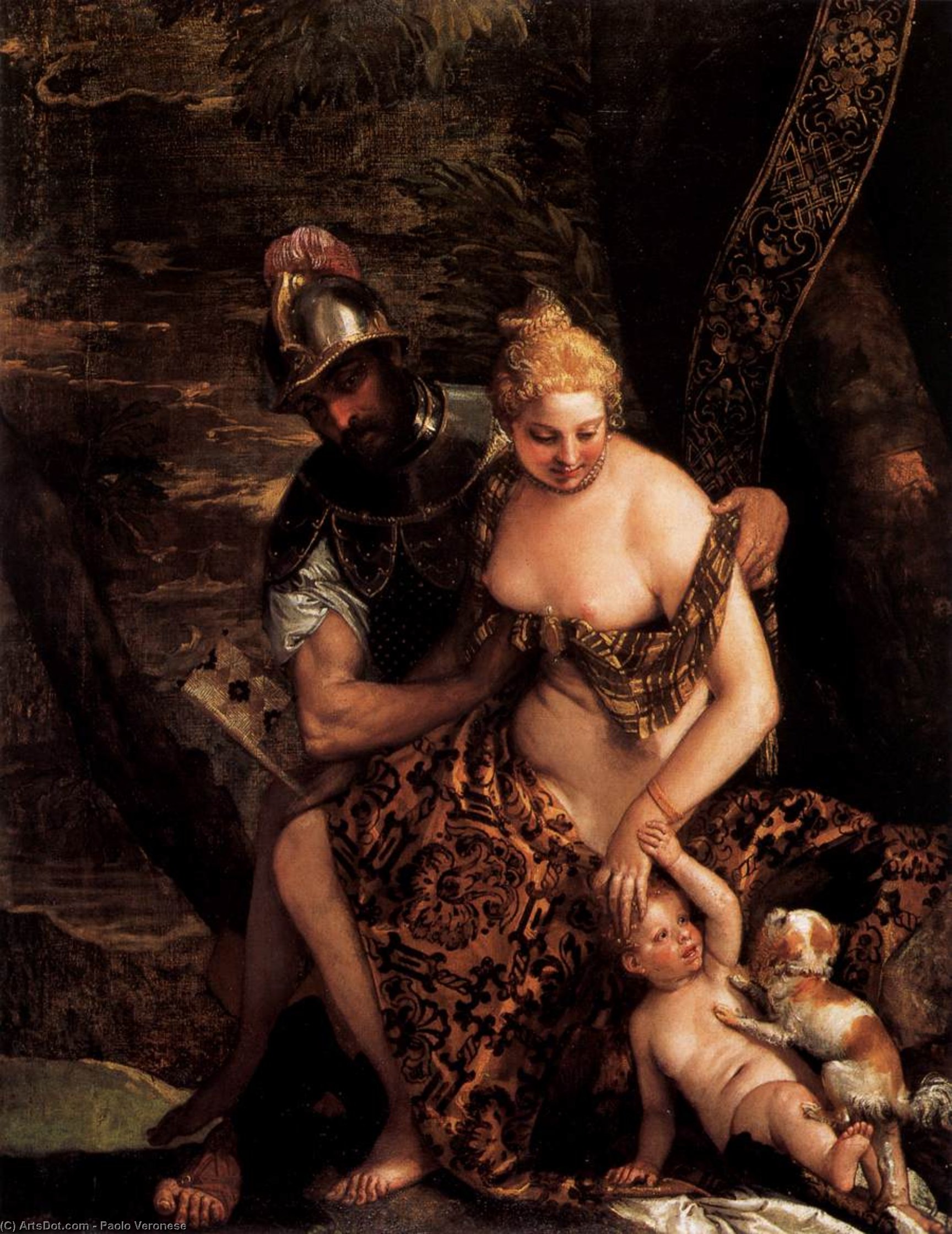
Mars Undressing Venus: A Venetian Tapestry of Myth and Sensuality
Paolo Veronese’s “Mars Undressing Venus,” completed around 1570, stands as an unparalleled achievement in Renaissance art – a monumental oil painting that transcends mere depiction to embody the very essence of Venetian artistic grandeur. More than just a visual spectacle, it's a carefully constructed narrative steeped in classical mythology and imbued with humanist ideals, reflecting the intellectual fervor of its time.
- Subject Matter & Narrative: The artwork portrays Mars, god of war, attempting to strip Venus, goddess of love, naked. Accompanied by a young child – believed to be Adonis – and a loyal dog, the scene unfolds within what appears to be a lavish grotto or cave setting. This juxtaposition immediately establishes a dramatic tension between masculine aggression and feminine vulnerability, mirroring themes prevalent in classical literature and art.
- Style & Composition: Veronese’s style is distinctly Venetian Renaissance, prioritizing realism alongside idealized beauty. The composition centers on the figures themselves, creating an intimate tableau despite Mars' imposing armor. Geometric shapes dominate the drapery and armor, reflecting a deliberate effort to impose order onto the scene while maintaining visual harmony. Perspective is subtly flattened, characteristic of the era, yet atmospheric effects contribute to depth and enhance the dramatic lighting.
- Technique & Material: Veronese’s mastery lies in his meticulous brushwork and glazing technique—a hallmark of Venetian painting—which achieves remarkable luminosity and textural richness. Layers upon layers of pigment create a palpable sense of surface detail, capturing the sheen of metal armor, the softness of skin tones, and the lush foliage of the background landscape. Oil paints on canvas ensured durability and allowed for nuanced color blending.
- Historical Context: Created during Veronese’s prolific period in Venice, “Mars Undressing Venus” reflects the city's position as a cultural epicenter—a hub of artistic innovation fueled by patronage from wealthy families like Gonzaga. It aligns with broader Renaissance explorations of humanist ideals and classical mythology, responding to the revival of Greco-Roman culture.
- Symbolism & Emotional Impact: Beyond its narrative depiction, the painting resonates with profound symbolic meaning. Mars represents strength and protection, guarding Venus’s purity—a visual embodiment of the eternal struggle between opposing forces. The inclusion of Adonis symbolizes youthful innocence and vulnerability, highlighting the fragility of beauty and love. Ultimately, “Mars Undressing Venus” evokes a sense of awe and contemplation, inviting viewers to ponder themes of desire, loss, and the transformative power of art.
A reproduction of this masterpiece offers an exceptional opportunity to bring Veronese’s Venetian splendor into any interior space. ArtsDot.com presents meticulously crafted reproductions that faithfully capture the artwork's vibrant colors, textural depth, and dramatic lighting—allowing you to experience the enduring beauty and intellectual richness of Renaissance art firsthand.