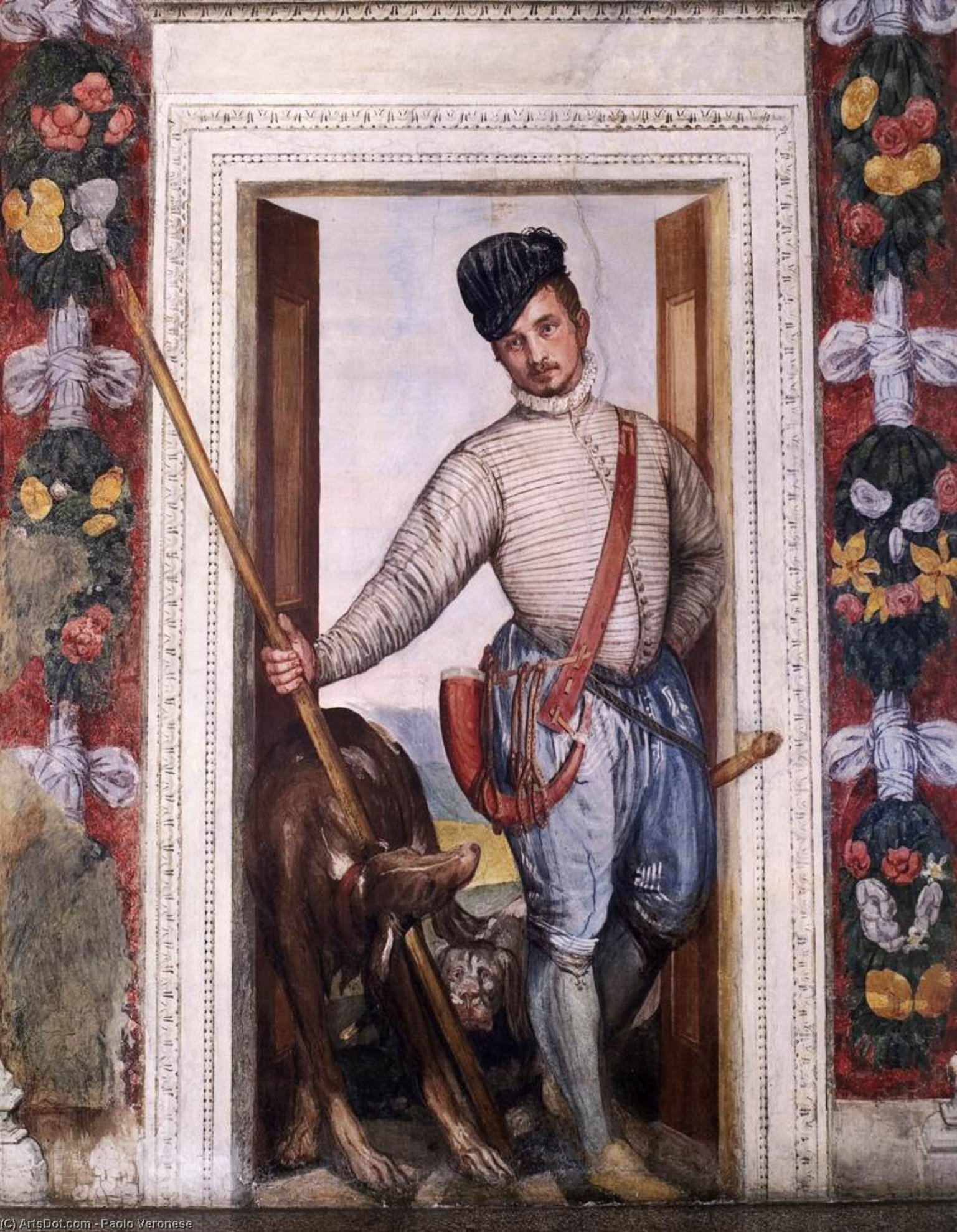
Paolo Veronese: A Venetian Visionary – Exploring ‘Nobleman in Hunting Attire’
Paolo Caliari Veronese (1528-1588) stands as one of the most celebrated figures of Venetian Renaissance art, a painter whose mastery extended beyond mere representation to encompass an astonishing command of color, composition, and theatrical grandeur. Born in Verona amidst the burgeoning humanist fervor of his time – a period marked by renewed interest in classical ideals and artistic innovation – Veronese’s formative years instilled within him a profound appreciation for visual richness and sculptural form, influences that would irrevocably shape his distinctive artistic vision.
His early training under Antonio Badile and Giovanni Francesco Caroto provided him with foundational skills in traditional techniques, yet it was his relocation to Venice in the 1550s that truly propelled him toward artistic prominence. Recognizing the city’s unparalleled dynamism as a crucible of artistic experimentation, Veronese swiftly absorbed the stylistic currents emanating from luminaries like Titian and Tintoretto, whose groundbreaking use of color served as an undeniable catalyst for Veronese's own palette. However, he distinguished himself through a singular style characterized by meticulous detail, monumental scale, and an unwavering commitment to illusionistic perspective – elements that elevated his canvases into immersive experiences for the viewer.
‘Nobleman in Hunting Attire,’ completed between 1560 and 1561, exemplifies Veronese’s unparalleled ability to synthesize these influences into a breathtaking spectacle. Executed as a fresco within Villa Barbaro, Maser – commissioned by Daniele Barbaro himself – the artwork embodies the apex of Mannerism, a stylistic movement that prioritized elegance, refinement, and stylized emotion over naturalistic accuracy.
- Subject Matter: The painting portrays a nobleman engaged in hunting activities alongside his loyal canine companion. This depiction transcends mere portraiture; it’s imbued with symbolic significance reflecting the aristocratic ideals of the era – nobility, honor, and mastery over nature.
- Style & Technique: Veronese's masterful application of color is immediately striking. He employs a vibrant polychromy—a dazzling array of hues—that achieves an unprecedented level of luminosity and depth. The artist utilizes meticulous layering techniques to create textures that mimic reality, enhancing the illusionistic quality of the fresco.
- Historical Context: Created during the Venetian Renaissance, ‘Nobleman in Hunting Attire’ reflects the cultural preoccupation with humanist ideals and aristocratic patronage prevalent at the time. Villa Barbaro itself stands as a testament to the opulent tastes of its benefactor, Daniele Barbaro – a scholar and diplomat who championed artistic excellence.
- Symbolism: The nobleman's attire—a scarlet cloak and hunting garb—represents status and authority. The dog symbolizes loyalty and companionship, reinforcing themes of nobility and virtue.
- Emotional Impact: Veronese’s composition draws the viewer into a carefully orchestrated scene, conveying an atmosphere of grandeur and formality. The subtle interplay of light and shadow contributes to the painting's dramatic effect, eliciting contemplation on themes of power, beauty, and human aspiration.
‘Nobleman in Hunting Attire’ remains a cornerstone of Venetian art history—a masterpiece that continues to inspire admiration for its technical brilliance and profound artistic vision. Its enduring appeal lies not only in its exquisite aesthetic qualities but also in its ability to transport us back to the splendorous world of Renaissance Venice.