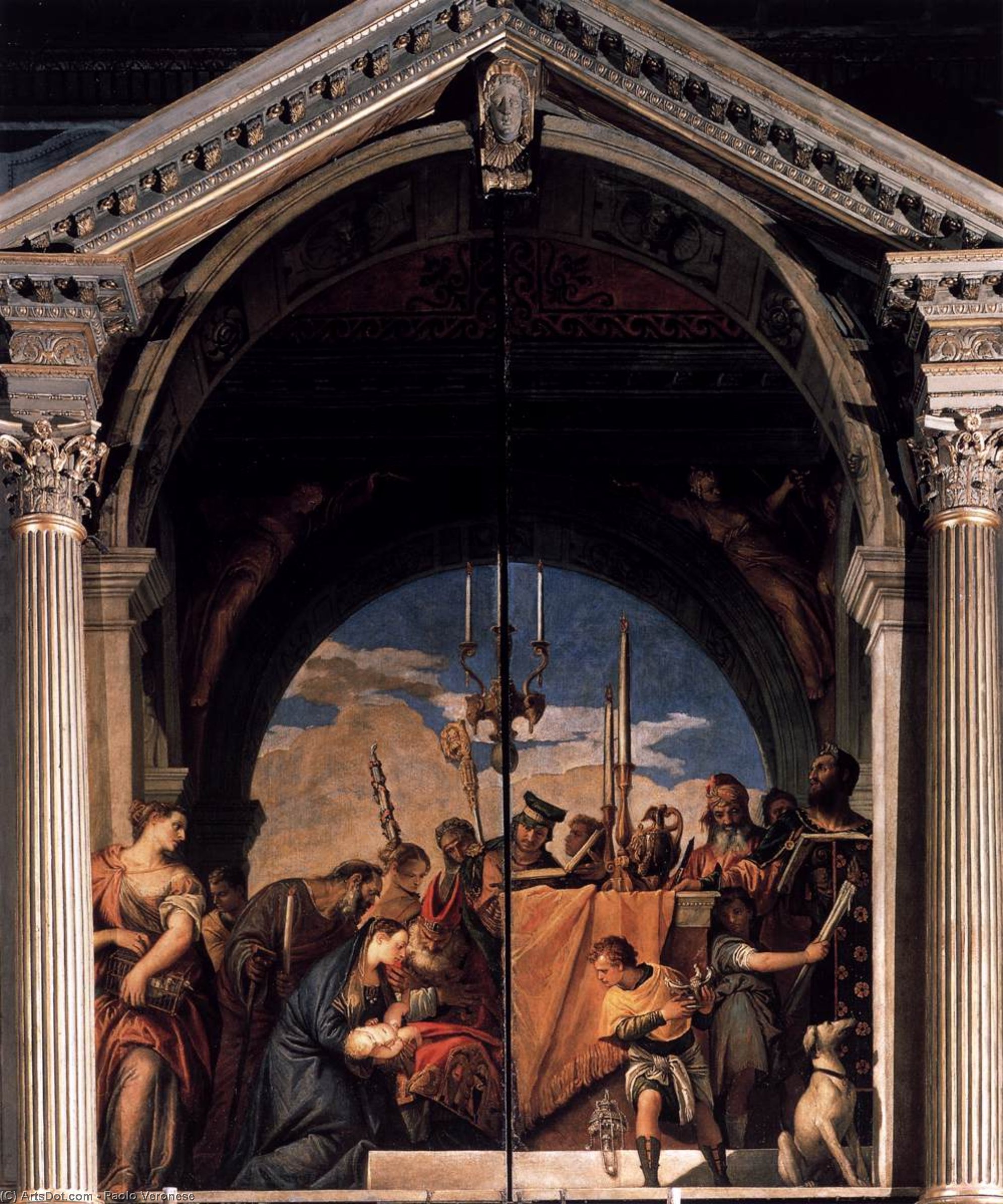
Paolo Veronese’s monumental 1560 fresco, "Presentation in the Temple," bursts with opulent color and intricate detail depicting Mary presenting a baby Jesus in a Venetian temple setting. This masterful Renaissance artwork showcases Veronese's signature style and invites you to own a piece of art history.
A Venetian Masterpiece: Veronese's "Presentation in the Temple"
Paolo Veronese’s “Presentation in the Temple,” completed in 1560, is more than just a depiction of a biblical scene; it’s a vibrant testament to the artistic flourishing of Venice during the High Renaissance. Measuring an impressive 490 x 190 cm, this fresco captures the pivotal moment when Mary and Joseph presented the infant Jesus at the Temple, an event steeped in religious significance and meticulously rendered with Veronese's signature mastery. The painting’s scale alone commands attention, transporting the viewer into a world of opulent color and carefully orchestrated composition – a hallmark of Venetian art.
- Subject Matter: The artwork portrays the biblical narrative from Luke 2:21-38, specifically the circumcision of Jesus as mandated by Jewish law.
- Composition: Veronese employs a complex and layered composition, drawing inspiration from classical perspective while simultaneously embracing the dynamism characteristic of Venetian painting. The arched doorway leading into the scene creates depth and invites the viewer to participate in the unfolding drama.
Technique and Materials – A Symphony of Color
Veronese’s skill is immediately apparent in his masterful use of color, a technique heavily influenced by Titian, yet distinctly Veronese's own. He employed the *sfumato* technique—a subtle blurring of lines and colors—to create an ethereal quality, softening edges and lending a dreamlike atmosphere to the scene. The fresco’s pigments, primarily derived from minerals like azurite for blues and malachite for greens, were meticulously ground and mixed with binders – likely egg tempera – to achieve their luminous intensity. The artist's attention to detail is extraordinary; observe the intricate folds of the drapery, the delicate expressions on the faces of the figures, and the shimmering effect of the gold leaf used to highlight key elements like the Temple’s architecture and the garments of certain individuals. This lavish use of gold wasn't merely decorative; it symbolized divine glory and wealth.
Symbolism and Context – A Window into Venetian Society
“Presentation in the Temple” is not simply a religious scene; it’s a carefully constructed allegory reflecting the social and political landscape of 16th-century Venice. The painting's vast scale, reminiscent of monumental Roman architecture, subtly references the city’s own ambition to emulate classical grandeur. The numerous figures surrounding Mary and Joseph – including angels, dignitaries, and ordinary citizens – represent the universality of faith and the importance of communal participation in religious rituals. The inclusion of prominent Venetian families within the scene suggests Veronese's close ties to the ruling elite, further solidifying his position as a favored artist within the city’s artistic circles. The Temple itself symbolizes both earthly and spiritual authority.
Emotional Impact and Legacy – A Timeless Vision
More than four centuries after its creation, “Presentation in the Temple” continues to captivate viewers with its sheer beauty and emotional resonance. Veronese's ability to convey a sense of reverence, joy, and profound human connection elevates this biblical scene beyond mere illustration, transforming it into a timeless vision of faith and family. This hand-painted reproduction offers an unparalleled opportunity to experience the full splendor of Veronese’s genius – a chance to own a piece of Venetian history and bring its captivating beauty into your home or office.