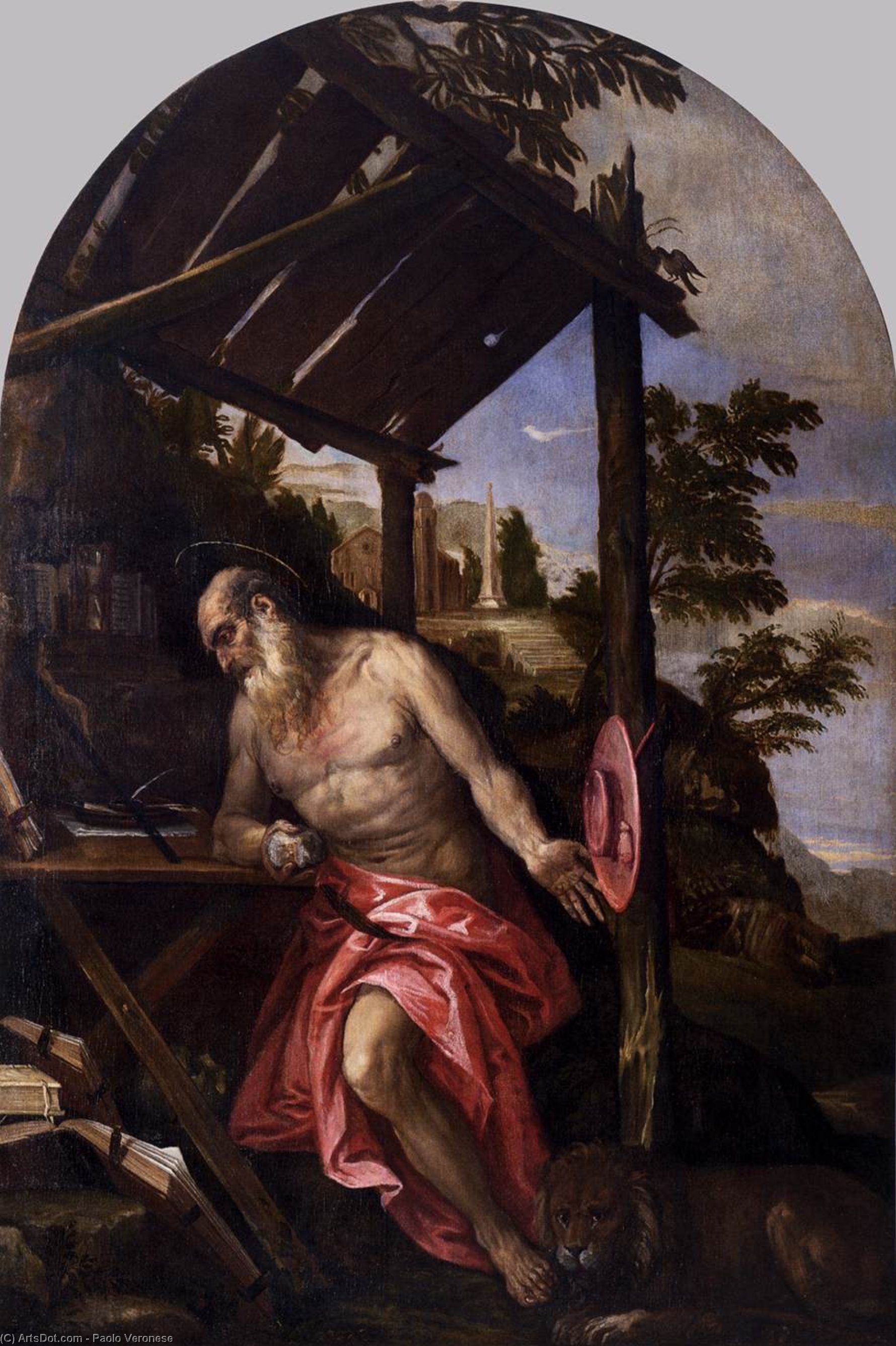
Paolo Veronese’s ‘St Jerome in the Wilderness’ showcases Venetian Renaissance artistry with its opulent color palette and serene depiction of the saint. This monumental 1580 painting, a masterful example of Veronese's vision, invites you to discover this timeless masterpiece.
St Jerome in the Wilderness: A Venetian Visionary's Embrace of Serenity
Paolo Veronese’s “St Jerome in the Wilderness,” completed around 1585–90, stands as a cornerstone of Venetian Renaissance art—a testament to Veronese’s unparalleled ability to capture both spiritual contemplation and visual grandeur. Executed during his prolific workshop years, this monumental painting transcends mere portraiture; it embodies an idealized vision of monastic asceticism bathed in the luminous glow of artistic innovation.
The scene depicts St. Jerome, revered as the patron saint of hermits and translators, seated beneath a sprawling canopy—a deliberate architectural device that harkens back to classical precedents while simultaneously elevating the figure’s solitude to an almost theatrical level. The artist skillfully employs atmospheric perspective, layering shades of ochre and umber to create depth and convey the impression of a vast, sunlit landscape.
- Composition: Veronese’s masterful arrangement prioritizes balance and harmony. Jerome occupies the central axis, flanked by two attentive dogs—a recurring motif in Veronese's oeuvre—who gaze upon him with unwavering devotion. This duality reinforces the saint’s inner peace amidst external challenges.
- Technique: Veronese’s technique is characterized by meticulous glazing – applying thin layers of translucent pigment over underlying colors to achieve remarkable luminosity and vibrancy. The use of sfumato, a subtle blending of tones that softens contours and creates an ethereal haze, contributes significantly to the painting's serene atmosphere.
- Color Palette: Dominating the canvas is a rich tapestry of earthy hues—warm yellows, reds, and browns—harmoniously interwoven with cooler greens and blues. These colors evoke the tranquility of the wilderness and symbolize Jerome’s spiritual purity.
Beyond its aesthetic beauty, “St Jerome in the Wilderness” carries profound symbolic weight. The desert landscape represents isolation and asceticism – a deliberate choice by Jerome to renounce worldly pleasures in pursuit of divine communion. The dogs serve as emblems of loyalty and faithfulness—companionship in solitude—reflecting the saint’s unwavering devotion to God.
The painting's impact extends beyond its immediate visual appeal; it exemplifies Veronese’s commitment to elevating religious subjects through artistic excellence. It remains a captivating masterpiece, inviting viewers to contemplate themes of faith, contemplation, and the enduring power of art to convey spiritual truths—a timeless reflection on serenity and devotion.
Historical Context: Venetian Renaissance Ideals
Created during the High Renaissance in Venice – a period marked by artistic flourishing and humanist intellectualism – “St Jerome” aligns perfectly with prevailing cultural values. The patronage of influential families like Gonzaga fueled ambitious artistic endeavors, prioritizing grandeur and beauty alongside moral instruction. Veronese’s work embodies this ethos, demonstrating how art could inspire piety and elevate the human spirit.
Further Research: Exploring St Jerome's Legacy
For deeper insights into St Jerome’s significance in Christian iconography and artistic tradition, consult resources such as:
Recommended Reproductions: Bringing Veronese's Vision Home
High-quality reproductions of “St Jerome in the Wilderness” are available from reputable art dealers and online platforms, allowing collectors and interior designers alike to experience Veronese’s masterful artistry firsthand.