The Dramatic Narrative of Desire and Faith
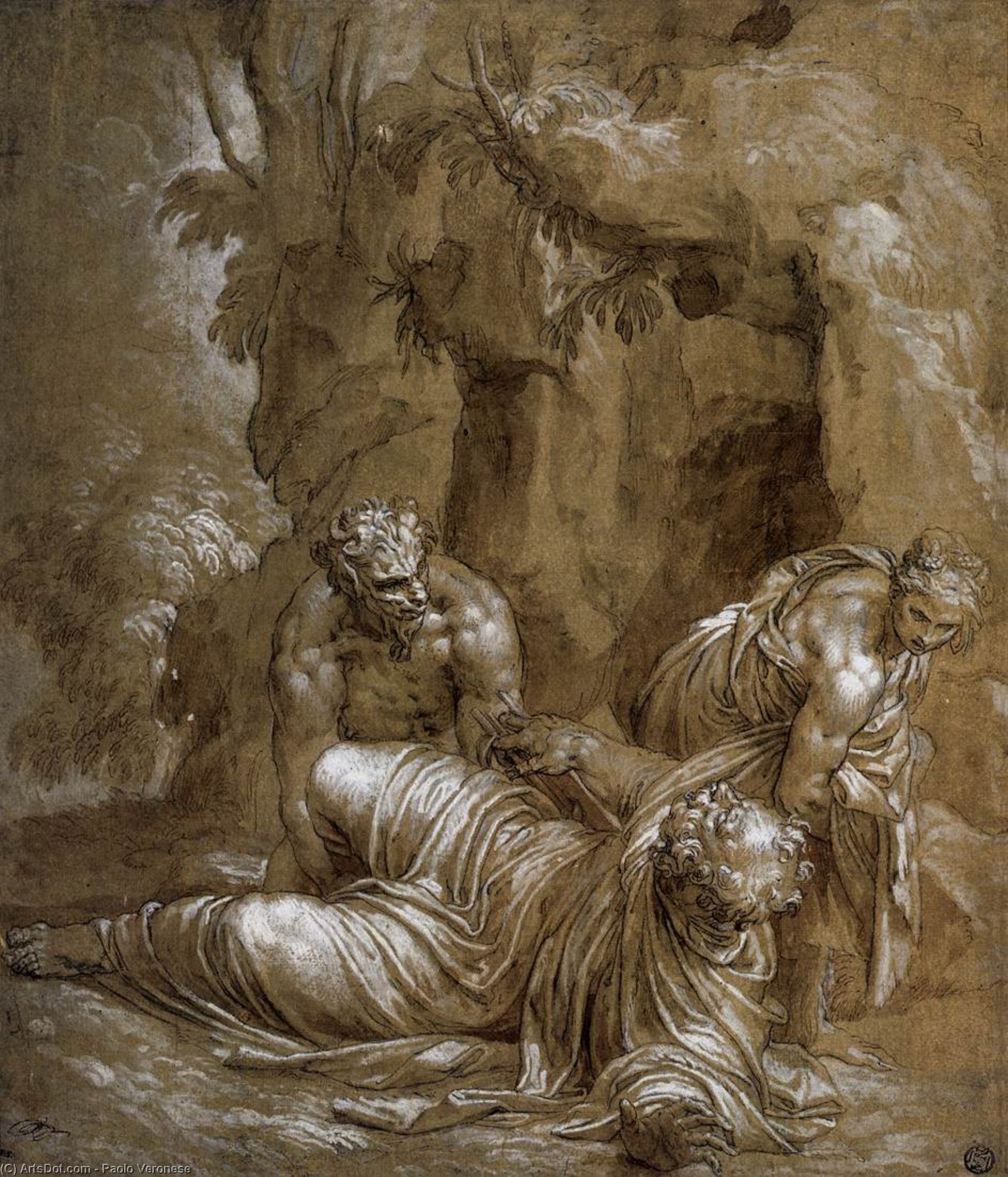
Paolo Veronese’s “Temptation of St. Anthony” (1552), a monumental charcoal drawing now housed within ArtsDot’s exquisite hand-painted reproductions, is far more than a simple depiction of a biblical scene; it's a profound exploration of human vulnerability and the relentless pull of temptation. Commissioned for Cardinal Ercole Gonzaga in Mantua, this preparatory study reveals the artist’s meticulous process and his masterful command of dramatic composition – elements that would later define his grandest works. The drawing immediately draws the eye with its intense chiaroscuro, a hallmark of the Baroque period, casting deep shadows across the rocky cave setting and highlighting the muscular forms of the figures within. The scene unfolds around a prone St. Anthony, seemingly overwhelmed by an unseen force, while a woman attends to his wounds, and a young man observes with a mixture of concern and perhaps even judgment.
A Study in Technique: Charcoal’s Expressive Power
Veronese's choice of charcoal as the primary medium is crucial to understanding the work’s impact. The rough, uneven texture created by the dry medium lends an immediacy and spontaneity that belies the drawing’s detailed execution. Lines are employed with deliberate precision – hatching and cross-hatching build up volume and create a convincing sense of depth, particularly in the depiction of the cave walls and the folds of the figures' clothing. The artist skillfully uses light and shadow to sculpt form, emphasizing the physicality of St. Anthony’s struggle and conveying a palpable sense of distress. Notice how the lines converge towards the center of the composition, drawing the viewer’s eye directly to the central drama – the confrontation between faith and temptation.
Symbolism and the Landscape of the Soul
Beyond its narrative content, “Temptation of St. Anthony” is rich in symbolic meaning. The rocky cave itself represents the inner landscape of the soul, a place of isolation and vulnerability where the saint’s faith is tested. The woman attending to his wounds could symbolize compassion or perhaps even worldly distractions vying for his attention. The young man observing suggests the presence of doubt and temptation within the community. But it's the surrounding figures – the elephants bearing objects like an obelisk, a statue of a nude woman, and a tower – that offer particularly potent symbolism. These elements represent the various temptations that assail St. Anthony: earthly pleasures, vanity, and ultimately, spiritual corruption. The reversed hooves of the horse, representing Satan, are a clever visual cue, echoing medieval iconography.
Veronese’s Venetian Vision and Legacy
Created in the vibrant artistic hub of Venice during the High Renaissance, “Temptation of St. Anthony” reflects Veronese's unique style – a masterful blend of realism, classical influence, and dramatic flair. Drawing inspiration from Titian’s mastery of color and composition, Veronese developed his own distinctive approach, characterized by opulent spectacle and an intense emotionality. This drawing serves as a fascinating glimpse into the artist’s creative process, revealing the layers of thought and planning that went into his larger, more finished works. ArtsDot's hand-painted reproductions capture the essence of this remarkable piece, allowing art lovers to experience Veronese’s genius in stunning detail. The scale of this drawing – 414 x 356 cm – speaks to the grandeur and theatricality that would become hallmarks of his career.