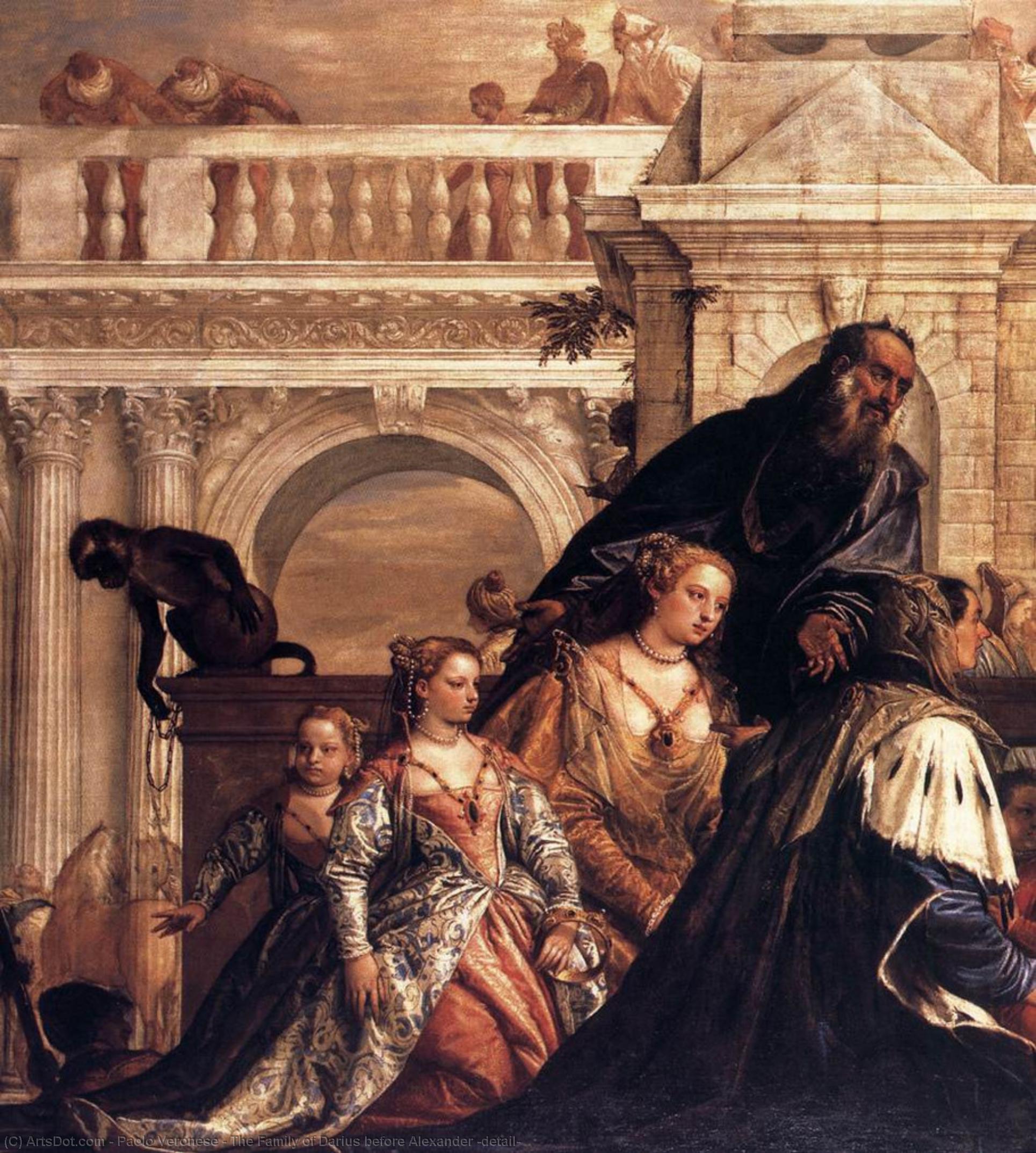
A Portrait of Power and Grace: The Family of Darius before Alexander (detail) by Paolo Veronese
Paolo Veronese’s “The Family of Darius before Alexander” is more than just a depiction of a wealthy Venetian family; it's a meticulously constructed tableau brimming with historical allusion, symbolic richness, and the sheer mastery of color that defined the artist’s extraordinary career. Painted in 1565, this captivating detail offers a glimpse into a world of opulent patronage and artistic ambition, revealing Veronese’s unparalleled ability to synthesize classical grandeur with Venetian sensibility.
- Subject Matter: The scene portrays Darius III, the last king of the Achaemenid Empire, alongside his family – a potent symbol of power and lineage. This wasn't merely a portrait; it was a carefully orchestrated narrative, likely commissioned to legitimize the status of a prominent Venetian family through association with a legendary historical figure.
- Composition & Technique: Veronese’s signature technique—a masterful deployment of color and perspective—is immediately apparent. The figures are arranged within a vast, receding architectural space, creating an illusion of depth that draws the viewer into the scene. Note the use of *sfumato*, a subtle blurring of lines and edges, which softens the forms and contributes to the painting’s ethereal quality.
Venetian Grandeur and Classical Echoes
Veronese was deeply influenced by the artistic traditions of Venice, particularly the work of Titian, whose vibrant palette and dramatic compositions served as a cornerstone for Veronese's own style. However, he wasn’t simply imitating; he was transforming these influences into something uniquely his own. The painting is replete with classical allusions – the architectural setting, the clothing styles, and even the poses of the figures—reflecting the Renaissance fascination with antiquity. This deliberate engagement with classical ideals elevates the work beyond a simple portrait, imbuing it with a sense of timelessness and universal significance.
- Historical Context: The painting was created during a period of intense artistic innovation in Venice, a city that served as a crucial crossroads for European culture. Venetian merchants and patrons were instrumental in fostering the exchange of ideas and artworks from across the Mediterranean world.
- Symbolism: The inclusion of the two cats is particularly intriguing. While their precise meaning remains debated, they may represent good fortune, prosperity, or even a subtle commentary on human vanity – qualities often associated with rulers and nobility.
A Masterpiece of Scale and Emotion
The sheer scale of “The Family of Darius before Alexander” is breathtaking, reflecting Veronese’s ambition to create works that would dominate the viewer's attention. The painting evokes a sense of awe and wonder, inviting us to contemplate the lives of these figures and their place in history. Veronese’s ability to capture not just physical likeness but also the emotional nuances of his subjects—the dignity of Darius, the tenderness of his family—is what truly sets this work apart. It is a testament to Veronese's profound understanding of human psychology and his extraordinary skill as a painter.
- Materials & Process: The painting was likely executed on a large poplar panel, using oil paints – a relatively new medium at the time that allowed for greater luminosity and detail.
- Legacy: “The Family of Darius before Alexander” remains one of Veronese’s most celebrated works, admired for its technical brilliance, historical significance, and enduring emotional impact. It exemplifies the Venetian Renaissance at its finest – a fusion of classical ideals, artistic innovation, and profound human understanding.