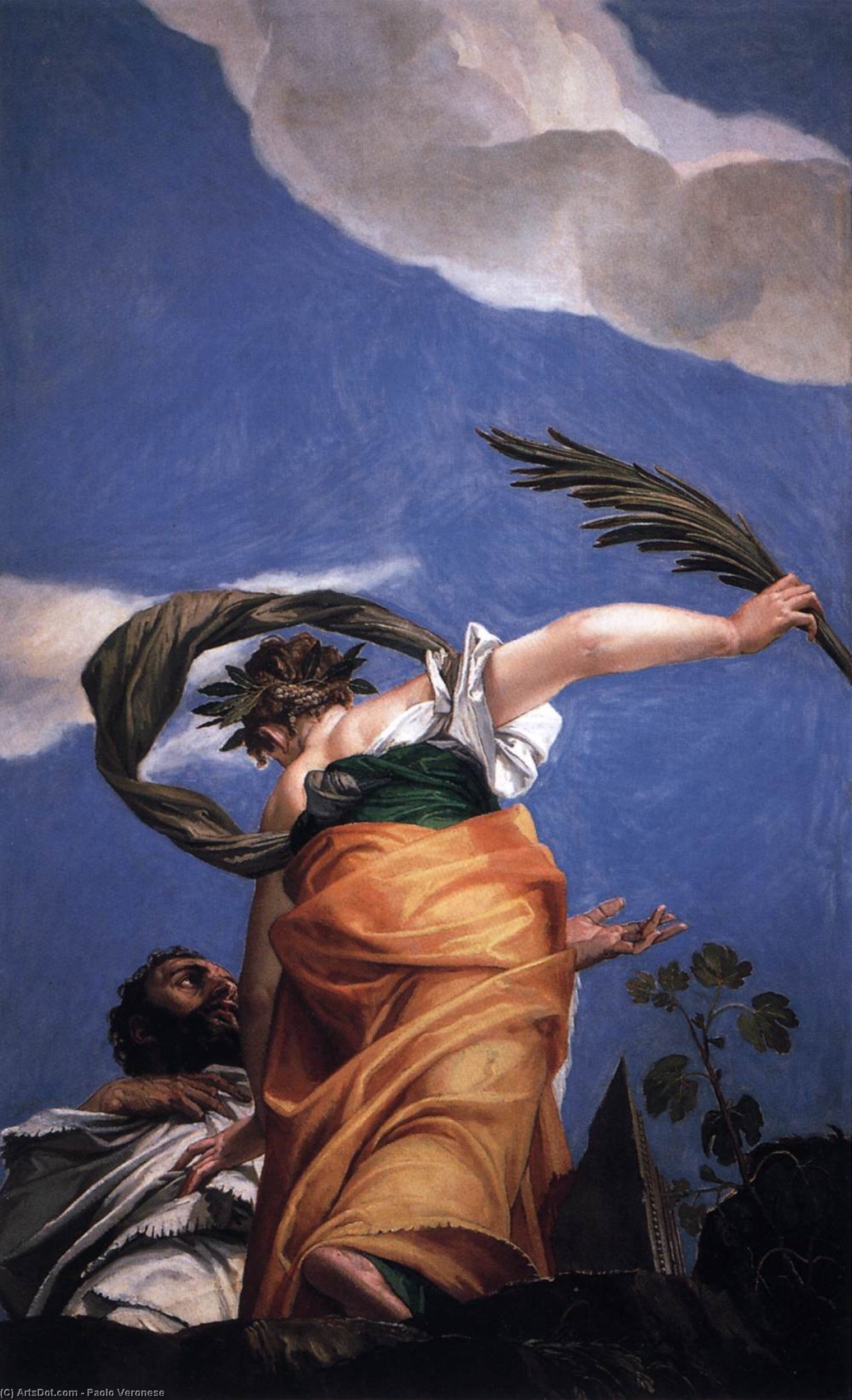
A Triumph of Allegory: Veronese’s “The Triumph of Virtue over Vice”
Paolo Veronese's "The Triumph of Virtue over Vice," completed in 1554, is more than just a painting; it’s a meticulously crafted allegory that encapsulates the spiritual and moral battles central to Renaissance Venetian thought. Measuring an impressive 295 x 165 cm, this monumental work immediately commands attention with its vibrant color palette and dynamic composition – hallmarks of Veronese's unparalleled skill. The scene depicts a dramatic confrontation between opposing forces, rendered with a theatrical flair that reflects the artistic conventions of the era while firmly establishing Veronese as a leading figure in Venetian art.
- Subject Matter: The painting’s core narrative revolves around the triumph of virtue over vice. A central female figure, embodying Virtue, ascends through the air, seemingly liberated from the constraints of earthly corruption.
- Composition: Veronese masterfully employs a pyramidal composition, drawing the viewer's eye upwards towards the soaring figure of Virtue. The lower portion of the canvas is dominated by figures representing Vice, engaged in a chaotic and unsettling scene.
- Color & Technique: Veronese’s signature use of rich, saturated colors – particularly greens and golds – creates an opulent atmosphere, reflecting the wealth and power of Venice at the time. His brushwork is characterized by smooth transitions and meticulous detail, creating a sense of depth and realism within this allegorical framework.
The Venetian Context: A Synthesis of Classical and Christian Ideals
Created in the heart of 16th-century Venice, “The Triumph of Virtue over Vice” is deeply rooted in the city’s unique artistic and intellectual environment. Venice, a melting pot of cultures and ideas, was experiencing a resurgence of classical learning alongside the fervent embrace of Christian humanism. Veronese, like many Venetian artists, drew inspiration from both ancient Roman art – particularly its emphasis on monumental scale and narrative storytelling – and the religious fervor of the Counter-Reformation. The painting reflects this synthesis, presenting a visually arresting representation of moral struggle within a distinctly Venetian context.
The work’s commission likely stemmed from the desire to project an image of civic virtue and religious piety, aligning with the values promoted by the Venetian Republic. Veronese's ability to seamlessly blend these influences cemented his position as one of Venice’s most celebrated artists, a master capable of translating complex theological concepts into visually stunning works.
Symbolism and Interpretation: Decoding the Allegory
The painting is laden with symbolic meaning. The woman ascending represents Virtue – often associated with Chastity, Temperance, Strength, and Justice – liberated from the clutches of Vice. Below her, the figures embody various vices, perhaps representing Lust, Greed, Wrath, or Pride. The inclusion of onlookers suggests a broader moral judgment, inviting viewers to contemplate their own adherence to virtuous principles. The use of classical architectural elements within the scene further reinforces the painting’s connection to ancient wisdom and ideals.
Veronese's meticulous attention to detail extends beyond mere representation; he employs symbolism as a key element in conveying his message. The vibrant colors, the dynamic composition, and the carefully chosen figures all contribute to the overall impact of this powerful allegory.
A Legacy of Opulence: Reproduction Possibilities
"The Triumph of Virtue over Vice" remains a testament to Veronese’s artistic genius and a captivating example of Venetian Renaissance painting. ArtsDot offers meticulously crafted hand-painted reproductions that faithfully capture the original's grandeur and detail. Each reproduction is created using traditional techniques, ensuring an authentic representation of this iconic artwork. Whether adorning a grand salon or adding a touch of timeless elegance to a smaller space, a reproduction of Veronese’s masterpiece will undoubtedly become a focal point of admiration and conversation.