A Masterpiece of Mannerist Grace
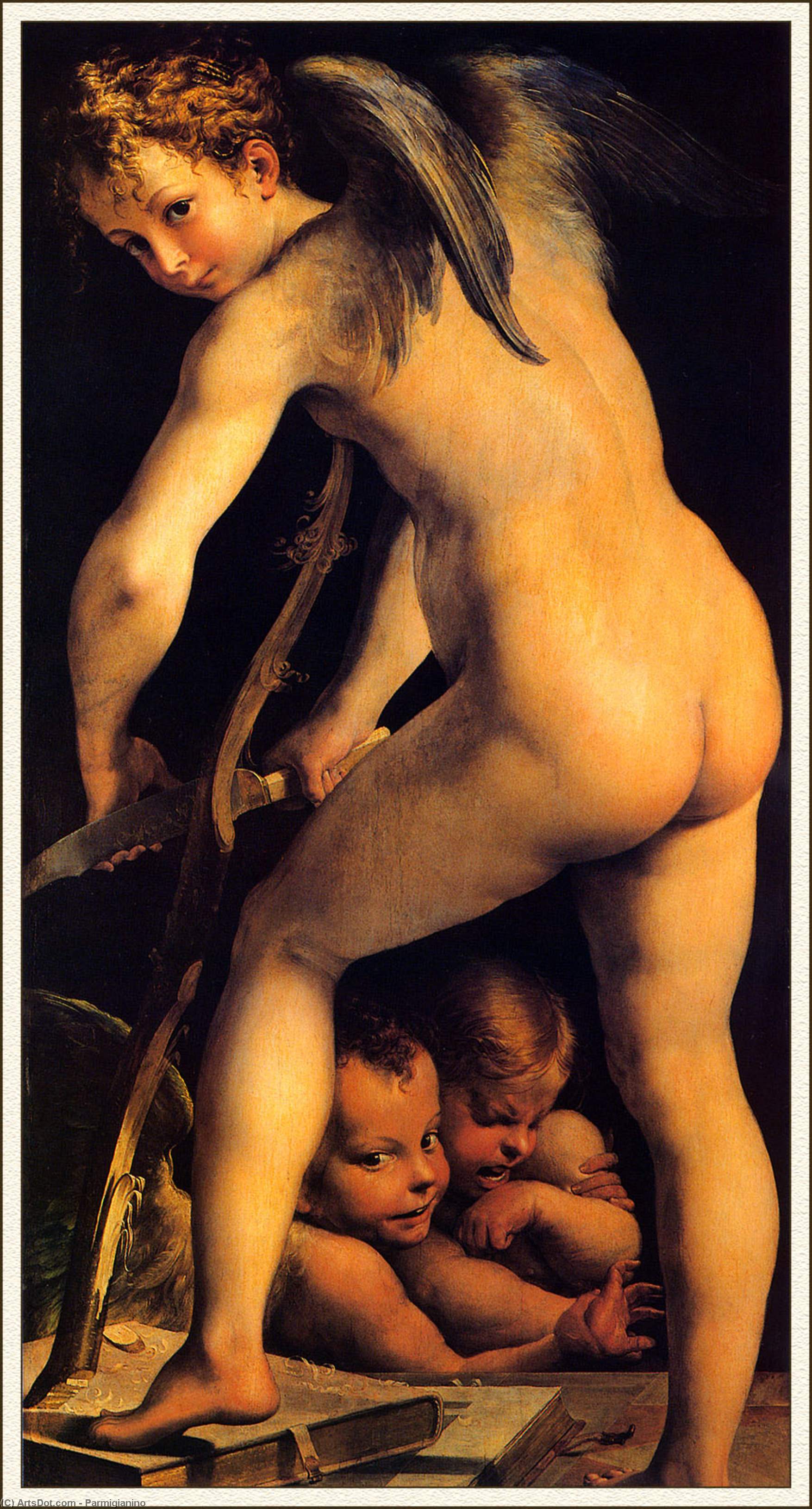
In the delicate dance of light and shadow that defines the Italian Renaissance, few works capture the transition from classical harmony to the expressive tension of Mannerism as exquisitely as Parmigianino’s Amor Carving His Bow. Created in 1524, this oil on panel masterpiece serves as a profound window into a period of intense artistic evolution. The painting presents us with a captivating vision of a young cherub, an adolescent Cupid, caught in a moment of quiet, focused industry. As he meticulously carves his bow from a piece of wood, the viewer is invited into a private, almost sacred space where the divine meets the earthly. This is not merely a depiction of a mythological figure; it is a study in the very essence of grace and the burgeoning complexity of the human form as interpreted through a refined, sophisticated lens.
The composition is a triumph of chiaroscuro, a technique that Parmigianino employs to breathe life and three-dimensional volume into the subject. Against a deep, enigmatic background, the luminous skin of the cherub seems to glow from within, creating a striking contrast that pulls the eye toward the center of the action. This interplay of light and dark does more than just define shape; it creates an atmosphere of intimacy and mystery. The artist’s mastery is evident in the way the light catches the curve of a limb or the sharp edge of the carving tool, lending a tactile quality to the scene that makes the wood and flesh feel palpably real.
Symbolism and the Elegance of Form
Beyond its technical brilliance, the painting is rich with the symbolic language of the 16th century. The cherub, or Amor, stands as a potent symbol of innocence, desire, and the transformative power of love. His dynamic pose—captured mid-motion yet possessing an ethereal stillness—reflects the Mannerist fascination with elongated proportions and serpentine curves. This deliberate departure from the balanced, static figures of the High Renaissance allows for a more fluid, rhythmic energy to permeate the canvas. Every line of the figure’s body is designed to lead the eye in a graceful arc, embodying the "maniera" or style that prioritized elegance and artifice over strict naturalism.
For the discerning collector or interior designer, this artwork offers much more than mere decoration; it provides a focal point of intellectual and aesthetic depth. The attention to detail, from the delicate texture of the wings to the focused expression on the young Cupid's face, ensures that the piece rewards prolonged contemplation. It is an artwork that speaks of craftsmanship and the enduring legacy of Italian genius, making it an ideal centerpiece for a curated collection or a sophisticated living space where art is intended to inspire conversation and evoke a sense of timeless beauty.
An Enduring Legacy for Modern Spaces
Owning a high-quality reproduction of Amor Carving His Bow allows one to bring the prestige of the Kunsthistorisches Museum into the home. Whether placed in a sunlit gallery or a moody, classically styled study, the painting’s ability to command attention through its dramatic lighting and refined subject matter is unparalleled. It serves as a bridge between the historical grandeur of the Renaissance and the contemporary appreciation for fine art, offering a sense of continuity and cultural richness. To display this work is to celebrate the skill of Parmigianino and the enduring allure of the Mannerist spirit—a spirit that finds beauty in the exquisite, the unusual, and the profoundly graceful.