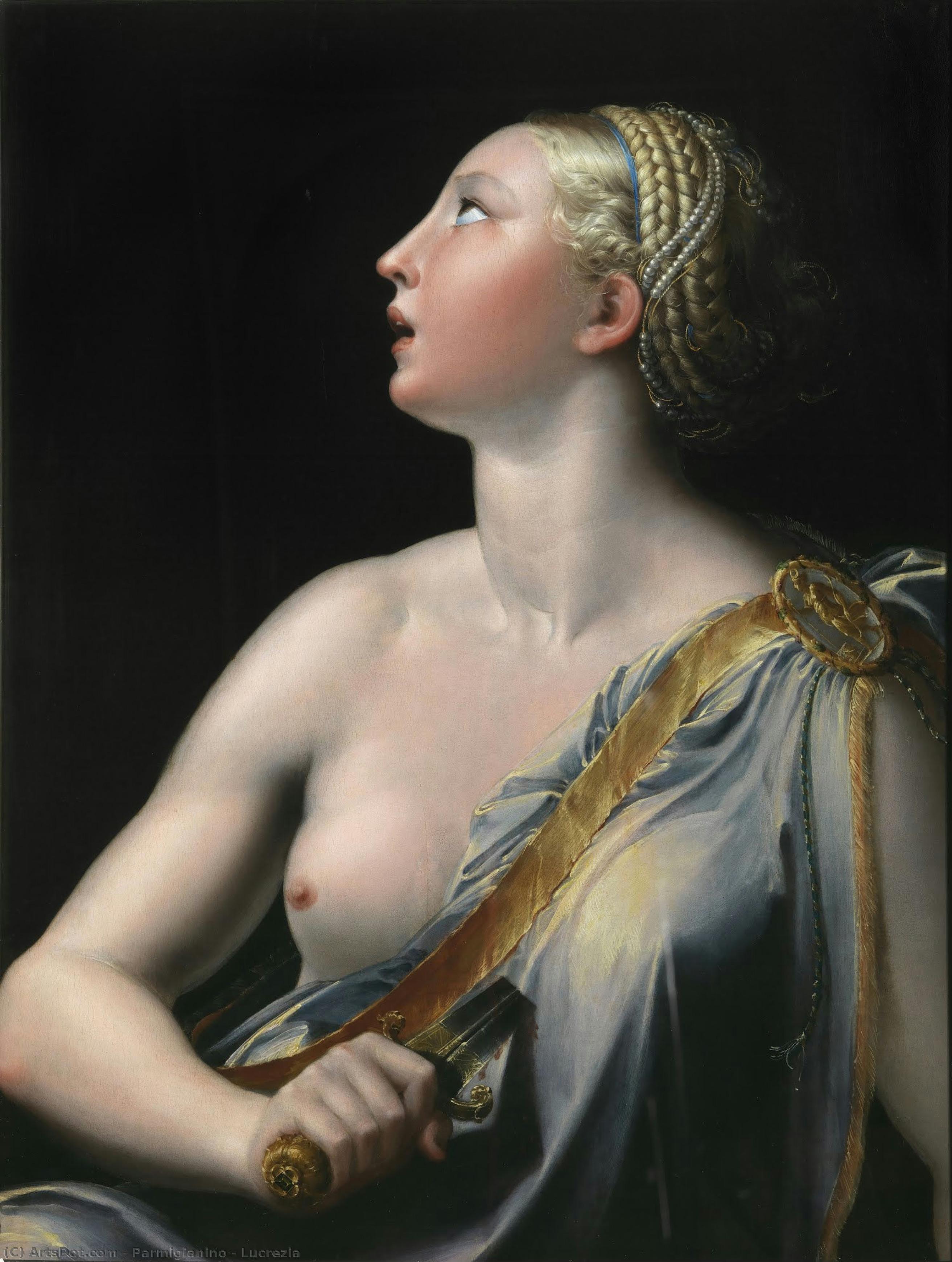
Admire Parmigianino's 'Lucrezia,' a captivating Renaissance portrait showcasing elongated figures and refined elegance. Explore its symbolism, technique & historical context of this masterpiece.
The Enigmatic Gaze of Lucrezia
To stand before Parmigianino’s depiction of Lucrezia is to encounter not merely a portrait, but a moment suspended in rarefied air—a breath held between earthly contemplation and divine aspiration. The subject, identified as the famed Lucrezia Borgia, commands attention with an almost ethereal grace. She is presented in a three-quarter view, her posture suggesting both languid elegance and profound inner thought. Her upward gaze is the painting's magnetic core; it directs the viewer’s eye beyond the frame, inviting speculation about what celestial vision or deep philosophical query occupies her mind. The overall impression is one of exquisite refinement, characteristic of the height of Renaissance ambition filtered through the lens of Mannerist sophistication.
Mannerism and Elongated Grace
Parmigianino’s signature touch—the hallmark of Mannerism—is immediately apparent in the figure's proportions. Here, we see an exquisite elongation; every line, from the sweep of her drapery to the delicate curve of her neck, speaks of artifice elevated to the level of sublime beauty. The composition itself is a masterclass in dynamic asymmetry. While the main figure dominates with soft, flowing contours, the inclusion of two smaller, partially obscured figures in the lower right corner adds a subtle narrative tension, as if they are witnesses to her private reverie. This deliberate manipulation of form and scale creates an atmosphere that is both intensely personal and dramatically theatrical.
A Symphony of Light and Shadow
Technically, the painting showcases Parmigianino’s masterful handling of oil paint on panel. The artist employs a diffused yet directional lighting scheme that sculpts the subject from within. Notice how the light catches the luminous quality of her skin, contrasting sharply with the deep, undefined shadows of the background. This dramatic chiaroscuro technique serves to isolate Lucrezia, making her appear almost self-illuminated. The color palette—a sophisticated interplay of warm flesh tones, cool blue-greys in the drapery, and touches of gold—is handled with a subtle glazing technique, giving the fabric and skin an unparalleled depth and sheen that modern reproductions strive to capture.
Symbolism and Enduring Allure
Beyond its technical brilliance, the painting resonates with layers of symbolism. The upward tilt of her head suggests a yearning for transcendence, perhaps hinting at spiritual contemplation or divine inspiration far removed from the political machinations associated with her historical persona. The gold necklace acts as both an emblem of status and a focal point for the eye. For the collector or designer seeking to infuse a space with history and mystery, this piece offers more than mere decoration; it offers a conversation starter—a meditation on beauty, ambition, and the elusive nature of the soul.