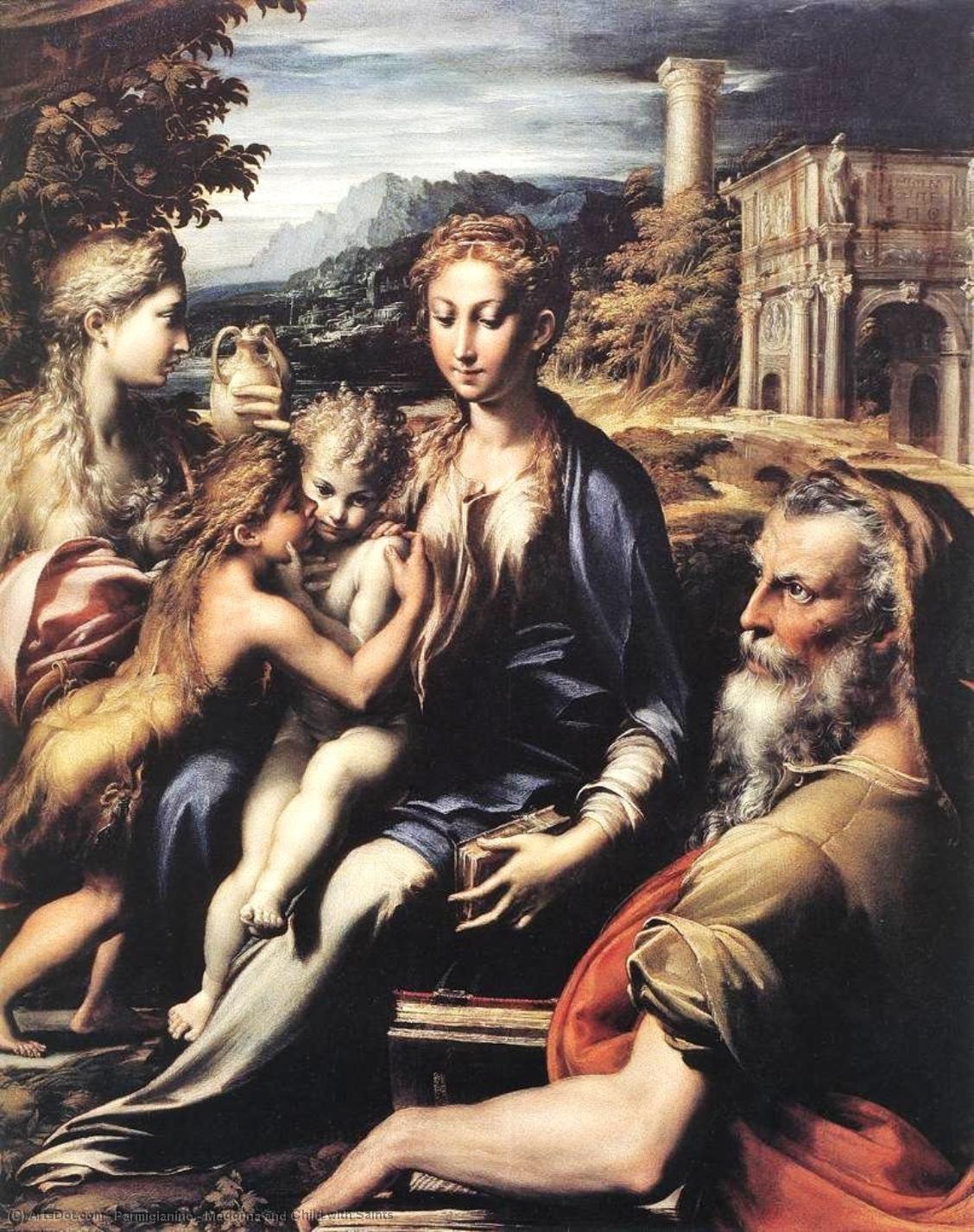
Parmigianino’s "Madonna & Child" (1530) – a masterpiece of High Renaissance art! Admire its serene beauty, pyramidal composition & rich detail. Explore this iconic oil painting.
Explore Parmigianino (1503-1540), a key Italian Mannerist painter known for elegant, elongated figures & refined sensuality in masterpieces like 'Madonna with the Long Neck.' Discover his art & Renaissance influence.
Step into the Renaissance heart of Florence at the Uffizi Gallery! Explore masterpieces by Botticelli, Leonardo da Vinci & Michelangelo – an unforgettable art experience.
A Symphony of Serenity: Parmigianino’s Madonna and Child with Saints
Girolamo Francesco Maria Mazzola, known to posterity as Parmigianino – “the little one from Parma” – stands as a singular beacon within the High Renaissance, yet swiftly cemented his place as a pivotal architect of Mannerism. Born in Parma on January 11, 1503, his formative years were shadowed by profound familial sorrow; Filippo Mazzola, his father, succumbed to illness just two short years later, leaving Girolamo under the guardianship of his uncles, Michele and Pier Ilario – artists themselves who possessed a modest skill. This familial crucible served as an invaluable incubator for an extraordinary talent that would soon transcend even their influence, propelling him toward artistic heights previously unimagined. By the astonishing age of eighteen, he had already achieved mastery with the Bardi Altarpiece, a work demonstrating not merely technical proficiency but a maturity and sophistication surpassing his peers – a testament to the burgeoning genius within.
The Essence of Mannerist Elegance: Composition and Style
Parmigianino’s artistic vision embraced the stylistic currents swirling around Florence and Rome during this transitional period, rejecting the idealized harmony championed by Raphael and Michelangelo in favor of a deliberate distortion of proportion and perspective. This characteristic Mannerist aesthetic is powerfully evident in “Madonna and Child with Saints” (1530), where Parmigianino abandons conventional pyramidal structures for a subtly asymmetrical arrangement that prioritizes visual drama over strict geometric precision. The elongated figures—particularly Mary’s torso—are rendered with exquisite grace, conveying an unsettling beauty that challenges the viewer's expectations of Renaissance idealism. Lines are fluid and curving, creating a sense of movement and dynamism within the stillness of the scene. This deliberate manipulation of form reflects a broader preoccupation with psychological nuance and emotional intensity – hallmarks of Mannerist art’s quest to explore the complexities of human experience beyond mere representation.
Technical Virtuosity: Impasto and Sfumato—A Dance of Light
The execution of “Madonna and Child” exemplifies Parmigianino's unparalleled technical prowess. He employed a masterful technique known as impasto – applying thick layers of oil paint onto the canvas – to imbue the drapery and flesh tones with remarkable textural richness. These textured surfaces capture the subtle nuances of light and shadow, enhancing the painting’s visual depth and creating an illusionistic effect that draws the eye into the scene. Furthermore, Parmigianino skillfully utilized sfumato—a technique pioneered by Leonardo da Vinci—to soften contours and blend tonal transitions seamlessly. This subtle blurring creates a luminous atmosphere, bathing the central figures in a warm glow while simultaneously concealing underlying anatomical details – a masterful demonstration of artistic subtlety and illusionism. The meticulous brushwork speaks volumes about Parmigianino’s dedication to capturing not just what he saw but how he felt.
Symbolic Resonance: Faith, Beauty, and Artistic Innovation
Beyond its aesthetic brilliance, “Madonna and Child” resonates with profound symbolic significance rooted in Christian iconography. Mary’s serene gaze embodies maternal piety and spiritual contemplation—a central theme within Renaissance devotional art. Jesus’s youthful appearance underscores his divine innocence and purity, aligning with prevailing theological interpretations of Christ's incarnation. The presence of Saint John the Baptist—represented as a child—symbolizes humility and foreshadows Jesus’s prophetic role. Joseph’s dignified posture reinforces patriarchal authority while conveying unwavering devotion to God’s will. Parmigianino’s audacious stylistic choices – the elongated figures, distorted perspective – were not merely decorative gestures but deliberate provocations intended to engage viewers intellectually and emotionally. He pushed the boundaries of artistic convention, establishing himself as a pioneer of Mannerist innovation and securing his legacy as one of the most influential artists of his time.
A Timeless Reflection: Emotional Impact and Artistic Inspiration
“Madonna and Child with Saints” continues to captivate audiences centuries after its creation—a testament to Parmigianino’s enduring artistic vision. Its ethereal beauty, combined with its masterful technique and layered symbolism, inspires contemplation on themes of faith, familial love, and the sublime. Reproductions of this iconic masterpiece offer collectors and interior designers alike an opportunity to experience firsthand the profound emotional impact of Renaissance art – a celebration of grace, elegance, and artistic genius that transcends temporal boundaries.