A Vision of Renaissance Sophistication
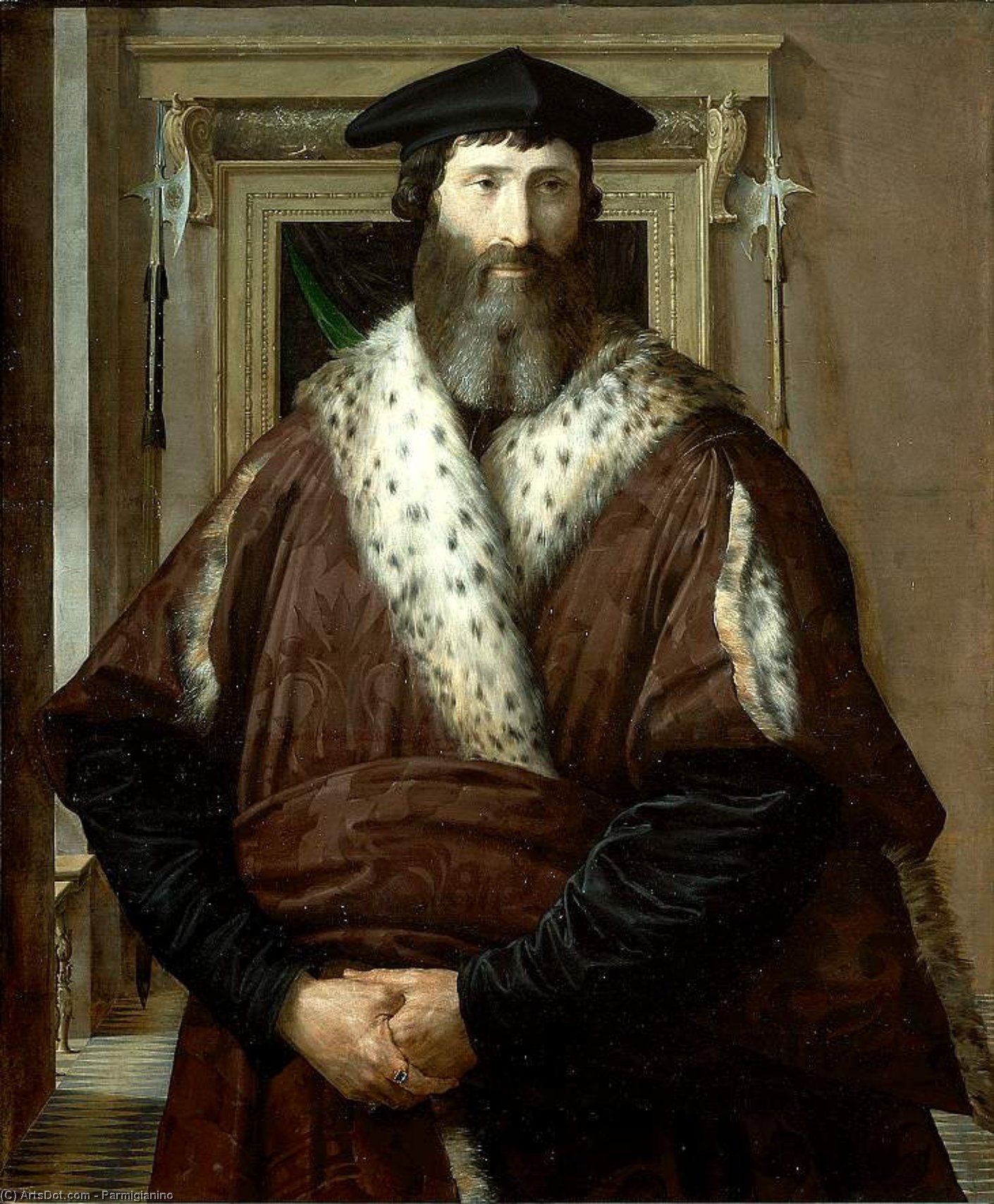
In the quiet, commanding presence of Parmigianino’s 1537 masterpiece, Malatesta Baglioni, we encounter more than just a portrait; we enter the intimate psychological space of the Italian Cinquecento. This work stands as a breathtaking testament to the transition from the balanced harmony of the High Renaissance to the elegant, often tension-filled grace of Mannerism. The subject, Malatesta Baglioni, is rendered with a profound sense of realism that transcends mere likeness, capturing a man whose very posture speaks of intellectual depth and social prestige. As he gazes out from the canvas, his expression invites the viewer into a silent dialogue, bridging the gap between the sixteenth century and the modern collector's eye.
The artistry of Parmigianino is most vibrantly expressed through his masterful command of chiaroscuro. By casting the subject in a soft yet focused light against a somber, receding background, the artist creates an extraordinary sense of three-dimensional volume. This interplay of shadow and illumination does not merely define the contours of Baglioni’s face; it breathes life into the textures of his existence. One can almost feel the weight of the fur-lined cloak and the intricate, tactile patterns of his scholarly robes. The light dances across the subtle folds of his attire, highlighting a level of detail that serves to ground the figure in a tangible, physical reality while simultaneously elevating him to an icon of Renaissance humanism.
Symbolism and the Scholar's Soul
Every element within this composition has been meticulously curated to communicate the status and character of the sitter. The inclusion of a book held firmly in his left hand is a deliberate symbolic gesture, signaling Baglioni’s devotion to the intellectual pursuits that defined the Renaissance humanist movement. This is not merely a man of power, but a man of thought. His attire—a rich tapestry of black fabrics, fine furs, and complex patterns—functions as a visual language of wealth and refinement, yet it is balanced by the scholarly cap that suggests a life dedicated to study and contemplation.
The architectural backdrop, featuring classical columns and an arched doorway, provides more than just depth; it anchors the subject within the grand tradition of Roman antiquity. This setting reinforces the themes of stability, order, and the enduring legacy of classical knowledge. For the interior designer or art enthusiast, this painting offers a profound emotional resonance. It brings a sense of historical gravity and intellectual prestige to any space, making it an ideal centerpiece for a library, a formal study, or a sophisticated living area where conversation and culture are celebrated.
An Eternal Legacy for the Modern Collector
Owning a reproduction of Malatesta Baglioni is an opportunity to possess a fragment of Italy's golden age. The painting’s substantial scale—measuring 117 x 98 cm—ensures that it commands attention, acting as a window into the soul of the 16th century. For those seeking to curate a collection that reflects a passion for fine art and historical narrative, this piece offers unparalleled inspiration. The meticulous hand-painted oil reproductions available through ArtsDot.com capture the very essence of Parmigianino’s brushwork, from the delicate highlights on the skin to the deep, velvety shadows of the background.
Whether you are an art historian captivated by the technical evolution of Mannerism or a decorator looking to infuse a room with timeless elegance, this portrait serves as a bridge between eras. It is a celebration of human dignity, a study in light, and a permanent tribute to the enduring power of the Renaissance spirit. To display such a work is to surround oneself with the beauty of human achievement and the quiet strength of a legacy that has refused to fade for nearly five centuries.