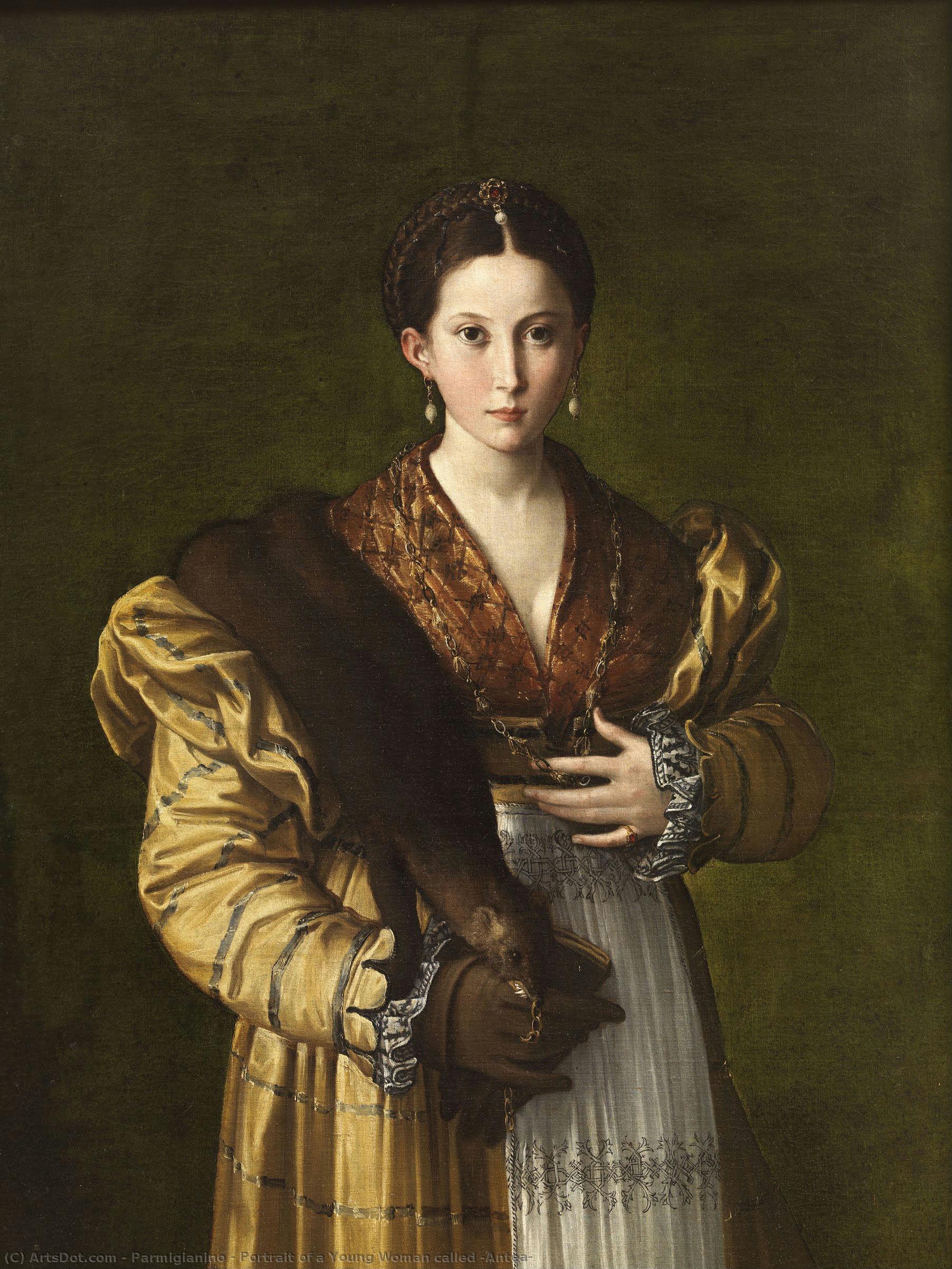
A Glimpse into Renaissance Grace: Unveiling Parmigianino's 'Antea'
Parmigianino’s “Portrait of a Young Woman Called ‘Antea’” is more than just a painting; it’s a carefully constructed enigma, a window into the artistic sensibilities and social currents of 16th-century Italy. Completed around 1530-35 in Parma, this captivating work transcends mere representation, offering a profound meditation on beauty, status, and the elusive nature of identity. The painting immediately draws the eye with its elegant composition – a half-length portrait that masterfully balances intimacy and formality. The subject, whose true identity remains tantalizingly unknown, is presented in a pose of serene contemplation, her gaze directed outwards with an almost unnerving directness.
At first glance, the painting embodies the refined elegance characteristic of Mannerism, a style that emerged as a reaction against the idealized forms and balanced compositions of the High Renaissance. Parmigianino’s signature lies in his elongated figures, subtly distorted proportions, and an emphasis on graceful movement – elements evident here in the delicate curve of her neck and the flowing drapery. The painting's palette is rich and luxurious, dominated by warm ochres, golds, and browns that evoke a sense of opulence and sophistication. The use of light is particularly masterful, creating a soft, diffused glow that highlights the subject’s features and imbues the scene with an ethereal quality.
Decoding Symbolism: Status, Beauty, and Intrigue
Beyond its aesthetic appeal, “Antea” is laden with symbolic meaning. The young woman's attire—a sumptuous gown adorned with intricate patterns and a prominent zinale (a white apron worn by brides), suggests a noble lineage and elevated social standing. The inclusion of expensive jewelry – rings on her fingers, earrings, and a necklace – further reinforces this impression of wealth and privilege. However, the painting’s complexity extends beyond mere material possessions. The very act of portraying a young woman in such an intimate setting was itself significant during the Renaissance, reflecting a growing interest in individual portraiture and the celebration of beauty.
The enduring mystery surrounding the subject's identity adds another layer of intrigue to the work. Early speculation linked her to Antea, a famous Roman courtesan, but this identification has been largely dismissed by modern scholars. Theories now suggest she may have been Parmigianino’s daughter, a lover, or even a servant—a woman whose beauty and status captivated the artist. The painting's composition subtly hints at a connection with the Madonna with the Long Neck (1534), suggesting a possible shared model or thematic resonance.
Technique and Legacy: A Masterclass in Mannerist Art
Parmigianino’s technical skill is undeniable. The painting demonstrates his mastery of oil paint, evident in the smooth blending of colors, the meticulous rendering of textures—particularly the luxurious fabric of her gown—and the subtle modeling of form. His use of perspective is relatively shallow, focusing on the immediate details of the portrait rather than creating a vast spatial illusion. This deliberate choice contributes to the painting’s intimate and engaging quality.
“Portrait of a Young Woman Called ‘Antea’” remains one of Parmigianino's most celebrated works, exemplifying the artist’s unique blend of elegance, sensuality, and intellectual depth. It stands as a testament to his innovative approach to portraiture and his profound understanding of Renaissance aesthetics. Today, this captivating painting resides in the Museum of Capodimonte in Naples, continuing to fascinate viewers with its timeless beauty and enduring mystery.