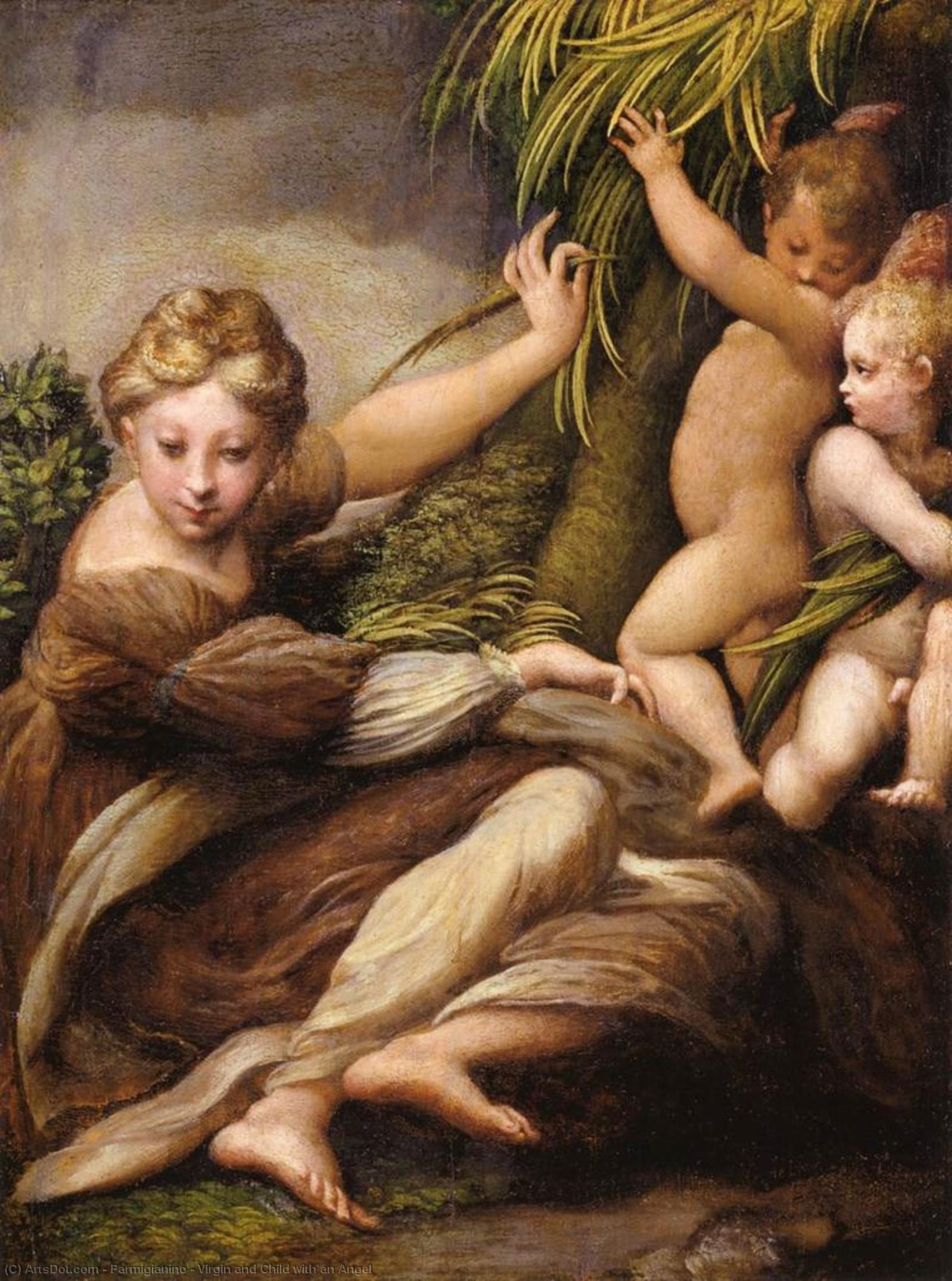
Discover Parmigianino’s ‘Virgin and Child,’ a Renaissance masterpiece featuring a luminous Madonna & Child with angels. Explore its classical beauty & intricate details at the Louvre.
Explore Parmigianino (1503-1540), a key Italian Mannerist painter known for elegant, elongated figures & refined sensuality in masterpieces like 'Madonna with the Long Neck.' Discover his art & Renaissance influence.
Explore 700 years of art at the Städel Museum in Frankfurt! From Old Masters to modern masterpieces, discover stunning collections & architectural marvels on the Museumsufer.
A Delicate Dance Between Idealism and Reality: Exploring Parmigianino’s Virgin and Child
Parmigianino's "Virgin and Child with an Angel," painted in 1523, stands as a testament to the Mannerist movement’s fascination with refined beauty and subtle distortions—a departure from the idealized forms of High Renaissance art that preceded it. More than just a depiction of religious piety, this masterpiece embodies a profound exploration of human emotion and artistic innovation, captivating viewers centuries later with its ethereal grace and unsettling realism.
The Subject Matter: Arcadia Revisited
The painting transports us back to the pastoral ideals of Arcadia—a mythical realm celebrated by poets like Virgil and Petrarch—where innocence reigned supreme and nature held dominion over human affairs. At its core lies a serene Madonna, cradling her infant son amidst a tranquil landscape bathed in diffused sunlight. Two angelic figures hover above, conveying divine benevolence and guardianship. However, Parmigianino doesn’t simply recreate the familiar iconography of motherhood; he imbues it with an unsettling stillness—a palpable tension between serenity and vulnerability that speaks to the complexities of human experience. The Virgin's pose is deliberately asymmetrical, subtly challenging conventional artistic conventions and hinting at a deeper psychological dimension.
A Mannerist Style Defined by Refinement and Distortion
Parmigianino’s stylistic choices firmly establish him within the Mannerist tradition. Unlike the balanced compositions favored by Raphael or Michelangelo, “Virgin and Child” prioritizes elegance over symmetry. The pyramidal structure is deliberately destabilized, creating a sense of unease that compels the eye to linger on every detail. This subtle distortion—a hallmark of Mannerism—extends beyond mere compositional imbalance; it’s evident in the elongated proportions of the figures, particularly the Madonna's torso and hands, which appear unnaturally graceful. These distortions aren’t gratuitous; they serve as a deliberate provocation, questioning established aesthetic ideals and emphasizing the artist’s mastery of technique.
Technique: Impasto and Light – Mastering Oil Paint
The painting’s remarkable beauty stems from Parmigianino's meticulous application of oil paint—a technique perfected during this period. He employs impasto extensively, layering thick strokes of pigment onto the canvas to create textured surfaces that capture the luminescence of light. This masterful manipulation of texture is particularly noticeable in the drapery and foliage, where the artist painstakingly builds up ridges of paint to simulate the play of sunlight on fabric and leaves—a feat of artistic realism unparalleled by many of his contemporaries. The diffused lighting contributes significantly to the painting’s emotional impact, casting soft shadows that heighten the sense of depth and intimacy. Parmigianino's meticulous blending ensures a harmonious interplay between color and light, creating an atmosphere of contemplative beauty.
Symbolism: Beyond Mere Representation
“Virgin and Child” is laden with symbolic significance—a reflection of Renaissance humanist thought’s preoccupation with exploring human psychology alongside religious dogma. The Virgin’s pose embodies purity and maternal devotion, while the angel figures represent divine grace and protection. However, Parmigianino subtly disrupts these traditional symbols by presenting them in a context that anticipates Mannerist anxieties about mortality and decay. The landscape itself—partially obscured by mist—suggests the fragility of earthly existence and underscores the Madonna’s vulnerability as protector of innocence.
Emotional Impact: A Moment Frozen in Time
Ultimately, Parmigianino's "Virgin and Child" transcends mere visual representation; it evokes a profound emotional response. The painting captures a fleeting moment of serene contemplation—a tableau vivant that invites viewers to contemplate themes of beauty, faith, and the human condition. Its delicate balance between idealized form and subtle distortion compels us to confront uncomfortable truths about mortality and illusion—leaving an indelible impression on anyone who encounters its timeless elegance. It remains a cornerstone of Mannerist art, demonstrating Parmigianino’s unparalleled skill in conveying emotion through visual artistry.