The
Paul Cadmus painting,
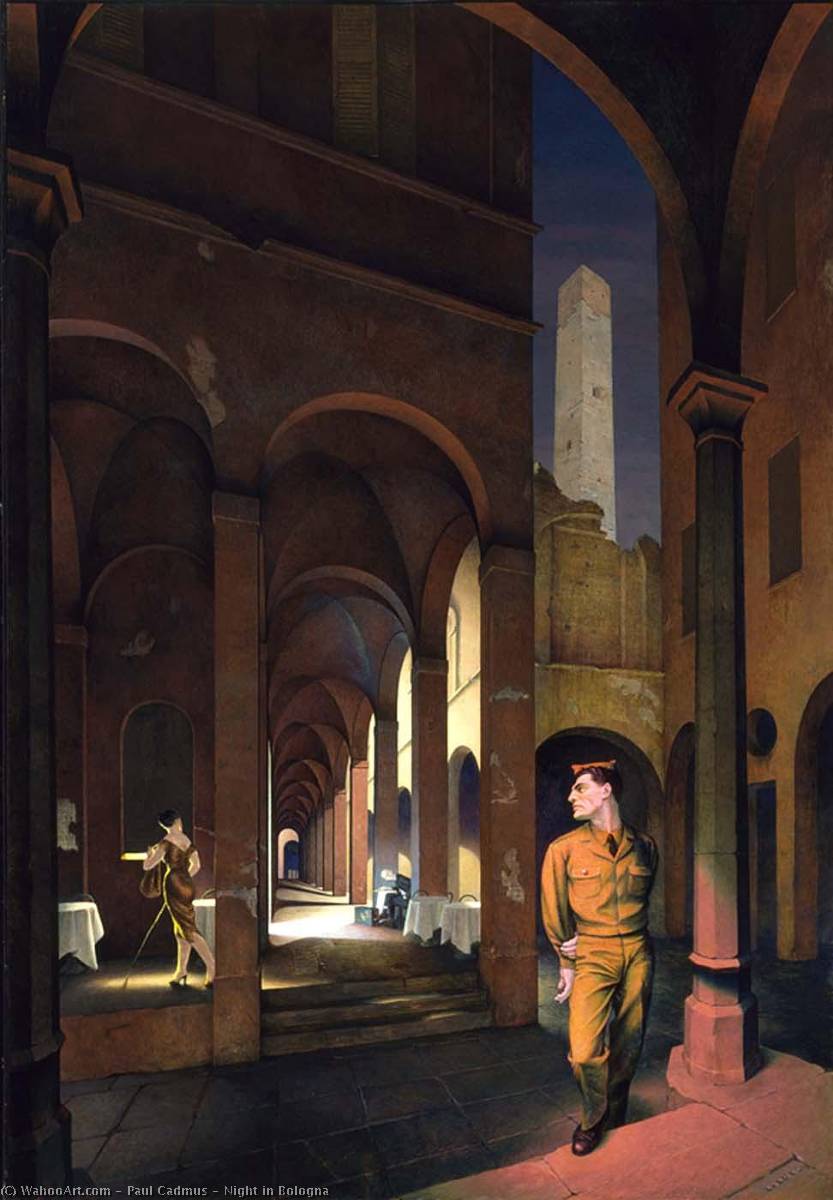
Night in Bologna, is a thought-provoking artwork that showcases the artist's unique style and technique. Created in 1958, this tempera on fiberboard piece measures 129 x 89 cm and is currently housed at the
Smithsonian American Art Museum in the United States.
Artistic Style and Technique
Paul Cadmus was known for his bold and satirical approach to art, often incorporating elements of social commentary and critique. In
Night in Bologna, he employs a range of colors to convey the emotions and tensions between the characters. The soldier, bathed in red light, exudes a sense of lust and desire, while the woman nearby is shrouded in yellow, symbolizing greed. The tourist, oblivious to the scene unfolding before him, is cast in green, representing envy.
Key Features of the painting include:
- The use of bold, vibrant colors to convey emotions and tensions
- The incorporation of architectural elements, such as arches and columns, to create a sense of depth and atmosphere
- The exploration of themes related to human nature, including desire, greed, and envy
Artist Background and Influences
Paul Cadmus was an American artist born in 1904. He studied at the National Academy of Design and later worked as an illustrator for a New York advertising agency. His experiences and influences are reflected in his artwork, which often features elements of satire and social commentary. For more information on
Paul Cadmus and his works, visit
ArtsDot.com.
The
Night in Bologna painting is a significant example of Modern American Realism, a style characterized by its focus on everyday life and social issues. To learn more about this art movement and view similar works, visit the
Smithsonian American Art Museum or explore the collection at
ArtsDot.com.