Discover Paul Cézanne (1839-1906): Post-Impressionist pioneer bridging Impressionism & Cubism. Explore geometric forms, still lifes & his lasting impact on modern art. #Cezanne #PostImpressionism
A Moment Frozen in Provence: Cézanne’s Almond Trees Revisited
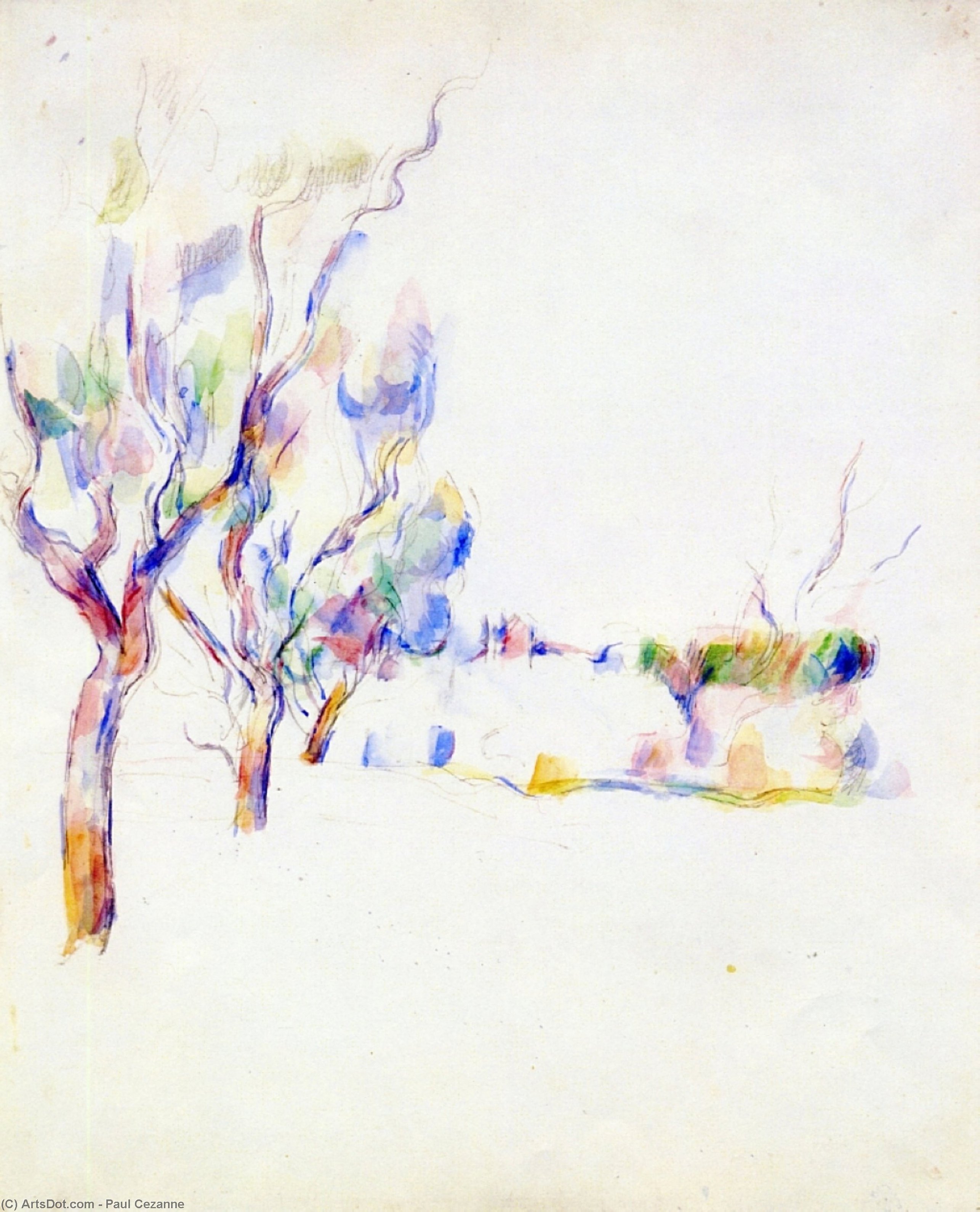
Paul Cézanne's "Almond Trees in Provence," painted in 1900, stands as a cornerstone of Post-Impressionism and a testament to the artist’s unwavering dedication to capturing the essence of nature through innovative artistic vision. More than just a depiction of trees laden with blossoms against a serene azure sky, this watercolor is an exploration of form, color, and perception—a deliberate departure from Impressionistic fleetingness that firmly established Cézanne as a precursor to Cubism and profoundly influenced subsequent generations of artists.
The Painter’s Obsession: Cézanne's Methodical Approach
Cézanne wasn’t interested in replicating visual appearances; he sought to distill the underlying structure of reality onto canvas. This is evident in his meticulous technique—a hallmark of his final period—characterized by thick, impasto brushstrokes that build up layers of pigment to create palpable solidity and dimensionality. Unlike Impressionists who aimed for optical accuracy, Cézanne employed a process akin to sculpting, manipulating color and form to convey not just what he saw but how he *felt* about it. The watercolor medium itself was chosen deliberately; its transparency allowed him to subtly suggest the interplay of light and shadow, enhancing the sense of depth without resorting to traditional perspective techniques. Careful observation of the tree’s contours—repeatedly sketched and studied—became paramount to Cézanne's artistic process.
Provence as Inspiration: Symbolism Rooted in Landscape
The Provençal landscape held a particular fascination for Cézanne, representing more than just scenery; it embodied tranquility, permanence, and the beauty of the natural world. Almond trees, specifically, were chosen as subjects not merely for their visual appeal but also for their symbolic significance—representing fertility, renewal, and resilience. The artist’s deliberate framing of the composition—three prominent almond trees dominating the scene—creates a harmonious balance between organic form and geometric abstraction. This compositional choice reflects Cézanne's broader preoccupation with simplifying complex shapes into fundamental building blocks, anticipating the revolutionary ideas that would soon propel Cubism to prominence.
A Legacy Beyond Impressionism: Cézanne’s Influence on Modern Art
“Almond Trees in Provence” represents a pivotal moment in Cézanne’s artistic evolution and cemented his position as one of the most influential figures in modern art history. His groundbreaking approach challenged conventional notions of representation, paving the way for artists like Picasso and Braque to dismantle perspectival illusion and explore fragmented forms—a stylistic breakthrough that irrevocably altered the landscape of 20th-century painting. The painting’s enduring appeal lies not only in its exquisite beauty but also in its profound intellectual depth—a reminder that art can transcend mere visual pleasure to engage with fundamental questions about perception, form, and the artist's relationship to nature. It continues to inspire artists and collectors alike who appreciate Cézanne’s unwavering commitment to artistic innovation and his enduring legacy as a visionary pioneer.