A Revolutionary Portrait: Exploring Cézanne’s ‘Boy in the Red Vest’
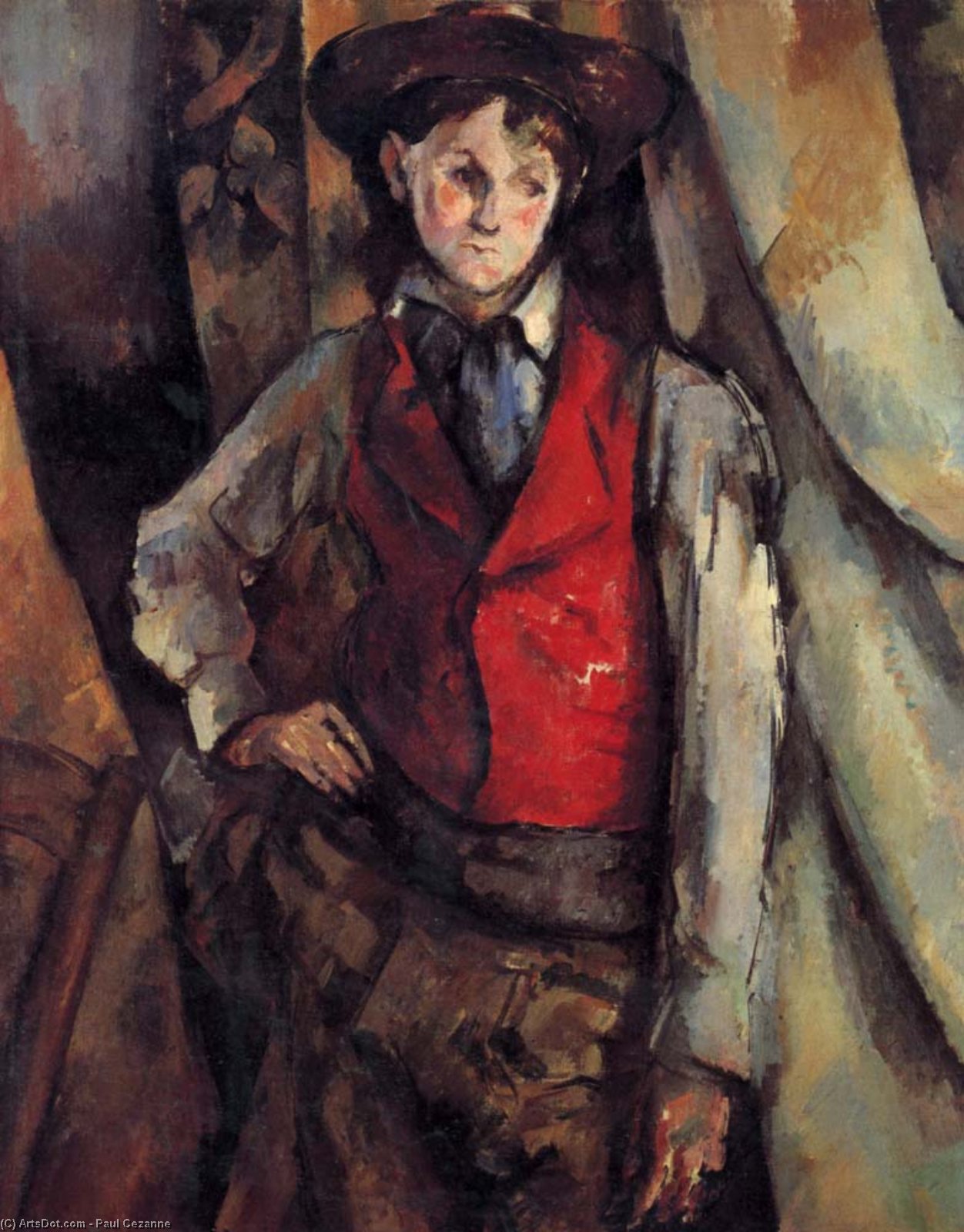
Paul Cézanne’s “Boy in the Red Vest,” painted between 1888 and 1890, stands as a cornerstone of Post-Impressionism—a movement that irrevocably challenged the conventions of its predecessor while simultaneously laying the groundwork for Cubism. More than just a depiction of a young boy, this artwork embodies Cézanne’s relentless pursuit of capturing not merely what is seen but how it feels to perceive the world, cementing his place as one of the most influential artists of the late 19th century.
- Subject Matter: The painting portrays a boy dressed in a traditional Italian vest and cowboy hat—a seemingly simple combination that Cézanne elevates into an exploration of form and gesture. This deliberate choice reflects Cézanne’s fascination with capturing the essence of human presence within its environment.
- Style & Technique: Cézanne employed his signature technique – a method he termed “alla prima”—applying paint directly onto the canvas in a single session, resulting in textured brushstrokes and vibrant colors that prioritize visual sensation over meticulous realism. The dense impasto creates palpable depth and contributes to the painting’s dramatic atmosphere.
- Compositional Dynamics: Cézanne masterfully utilized geometric principles to organize his composition. Three prominent diagonals—the tilt of the boy's head, the angle of the curtain behind him, and the upward slope of the table—converge to create a dynamic structure that draws the viewer’s eye inward, mirroring Cézanne’s belief in representing space as an illusion.
Historical Context & Artistic Significance
Painted during Cézanne's formative years, “Boy in the Red Vest” aligns with his broader artistic project—a rejection of Impressionistic fleetingness and a move toward investigating underlying structures. It’s considered one of four portraits Cézanne undertook of this Italian boy, each serving as a study in posture and spatial relationships. These explorations were crucial to Cézanne's development of his revolutionary approach to painting.
The painting’s placement within the Fondation E.G. Bührle’s collection underscores its importance as an exemplar of Cézanne’s mature style—a style that profoundly impacted subsequent generations of artists. Critics initially dismissed Cézanne's work, labeling it “primitive” and “unfinished,” yet his unwavering conviction in his vision ultimately secured him a revered position within the canon of modern art.
Color Palette & Emotional Resonance
Cézanne’s masterful use of color contributes significantly to the painting’s emotional impact. The dominant hues—deep greens and reds—create a harmonious balance between warmth and coolness, mirroring the boy's melancholic gaze and conveying a sense of quiet contemplation. Cézanne deliberately avoided blending colors seamlessly; instead, he layered them thickly onto the canvas, emphasizing their individual qualities and enhancing the painting’s textural richness.
Provenance & Legacy
Acquired by Ambroise Vollard in 1895, “Boy in the Red Vest” traversed several private collections before finding its home at the Fondation E.G. Bührle following a daring theft and subsequent recovery in Serbia. Its story serves as a testament to Cézanne’s enduring appeal—a painter who dared to challenge artistic conventions and paved the way for groundbreaking innovations that continue to inspire artists today.