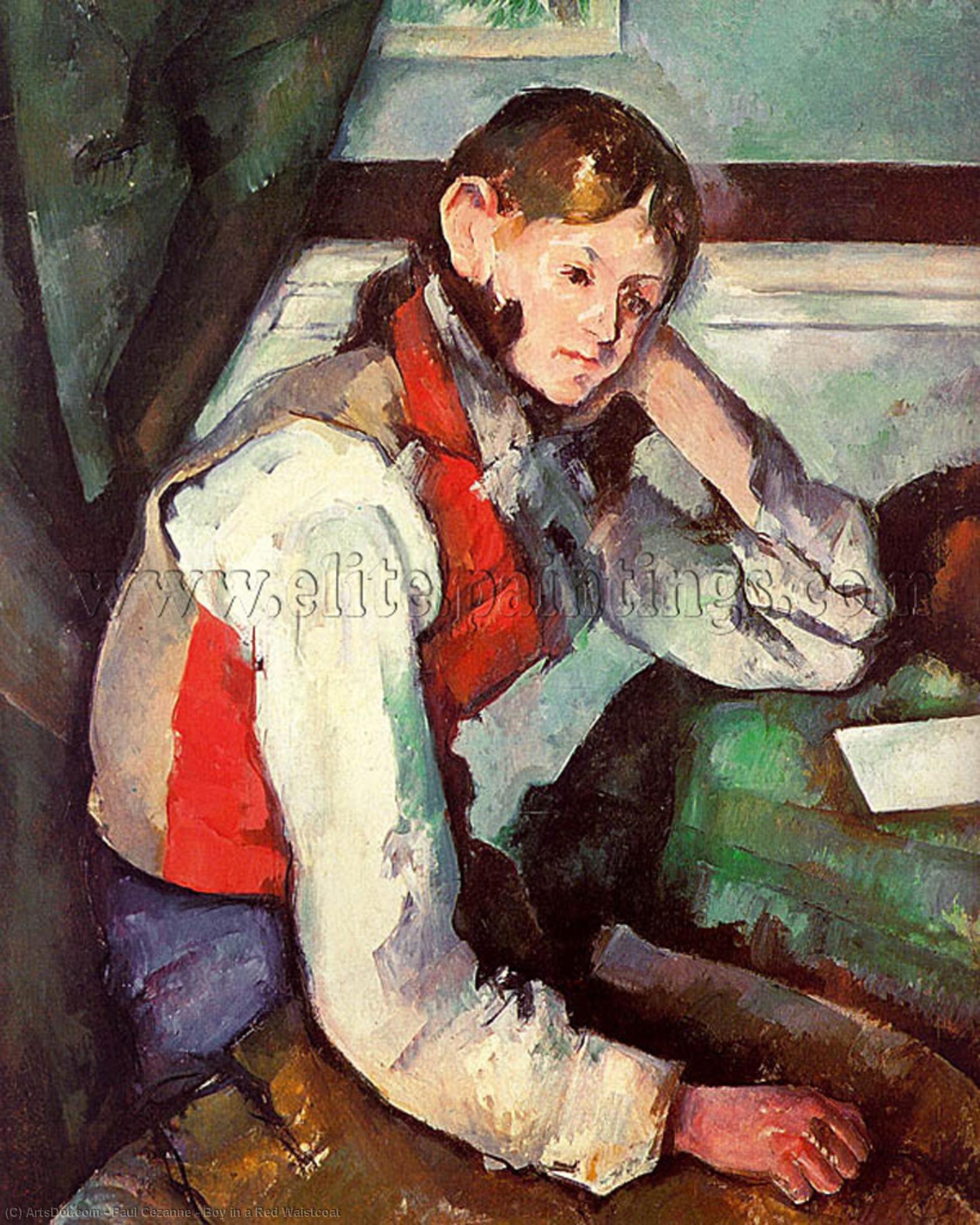
Boy in a Red Waistcoat

Captured in Cézanne’s distinctive Impressionistic style, this poignant portrait depicts a boy absorbed in contemplation amidst a simple dining room setting—a timeless exploration of youth and observation.


Paul Cézanne (1839 - 1906)

Discover Paul Cézanne (1839-1906): Post-Impressionist pioneer bridging Impressionism & Cubism. Explore geometric forms, still lifes & his lasting impact on modern art. #Cezanne #PostImpressionism

A Portrait of Quiet Contemplation: Cézanne’s Boy in a Red Waistcoat

  • Paul Cézanne's “Boy in a Red Waistcoat” transcends mere representation; it embodies the artist’s groundbreaking approach to capturing the essence of human experience. Painted circa 1890-91, this deceptively simple composition reveals layers of artistic innovation that cemented Cézanne’s position as a pivotal figure in the transition from Impressionism to Cubism.
  • The subject matter itself—a young boy seated on the floor—is deliberately understated. Cézanne eschewed dramatic poses or theatrical expressions, prioritizing instead an intimate portrayal of stillness and introspection. This deliberate restraint speaks volumes about Cézanne’s belief that art should strive to convey not just what is seen but also what is felt.

Stylistic Innovation: Cézanne's Fragmented Vision

  • Cézanne’s technique distinguishes him from his Impressionist predecessors. Rather than attempting to capture fleeting light and color, he employed a method of analyzing objects into geometric forms—planes—that he then rebuilt on the canvas with painstaking accuracy. This process, often described as “analytical Cubism,” anticipates the radical stylistic developments that would soon characterize Picasso and Braque’s work.
  • Notice how Cézanne renders the boy's torso and limbs not as smooth curves but as interlocking planes of color and texture. The red waistcoat itself is rendered with a textured surface, subtly hinting at the materiality of the garment—a characteristic feature of Cézanne’s oeuvre.

Historical Context: Cézanne Amidst Artistic Change

  • “Boy in a Red Waistcoat” emerged during a period of intense artistic experimentation. Impressionism, championed by Monet and Renoir, had dominated the art world for decades, prioritizing optical perception and capturing atmospheric effects. However, Cézanne’s unwavering commitment to form challenged these conventions.
  • He was part of a group of artists known as Les Anthotypes, who sought to explore new visual languages beyond Impressionism's limitations. This collective embraced Cézanne’s pioneering approach, recognizing its potential to revolutionize artistic expression and paving the way for subsequent movements like Cubism.

Symbolic Resonance: Quietude and Observation

  • The boy's posture—head resting in hand—suggests a state of profound contemplation. Cézanne’s deliberate choice to depict this moment of quiet repose speaks to the artist’s fascination with capturing inner psychological states.
  • Furthermore, the inclusion of books on the table symbolizes knowledge and intellectual curiosity – values that resonated deeply within Cézanne's worldview. The boy’s gaze directed off-camera invites viewers to consider what he might be perceiving—a subtle reminder that art can inspire us to look beyond the surface and engage in deeper reflection.

Emotional Impact: A Timeless Portrait of Innocence

  • "Boy in a Red Waistcoat" possesses an enduring emotional power. Cézanne’s masterful rendering of stillness and observation captures the essence of human vulnerability and invites viewers to contemplate themes of childhood, introspection, and the beauty of simplicity.
  • A high-quality reproduction allows admirers to experience this artwork's subtle nuances—the textured surface of the waistcoat, the muted palette—bringing Cézanne’s vision into a contemporary home or studio. It serves as a testament to the artist’s ability to distill complex ideas into a deceptively elegant image.