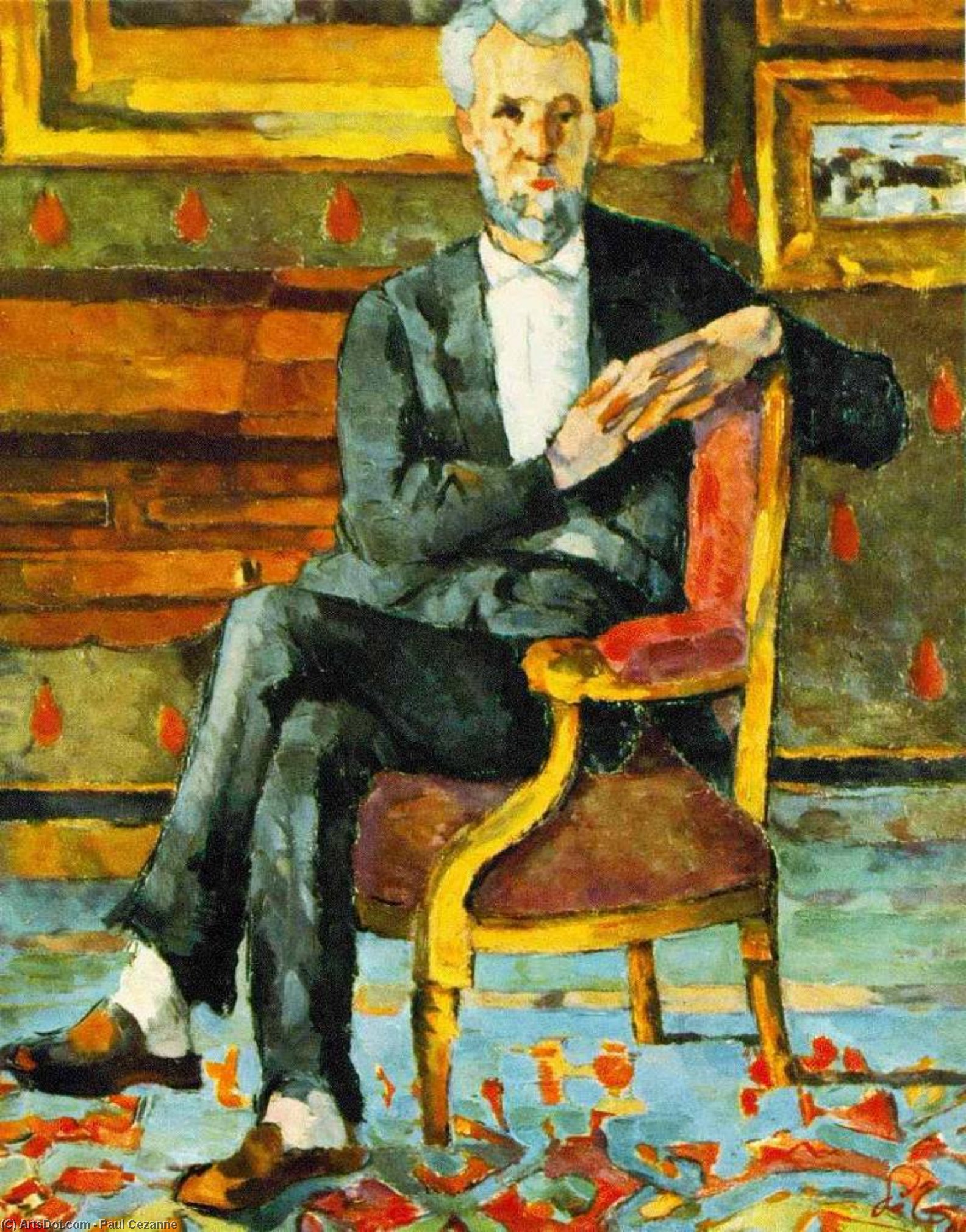
A Window into Modernity: Paul Cézanne’s *Chocquet Seated*
Paul Cézanne's *Chocquet Seated*, painted in 1877, is far more than a portrait; it represents a pivotal moment in the evolution of art, bridging the gap between Impressionism and the burgeoning modern movements that would define the 20th century. This work offers a compelling glimpse into Cézanne’s developing style and his profound impact on subsequent generations of artists.
The Subject & The Sitters Story
The painting depicts Gustave Chocquet, a Parisian postal worker and dedicated art collector who became a close friend and early champion of Cézanne. Chocquet was instrumental in introducing Cézanne to other avant-garde figures and providing crucial support during the artist’s formative years. He is portrayed seated comfortably in an armchair, his gaze directed slightly off-canvas, suggesting a contemplative inner life. The intimacy of the pose and setting hints at the close relationship between artist and sitter.
Deconstructing Tradition: Style & Technique
*Chocquet Seated* exemplifies Cézanne’s departure from traditional academic painting. Instead of striving for photographic realism, he prioritizes *structure and form*. Notice how Chocquet's figure isn't merely rendered; it is constructed through carefully considered planes of color and bold brushstrokes. The background, rather than receding into the distance, feels compressed and actively participates in the composition. Cézanne’s use of color is equally innovative – a rich palette dominated by reds, greens, and browns, applied with visible texture and an emphasis on the materiality of paint itself. The impasto technique—thickly applied paint—creates a tactile surface that invites close inspection.
Historical Context: The Dawn of Post-Impressionism
Painted during a period of significant artistic experimentation, *Chocquet Seated* reflects Cézanne’s response to Impressionism while simultaneously forging a new path. While he admired the Impressionists' focus on light and color, Cézanne sought to imbue his work with greater solidity and permanence. He rejected the fleeting effects of Impressionism in favor of a more enduring representation of form. This pursuit laid the groundwork for Cubism and other abstract movements that would follow.
Symbolism & Emotional Resonance
The symbolism within *Chocquet Seated* is subtle yet powerful. The armchair suggests comfort, stability, and perhaps the sitter’s bourgeois status. However, Chocquet's pensive expression introduces a note of melancholy or introspection. The painting isn’t simply about *what* is depicted but *how* it is perceived – Cézanne invites us to consider the psychological state of his subject and the very nature of representation itself.
Impact & Legacy
Cézanne's influence on modern art cannot be overstated. Artists like Pablo Picasso and Henri Matisse acknowledged him as a foundational figure, recognizing his revolutionary approach to form, color, and composition. *Chocquet Seated* stands as a testament to Cézanne’s genius – a work that continues to inspire and challenge viewers today.
- Key Characteristics: Bold brushwork, flattened perspective, emphasis on structure, rich color palette.
- Artistic Movement: Post-Impressionism
- Emotional Impact: Contemplative, intimate, subtly melancholic.
- Historical Significance: A pivotal work in the transition from Impressionism to modern art.
Owning a reproduction of *Chocquet Seated* is an opportunity to bring a piece of art history into your space, celebrating Cézanne’s enduring legacy and his profound contribution to the world of painting.