A Moment of Quietude: Paul Cézanne’s “Woman with a Coffee Pot”
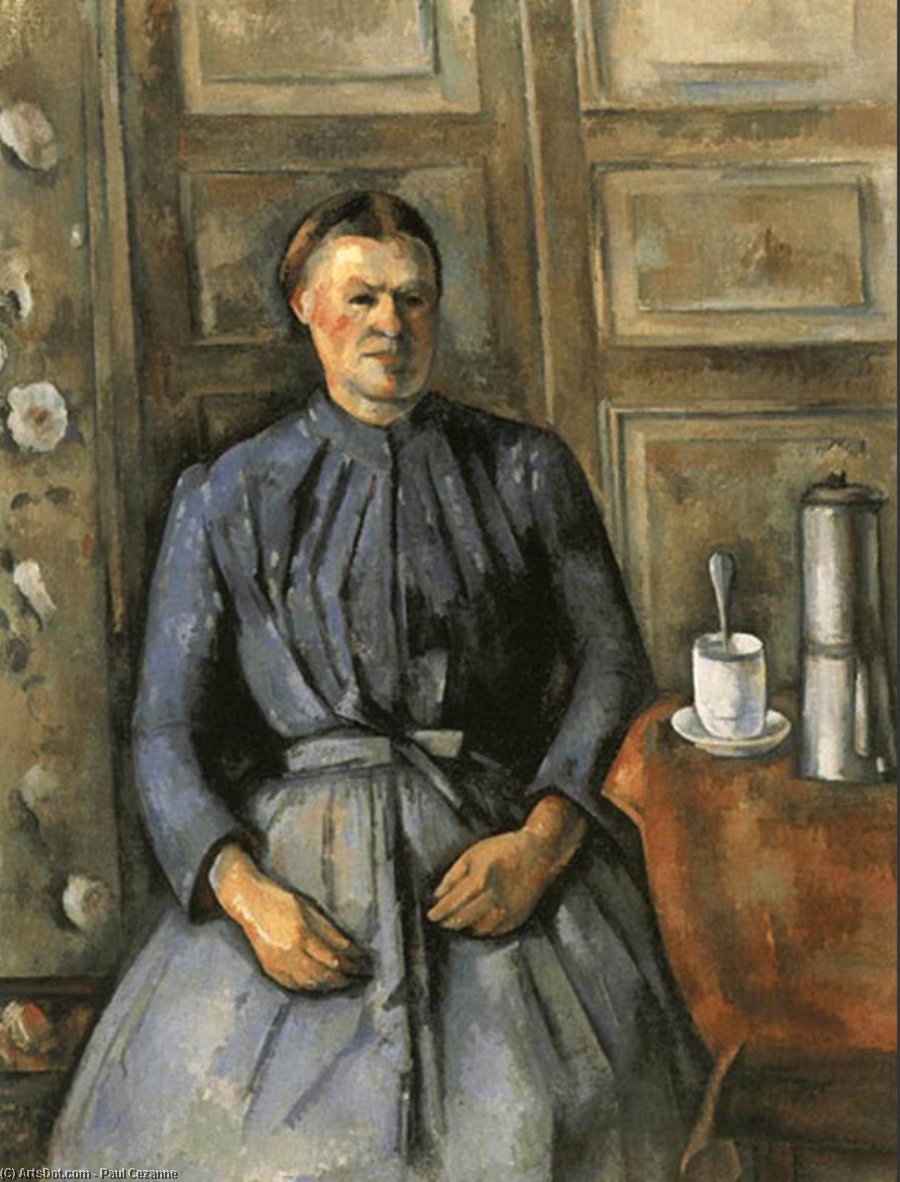
Paul Cézanne's "Woman with a Coffee Pot," painted in 1895, isn’t merely a portrait; it’s a carefully constructed tableau vivant—a snapshot of domesticity imbued with an almost palpable sense of contemplation. More than just depicting a woman enjoying her morning coffee, the painting invites us into a private world, a space where time seems to slow and the simple act of drinking becomes a profound experience. Cézanne, already pushing against the boundaries of Impressionism, here lays the groundwork for what would become Cubism, employing geometric forms and a deliberate flattening of perspective to capture not just appearance but the very essence of his subject.
The scene unfolds within a modestly furnished room—a dining table dominates the space, its surface reflecting the muted light. A simple chair offers a place to rest, while a vase in the background introduces a touch of color and an element of still life, subtly anchoring the composition. The woman herself is presented with remarkable restraint; her features are not idealized but rendered with a quiet dignity, her gaze directed slightly off-camera, suggesting a private thought or memory. Her hands, roughened by work, rest gently on the table, holding a delicate cup and spoon—objects that speak volumes about her life and routine.
Composition and Cézanne’s Revolutionary Approach
Cézanne's genius lies in his masterful manipulation of form. He abandons traditional perspective, creating an illusion of depth through the strategic placement of objects and the use of overlapping planes. The table, for instance, isn’t depicted as a flat surface but rather as a series of interlocking rectangles, echoing the geometric structures that would later define Cubism. This deliberate simplification of space forces the viewer to actively engage with the painting, reconstructing the scene in their own minds.
The color palette is deliberately restrained—a blend of browns, blues, and greens—creating a sense of warmth and intimacy. Cézanne’s brushstrokes are thick and visible, adding texture and dynamism to the surface of the canvas. He employs a technique known as “alla prima,” working directly onto the wet paint without layering or blending, resulting in a vibrant, almost tactile quality. The interplay of light and shadow further enhances the sense of depth and volume, drawing our attention to the key elements of the composition.
Symbolism and the Portrait of Everyday Life
Beyond its formal innovations, “Woman with a Coffee Pot” is rich in symbolic meaning. The coffee pot itself represents not just a beverage but also a ritual—a moment of quiet reflection and connection to one’s surroundings. The woman's solitary activity speaks to the isolation and introspection that often accompany domestic life. Yet, there’s no sense of melancholy or loneliness; rather, her posture suggests a peaceful acceptance of her circumstances.
Cézanne was deeply interested in capturing the essence of ordinary subjects—landscapes, still lifes, and portraits of his family and friends. He believed that art should reflect the realities of everyday life, not simply depict idealized beauty. “Woman with a Coffee Pot” exemplifies this philosophy, offering us a glimpse into the private world of a woman engaged in a simple, yet profoundly meaningful activity.
A Legacy of Innovation
“Woman with a Coffee Pot” stands as a pivotal work in Cézanne’s artistic development and a bridge between Impressionism and modern art. His exploration of form, color, and perspective paved the way for subsequent generations of artists, including Picasso and Braque, who would build upon his innovations to create Cubism. Reproductions of this captivating painting continue to resonate with viewers today, offering a timeless meditation on beauty, solitude, and the quiet moments that shape our lives.
High-quality reproductions of “Woman with a Coffee Pot” are available through ArtsDot.com, meticulously crafted by skilled artists using archival materials to faithfully capture the artist’s original vision. Consider adding this evocative piece to your collection or incorporating its serene atmosphere into your interior design—a testament to Cézanne's enduring legacy.