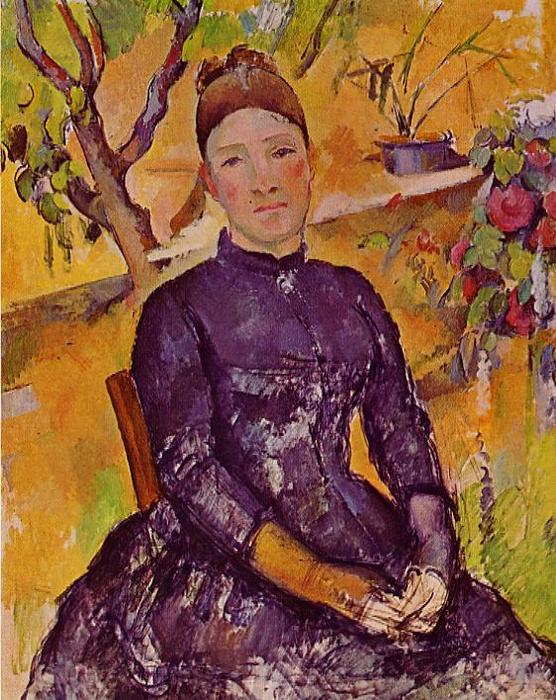
A Window into Intimacy: Exploring Cézanne’s *Madame Cézanne in the Conservatory*
Paul Cézanne's 1890 masterpiece, *Madame Cézanne in the Conservatory*, offers a profoundly intimate portrait not merely of his wife, Hortense Fiquet, but also of Cézanne’s revolutionary artistic approach. Housed at the Metropolitan Museum of Art, this painting transcends simple representation, becoming a cornerstone of Post-Impressionism and a testament to the evolving language of modern art.
The Subject: A Portrait of Domesticity
At first glance, we encounter Hortense, elegantly dressed in a dark dress accented by a yellow belt and brown hat, seated comfortably within a lush conservatory. The setting is deliberately chosen – a space brimming with life, yet contained and private. This isn’t a grand societal portrait; it's an *intimate* glimpse into the domestic sphere, a quiet moment captured with remarkable sensitivity. Hortense’s expression is reserved, her gaze directed slightly downward, conveying a sense of thoughtful contemplation rather than outward engagement.
Deconstructing Form: Cézanne’s Innovative Technique
Cézanne deliberately moved away from the fleeting impressions favored by earlier Impressionists. Instead, he sought to understand and represent the *underlying structure* of his subjects. In this painting, observe how forms are built up through carefully considered brushstrokes – not blended seamlessly, but rather applied in distinct patches of color. This technique, while seemingly unconventional at the time, allows Cézanne to convey a sense of solidity and volume. He’s less concerned with mimicking reality than with constructing it anew on the canvas.
The geometric underpinnings are subtly present – notice how shapes interlock and relate to one another, creating a harmonious yet dynamic composition.
Post-Impressionism: A Bridge to Modernity
*Madame Cézanne in the Conservatory* is a quintessential example of Post-Impressionism. This movement rejected the purely optical focus of Impressionism, embracing instead subjective vision and emotional expression. Cézanne, along with artists like Van Gogh and Gauguin, paved the way for 20th-century art movements such as Cubism and Fauvism.
He wasn’t simply painting what he saw; he was exploring how we see. The bold use of color, the emphasis on form, and the rejection of traditional perspective all contribute to this groundbreaking approach.
Symbolism & Emotional Resonance
The conservatory itself is rich in symbolism. Its abundance of plant life suggests growth, vitality, and a connection to nature – themes frequently explored by Cézanne. However, the enclosed space also hints at a sense of containment or perhaps even isolation. The painting’s subdued color palette contributes to its overall mood of quiet introspection. It's not a boisterous celebration of life; it’s a more nuanced and contemplative exploration of domesticity and the complexities of human relationships.
The contrast between the vibrant greenery and Hortense’s somber attire adds another layer of emotional depth.
A Lasting Legacy: Influence & Inspiration
Cézanne's influence on subsequent generations of artists is immeasurable. His emphasis on form, structure, and subjective vision fundamentally altered the course of art history. *Madame Cézanne in the Conservatory* remains a powerful example of his genius – a painting that continues to inspire awe and provoke thought. For those seeking to bring a touch of artistic sophistication to their spaces, a reproduction of this work offers not only aesthetic beauty but also a connection to one of the most important figures in modern art.
- Ideal for: Collectors appreciating Post-Impressionism, interior designers seeking sophisticated artwork, and art enthusiasts desiring a piece with historical significance.
- Color Palette: Dominated by muted greens, browns, blacks, and subtle yellows – creating a calming yet engaging atmosphere.
- Style: Post-Impressionism, characterized by bold brushstrokes, geometric forms, and subjective representation.