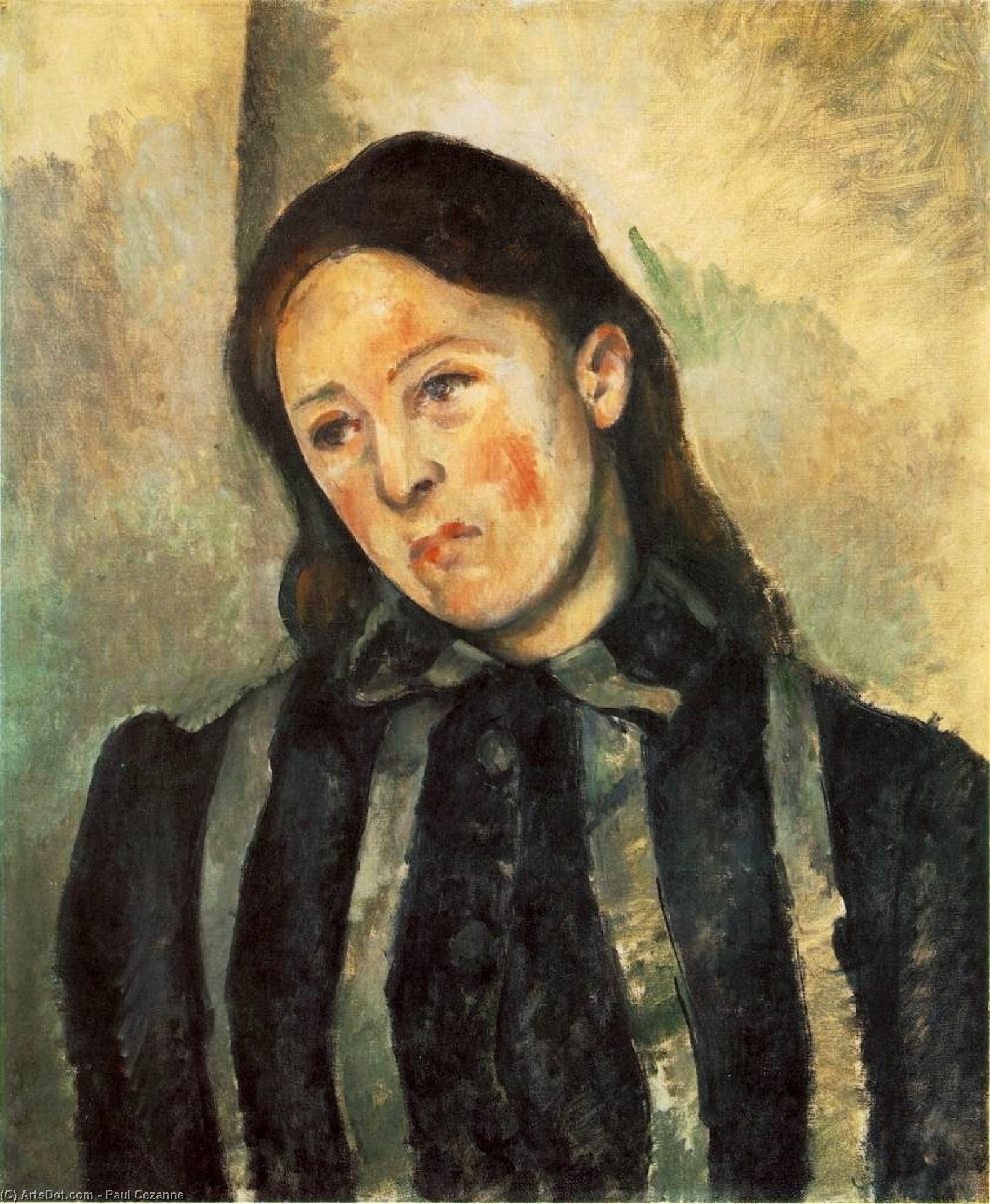
A Window into Intimacy: Exploring Cézanne’s *Madame Cézanne with Unbound Hair*
Paul Cézanne's 1890 portrait of his wife, Hortense Fiquet, is far more than a likeness; it’s a deeply psychological study rendered with the burgeoning techniques that would revolutionize modern art. This painting, currently residing at the Philadelphia Museum of Art, offers a compelling glimpse into both the artist’s personal life and the evolving landscape of Post-Impressionism.
The Subject: Hortense – Muse and Companion
Hortense Fiquet was Cézanne's lifelong companion and frequent model. Unlike many portraits of women from this era, which often emphasized societal expectations or idealized beauty, *Madame Cézanne with Unbound Hair* presents a strikingly honest portrayal. Her unbound hair—a deliberate choice by the artist—suggests vulnerability and intimacy. Her gaze is averted, her expression subtly melancholic, inviting viewers to contemplate her inner world. This isn’t a woman *on display*; it's a woman *being seen*.
Deconstructing Form: Style and Technique
Cézanne’s approach in this work exemplifies his departure from traditional Impressionism. While he retains the vibrant color palette, he moves beyond merely capturing light to focus on underlying structure. Notice how Cézanne builds form through carefully considered brushstrokes – not blending them seamlessly, but allowing them to exist as distinct planes of color. This technique anticipates Cubism’s fragmentation of form and emphasizes the two-dimensionality of the canvas. The oil paint is applied with a rich texture, adding depth and physicality to the image. The background, though simple—a wall adorned with a vase and plant—is not merely decorative; it serves as a grounding element that enhances the focus on Hortense’s figure.
Post-Impressionism: A Bridge to Modernity
Painted during the height of Post-Impressionism (roughly 1886-1905), this work embodies the movement's rejection of Impressionism’s purely optical concerns. Artists like Cézanne, Van Gogh, and Gauguin sought to express subjective emotions and ideas through symbolic color, distorted forms, and personal expression. Cézanne specifically aimed to create a more solid and enduring form of art—one that moved beyond fleeting impressions towards an exploration of fundamental geometric structures.
Symbolism & Emotional Resonance
The seemingly simple composition is imbued with subtle symbolism. The unbound hair can be interpreted as a symbol of freedom, but also perhaps of vulnerability or a quiet resignation. The muted color palette and the subject’s introspective expression contribute to an overall mood of quiet contemplation. Cézanne doesn't offer easy answers; he presents a complex emotional landscape that invites individual interpretation. The painting evokes a sense of intimacy and psychological depth, making it profoundly moving.
Cézanne’s Legacy: A Pioneer of Modern Art
Paul Cézanne is widely considered a pivotal figure in the transition from 19th-century Impressionism to 20th-century Cubism. His innovative use of form, color, and perspective profoundly influenced generations of artists, including Picasso and Braque. His emphasis on underlying structure paved the way for abstract art and fundamentally altered our understanding of representation.
Artwork Details
- Artist: Paul Cézanne
- Title: Madame Cézanne with Unbound Hair
- Year: 1890
- Museum: Philadelphia Museum of Art
- Style: Post-Impressionism
- Medium: Oil on Canvas
This painting is a testament to Cézanne’s genius – his ability to capture not just what he saw, but how he felt. It remains a powerful and enduring work of art that continues to resonate with audiences today.