Paul Cézanne (born Aix-en-Provence in 1839, died 1906) revolutionized artistic expression by bridging Impressionism and Cubism. Despite initial skepticism from critics and periods of self-doubt, his unwavering dedication to painting ultimately secured him a lasting legacy as one of the most influential artists of the late nineteenth century.
A Portrait Steeped in Pastoral Echoes: Cézanne’s Man in a Blue Smock
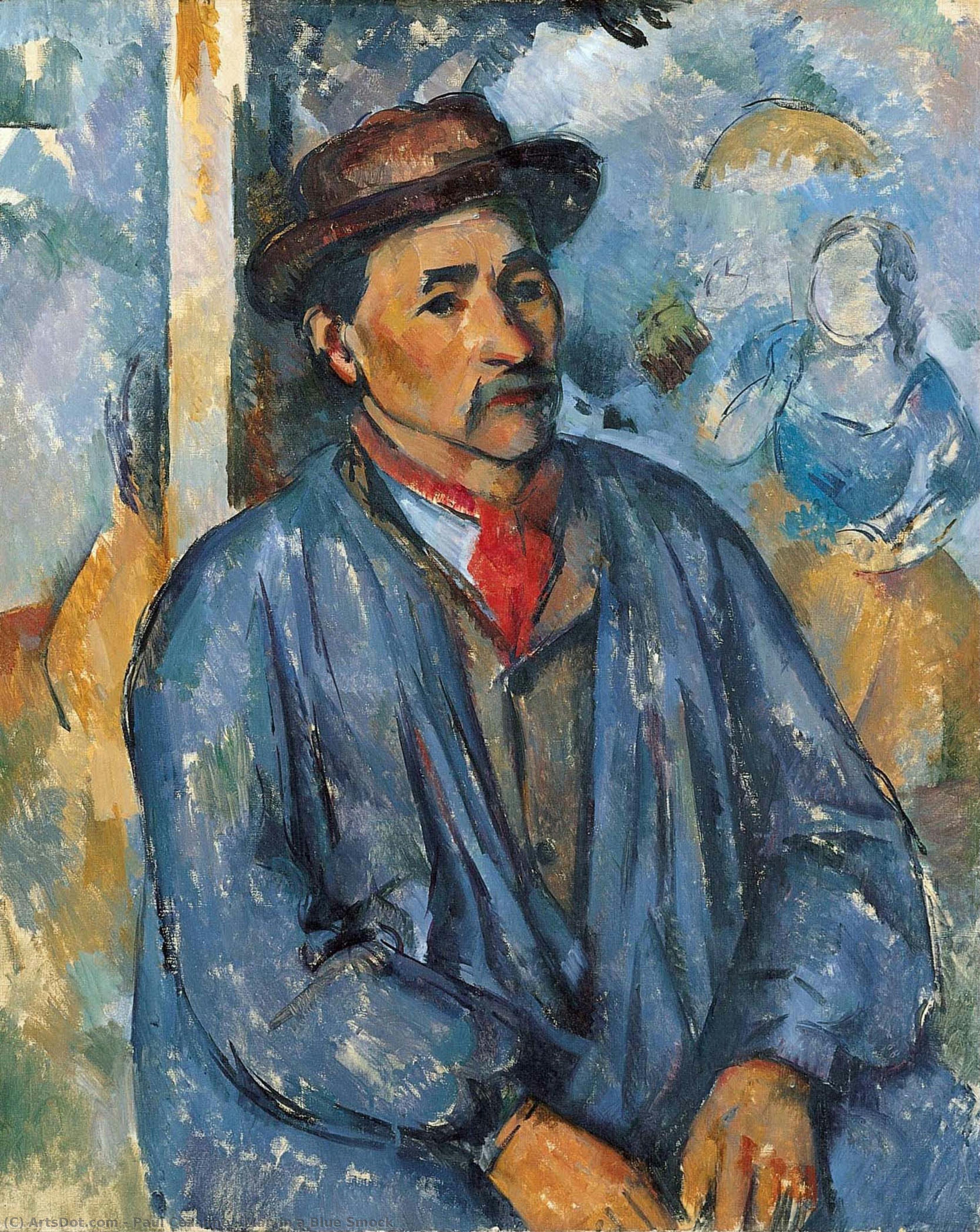
Paul Cézanne's "Man in a Blue Smock," painted in 1896, stands as a pivotal work demonstrating the artist’s unwavering fascination with capturing the essence of rural life and subtly exploring connections between artistic beginnings and mature expression. More than just a depiction of an individual, it embodies Cézanne’s revolutionary vision—a deliberate departure from Impressionistic fleetingness toward a more enduring representation of form and space that would profoundly influence subsequent generations of artists.
- Subject Matter: The portrait centers on a solitary man dressed in a simple blue smock, his gaze directed towards the horizon. This unassuming pose contrasts sharply with the opulent backdrop—a folding screen featuring elegant figures reminiscent of eighteenth-century tapestry scenes. Notably, this screen was Cézanne’s very first artistic endeavor, marking an early exploration of decorative art and establishing a stylistic precedent for his future works.
- Style & Technique: Cézanne employed his characteristic method – reductive simplification—to distill the figure into geometric forms, mirroring the underlying structure of the landscape behind him. Thick impasto brushstrokes dominate the canvas, conveying texture and solidity while simultaneously flattening perspective, a technique that anticipates Cubism’s fragmentation of visual reality. The deliberate use of color is restrained, prioritizing tonal harmonies that emphasize mood and atmosphere rather than capturing precise optical impressions.
- Historical Context: Cézanne's artistic trajectory unfolded against the backdrop of Impressionism’s waning influence and the burgeoning excitement surrounding Post-Impressionist experimentation. Following a rejection from the Salon of 1870—a setback that momentarily halted his career—Cézanne rediscovered inspiration in the work of Vincent van Gogh, whose fervent enthusiasm rekindled his passion for portraiture. This revival is palpable in “Man in a Blue Smock,” suggesting a deliberate revisiting of foundational artistic concerns.
- Symbolism & Interpretation: The inclusion of the folding screen introduces a layer of symbolic richness. Its pastoral imagery—figures engaged in leisure—represents an idealized vision of rural life, juxtaposed against the solitary worker depicted in the portrait. This juxtaposition invites contemplation on themes of gender roles, social distinctions, and perhaps most importantly, the artist’s own artistic evolution. Cézanne's early explorations of decorative art foreshadowed his later groundbreaking contributions to abstraction, demonstrating a continuous pursuit of expressive form.
- Emotional Impact: “Man in a Blue Smock” transcends mere visual representation; it communicates a profound sense of stillness and contemplation. The man’s averted gaze speaks volumes about inner reflection and invites viewers to consider the complexities of human experience. Cézanne's masterful handling of color and texture contributes to an emotional resonance that lingers long after viewing, cementing its place as a cornerstone of modern art history.
This artwork reproduction offers exceptional detail and vibrancy, faithfully capturing Cézanne’s artistic vision—a testament to the enduring power of observation and the transformative potential of stylistic innovation. It's ideal for enriching any interior space or inspiring collectors seeking pieces that embody both intellectual depth and aesthetic beauty.