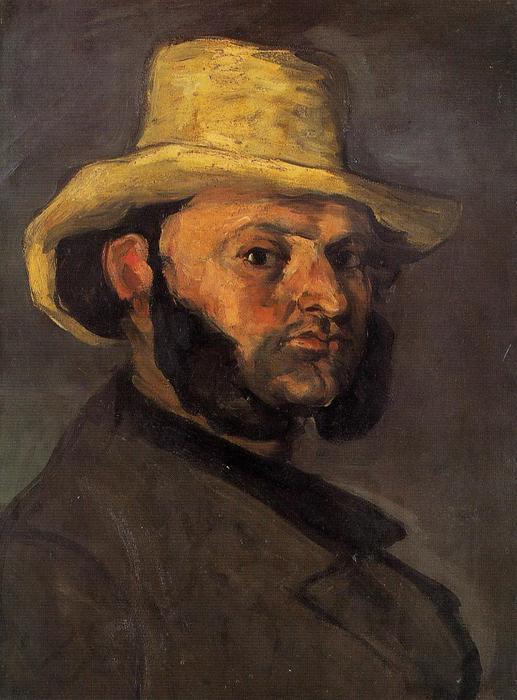
Experience Paul Cézanne's 'Man in a Straw Hat' (1871). A captivating Post-Impressionist portrait showcasing bold brushstrokes and capturing the essence of a timeless subject.
Discover Paul Cézanne (1839-1906): Post-Impressionist pioneer bridging Impressionism & Cubism. Explore geometric forms, still lifes & his lasting impact on modern art. #Cezanne #PostImpressionism
Explore The Metropolitan Museum of Art: 5,000 years of art from around the world! Discover masterpieces, ancient artifacts & immersive exhibitions – a global art destination awaits.
A Moment Frozen in Time: Paul Cézanne’s “Man in a Straw Hat”
Paul Cézanne's "Man in a Straw Hat," painted in 1871, isn’t merely a portrait; it’s a carefully constructed distillation of observation and emotion. Emerging from the vibrant, fleeting world of Impressionism, Cézanne began to subtly shift towards a more structured, geometric approach, laying the groundwork for movements like Cubism that would follow. This particular work embodies this transition beautifully, capturing not just a likeness but an essence—a quiet contemplation held within the simple act of being. The painting’s power lies in its ability to evoke a sense of timelessness, inviting us into a private moment observed by the artist.
The Post-Impressionist Palette and Technique
Cézanne's style at this period is characterized by a deliberate departure from Impressionism’s emphasis on capturing immediate visual effects. He wasn’t interested in replicating the shimmering light of a summer afternoon; instead, he sought to represent the underlying structure of his subject – the solidity of the man’s form, the weight of his hat, and the very essence of the scene. This is evident in his use of thick, broken brushstrokes, applied with a tactile energy that builds up layers of color and texture on the canvas. Notice how he doesn't blend colors smoothly; rather, he juxtaposes them, creating a vibrant, almost sculptural effect. The palette itself is muted – earthy browns, deep greens, and subtle blues – contributing to the painting’s sense of quiet dignity and grounding it in a specific time and place. Cézanne employed an oil on canvas medium, allowing for rich color saturation and textural depth.
A Portrait of Character: Symbolism and Context
The subject himself is deliberately ambiguous. The man, identified as Gustave Valabregue, is positioned slightly off-center, his head turned towards the viewer with a direct gaze that feels both inquisitive and reserved. His straw hat, a ubiquitous symbol of summer leisure in 19th-century France, casts a shadow across his face, partially obscuring his features and adding an element of mystery. The background, rendered in broad, atmospheric strokes, suggests a rural setting – perhaps a garden or a shaded lane – further enhancing the painting’s sense of tranquility and timelessness. Interestingly, this period coincided with the rise of Parisian fashion trends, where straw hats were increasingly popular among men, but their use was often viewed as slightly déclassé. Cézanne's choice to depict a man wearing one speaks volumes about his artistic sensibility – he elevates an everyday object into a subject worthy of serious contemplation.
The Legacy and Reproduction
“Man in a Straw Hat” is considered a pivotal work in Cézanne’s development, marking a crucial step towards his later, more geometric style. It profoundly influenced generations of artists, including Picasso and Matisse, who recognized in it a revolutionary approach to representation. Today, the painting resides at the Metropolitan Museum of Art in New York City, a testament to its enduring artistic merit. If you’re seeking to bring this captivating image into your home or office, a meticulously crafted oil painting reproduction offers an exceptional way to experience Cézanne's vision. These reproductions capture not only the visual details but also the emotional depth and textural richness of the original, allowing you to appreciate the artist’s genius in a tangible way. Consider a handmade reproduction – a testament to artistry itself—to truly connect with this iconic work.