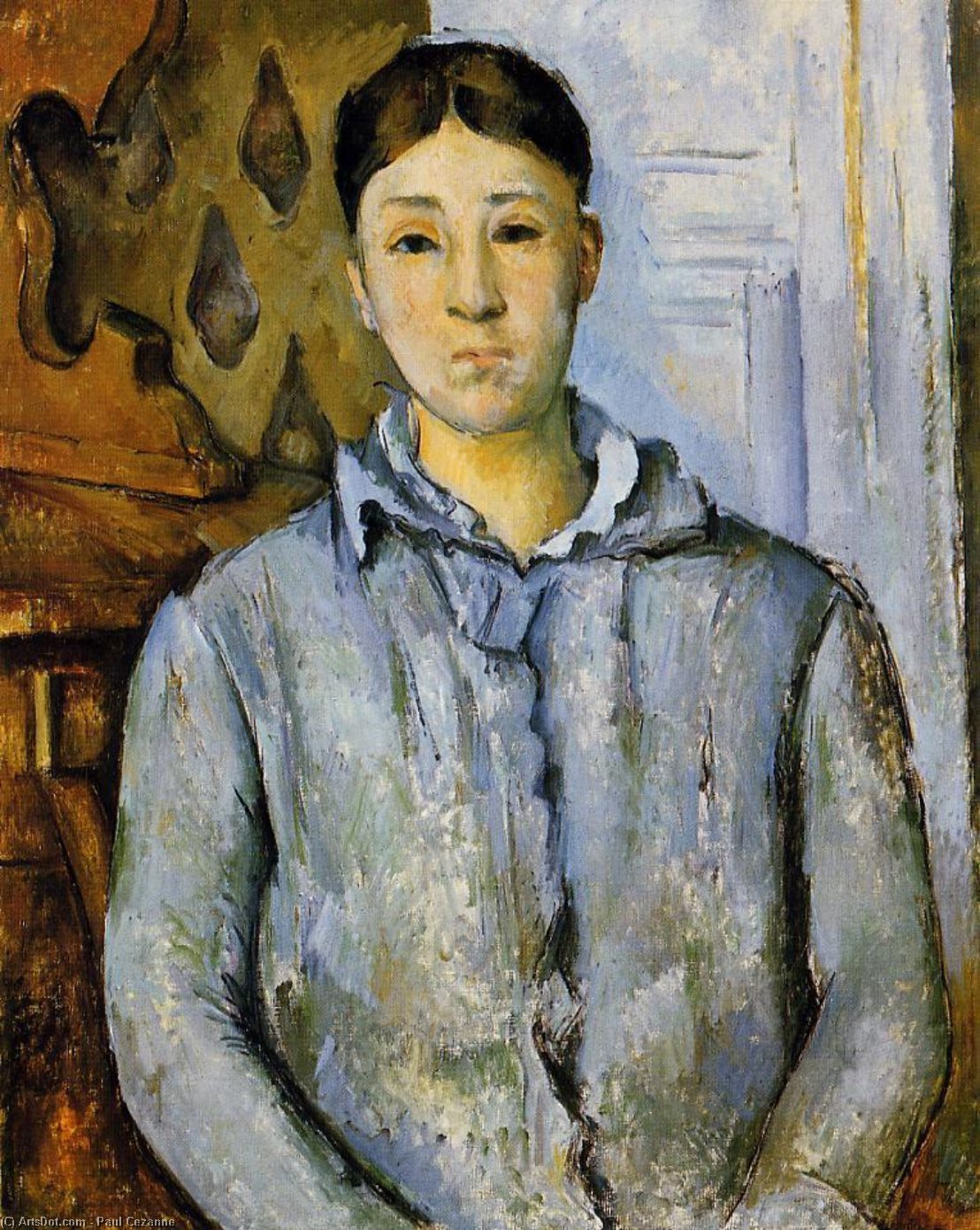
Portrait of Madame Cézanne: A Window Into Post-Impressionist Emotion
Paul Cézanne’s *Portrait of Madame Cézanne*, painted in 1890, transcends mere representation; it embodies the very essence of Post-Impressionism—a movement that sought to liberate painting from the constraints of optical realism and delve into subjective experience. Currently residing at the Museum of Fine Arts, Houston, this canvas offers a profound glimpse into Cézanne’s artistic vision and his enduring influence on subsequent generations of artists. Measuring 47 x 39 cm (approximately 18 ½ x 15 ¾ inches), it exemplifies Cézanne's revolutionary approach to capturing the inner life of his subjects through geometric forms and simplified brushstrokes—a technique that fundamentally reshaped the landscape of modern art.
The Artist’s Vision: Beyond Surface Appearance
Paul Cézanne, born in Aix-en-Provence in 1839, stands as a pivotal figure in bridging the gap between Impressionism and Cubism. Influenced by Romanticism and Realism initially—evident in his monumental murals at Jas de Bouffan—he swiftly rejected these styles for a path of independent exploration. Cézanne’s gaze was firmly fixed on capturing not just what he saw, but how he *felt*. He meticulously scrutinized Impressionist techniques, recognizing their limitations in conveying emotional depth and psychological nuance. This conviction fueled his determination to forge a new aesthetic language—one rooted in solidity, structure, and the expressive power of color.
Compositional Innovation: Spatial Depth and Geometric Forms
The painting’s composition is deceptively simple yet remarkably sophisticated. Cézanne depicts Hortense Fiquet, his wife, seated with her long hair cascading over her shoulders against a backdrop of two chairs—one positioned behind her and another slightly further back. This arrangement isn't merely decorative; it serves as a deliberate device for creating spatial depth and conveying a sense of equilibrium. Cézanne’s masterful use of perspective—though subtly rendered—guides the viewer’s eye across the canvas, establishing a harmonious relationship between foreground and background. Furthermore, he employs geometric forms—circles, squares, and rectangles—to reduce naturalistic detail and emphasize structural elements, mirroring his broader preoccupation with simplifying nature into its fundamental building blocks.
Artistic Significance: A Legacy of Bold Color and Texture
The
Portrait of Madame Cézanne’s bold brushstrokes and vibrant hues—primarily blues and yellows—are characteristic of Cézanne's distinctive style. Unlike Impressionists who prioritized capturing fleeting impressions of light and color, Cézanne sought to imbue his canvases with emotional resonance through deliberate chromatic choices. The textured surface of the paint—created by applying thick impasto—adds physicality to the image, conveying a palpable sense of presence and inviting contemplation. This technique reflects Cézanne’s belief that painting should strive for an illusion of reality that transcends mere visual perception.
Historical Context: Shaping Modern Art
The
Portrait of Madame Cézanne stands as a testament to the transformative forces reshaping European art at the turn of the century. Cézanne’s pioneering explorations paved the way for Cubism—a radical movement spearheaded by Picasso and Braque—which further challenged conventional notions of representation and embraced fragmentation as a means of conveying multiple perspectives simultaneously. His influence extends far beyond Cubism, inspiring artists across disciplines to reconsider the role of form and color in artistic expression.
Exploring Cézanne’s Oeuvre: Reproductions Available at ArtsDot
For those captivated by Cézanne's groundbreaking vision, ArtsDot offers exquisite handmade oil painting reproductions of his iconic works—including *Portrait of Madame Cézanne* itself. These meticulously crafted reproductions capture the artist’s masterful technique and vibrant palette, allowing art enthusiasts to experience the beauty and emotional depth of Cézanne’s oeuvre in their own homes. You can find high-quality prints and canvases at
ArtsDot.