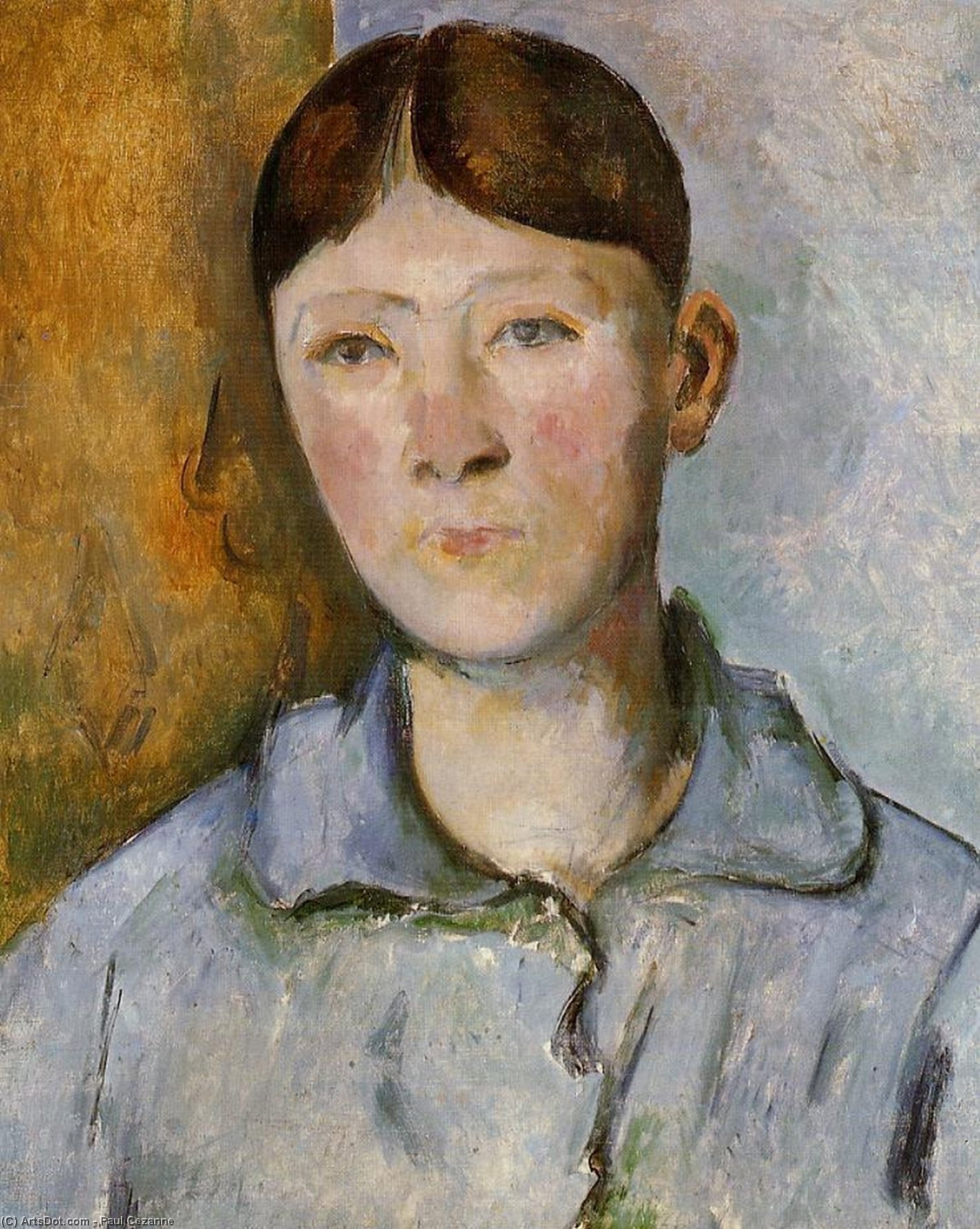
Portrait of Madame Cézanne: A Window Into Impressionistic Reflection
Paul Cézanne’s “Portrait of Madame Cézanne with Loosened Hair,” painted in 1885, stands as a cornerstone of Post-Impressionism and a poignant glimpse into the artist's personal life. More than just a likeness of Hortense Fiquet, Cézanne’s wife, this painting embodies his revolutionary approach to capturing emotion and form—a departure from the fleeting impressions favored by Impressionists like Monet and Renoir.
- Subject Matter: The portrait depicts Hortense Fiquet, Cézanne's beloved companion. Her gaze is direct yet melancholic, conveying a profound introspection that invites contemplation about inner life and unspoken feelings.
- Style & Technique: Cézanne’s distinctive style—characterized by geometric simplification and flattened planes of color—is evident throughout the canvas. He eschewed traditional brushstrokes for deliberate, exploratory marks that build up complex textures and suggest underlying structure. This technique prioritizes conveying essence over mere visual representation.
- Color Palette: The muted blues dominating the background harmonize beautifully with Madame Cézanne’s shirt, creating a sense of serenity and balance. Cézanne's masterful use of color contributes to the painting's emotional resonance, subtly hinting at sadness and quiet contemplation.
Historically, Cézanne’s work faced considerable criticism during his lifetime. Critics deemed it unfinished and lacking in conventional beauty—a judgment that belied its groundbreaking significance. However, fellow artists like Camille Pissarro championed Cézanne's vision, recognizing him as a pioneer forging new paths for artistic expression. Ambroise Vollard’s courageous decision to organize Cézanne’s first solo exhibition in Paris proved pivotal, propelling his reputation and securing his place among the titans of modern art.
The painting’s influence extends far beyond its immediate era. Henri Matisse and Pablo Picasso hailed Cézanne as “the father of us all,” acknowledging his profound impact on their artistic development. Today, "Portrait of Madame Cézanne" continues to inspire artists globally—a testament to Cézanne's enduring legacy as a visionary who fundamentally reshaped the landscape of art.
Displayed prominently in the Oskar Reinhart Collection Winterthur, Switzerland, this masterpiece offers viewers an opportunity to immerse themselves in the spirit of Post-Impressionism. Its quiet dignity and evocative color palette serve as a reminder that true beauty resides not merely in surface appearance but in capturing the complexities of human emotion—a feat Cézanne accomplished with unparalleled artistry.