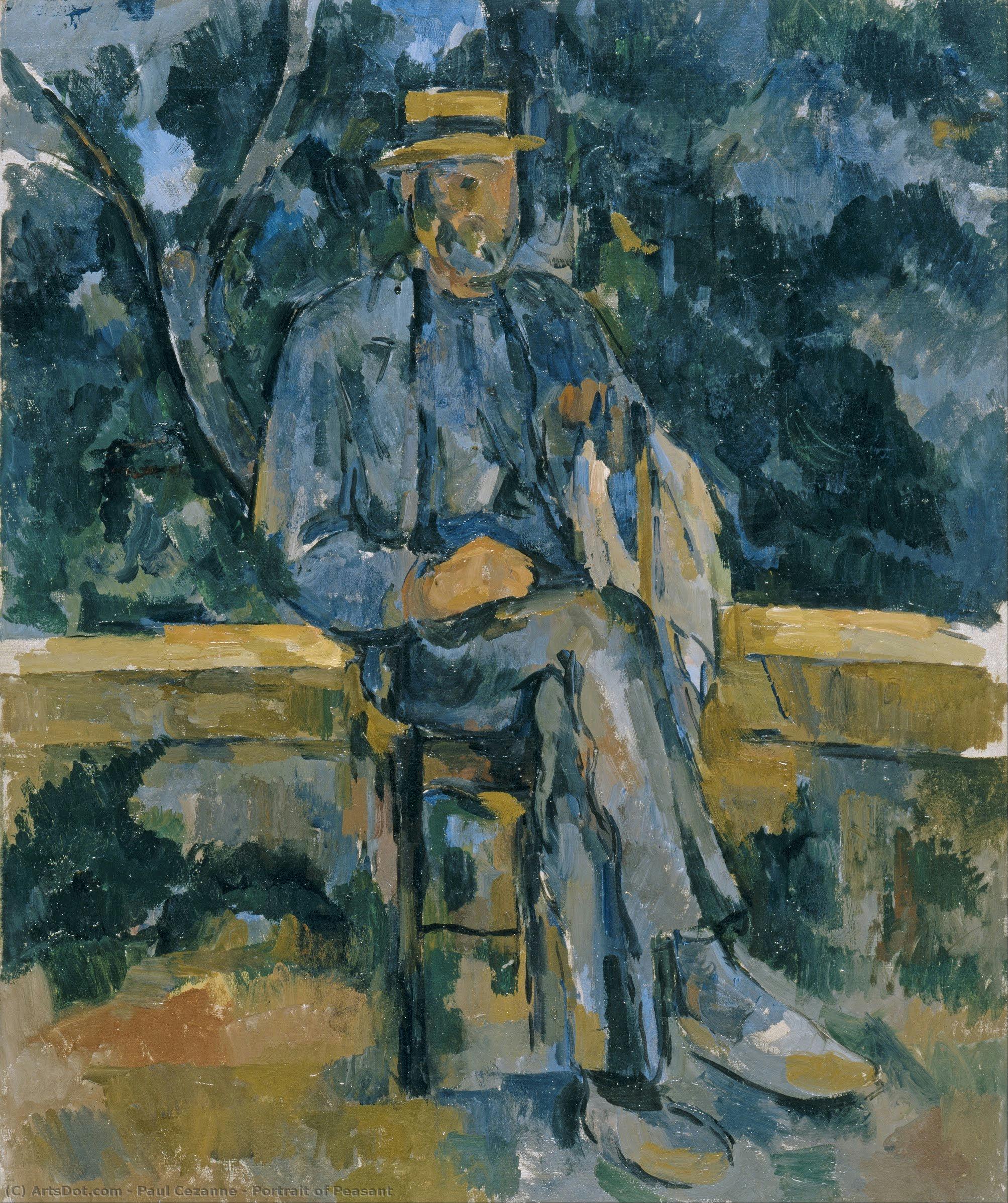
A Moment Frozen in Time: Cézanne’s Portrait of Peasant
Paul Cézanne's “Portrait of Peasant,” painted in 1906, represents more than just a depiction of an individual; it embodies the culmination of Cézanne’s artistic journey and stands as a cornerstone of Post-Impressionism. Executed during his final years in Aix-en-Provence, this canvas is part of a larger series exploring the landscapes and figures of Provence – a region that profoundly influenced Cézanne's vision of art and life itself. Unlike the fleeting impressions favored by Impressionists like Monet or Renoir, Cézanne sought to capture not merely what he saw but how it *felt*, transforming observed reality into an internalized representation of form and color.
The Anatomy of Observation: Cézanne’s Technique
Cézanne's approach was revolutionary for its time. He meticulously dissected the subject – a simple peasant seated calmly in a chair – breaking down geometric forms into fundamental planes, mirroring the principles he had begun to develop during his earlier explorations with Mont Sainte-Victoire. This technique—often described as “analytical”—involved applying thin layers of paint, painstakingly built up over time, creating an illusion of depth and solidity that defied traditional perspective. The muted palette – dominated by earthy browns and greens – reflects Cézanne’s fascination with the materiality of pigment itself, prioritizing color not for its optical effects but for its expressive potential. Notice how Cézanne renders the chair's structure—a series of interlocking planes—creating a palpable sense of volume that contrasts sharply with the smooth surfaces characteristic of Impressionism.
A Landscape Within a Portrait: Context and Symbolism
The inclusion of trees in the background isn’t merely decorative; it serves as an integral element of Cézanne's artistic philosophy. He believed that landscapes could inform portraiture, suggesting that the sitter’s inner state was inextricably linked to his surroundings. The seated peasant embodies a quiet dignity, gazing outwards with a contemplative expression—a pose reminiscent of biblical figures and reflecting Cézanne’s interest in conveying spiritual depth through visual representation. Furthermore, the newspaper or book held by the man symbolizes intellect and engagement with the world beyond immediate experience – mirroring Cézanne's own intellectual curiosity and his desire to depict human subjects as active participants in their environment.
Emotional Resonance: The Quiet Power of Cézanne’s Vision
“Portrait of Peasant” transcends its subject matter, resonating with a profound sense of stillness and introspection. Cézanne’s masterful use of color and form achieves an extraordinary feat: capturing not just the appearance of reality but also its emotional essence. The painting invites viewers to contemplate themes of solitude, contemplation, and connection to nature—values that were central to Cézanne's worldview. It is a testament to his belief that art should strive for something beyond mere visual representation, aiming instead to evoke feelings and ideas within the observer. Like many of Cézanne’s works, it speaks to the enduring human desire for beauty and understanding amidst the complexities of life.
- Artist: Paul Cézanne
- Year Painted: 1906
- Medium: Oil on Canvas
- Dimensions: 54 x 64 cm