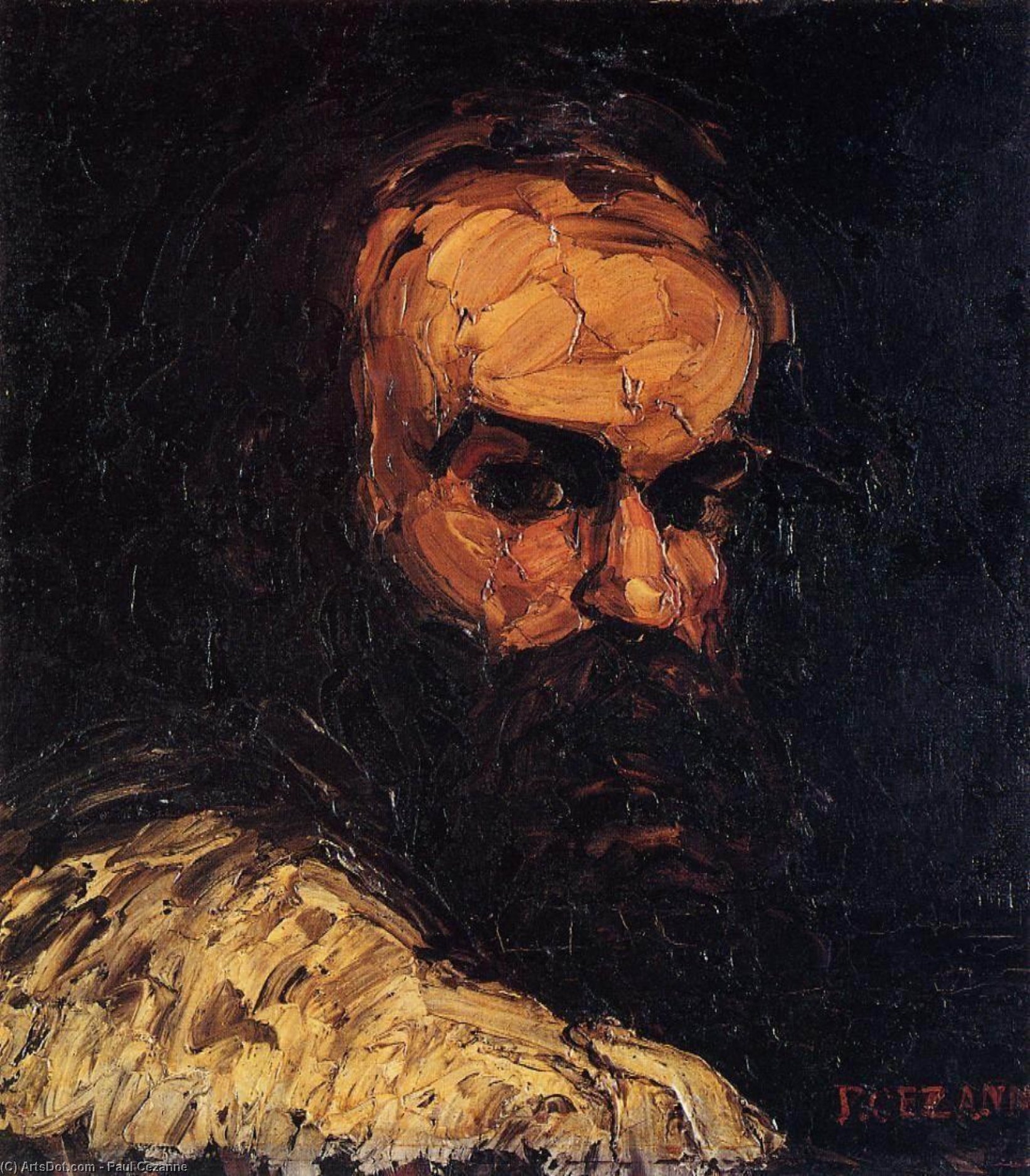
Self Portrait (10)
Paul Cézanne’s
Self-Portrait (10) stands as a cornerstone of Post-Impressionism, offering an unparalleled glimpse into the artist’s contemplative spirit and pioneering approach to artistic representation. Painted in 1866, this deceptively simple composition belies its profound significance within Cézanne's oeuvre and the broader trajectory of modern art history.
The Painting
The artwork depicts Cézanne with a prominent beard, gazing downwards—a posture that invites introspection and directs our gaze towards his hands, meticulously rendered as they rest on a table draped in dark fabric. The deliberate use of black as a background creates dramatic contrast, amplifying the solemn mood and emphasizing Cézanne’s solitary presence. Beyond its visual elements, the painting embodies Cézanne's commitment to capturing not merely what is seen but also how it feels—a characteristic that would become central to his revolutionary style.
Artistic Style
Cézanne’s technique in
Self Portrait (9) exemplifies the core tenets of Post-Impressionism. Rather than striving for optical realism, Cézanne employs planes of color and small brushstrokes to build up complex fields—a method that anticipates Cubism’s fragmentation of form. This deliberate disregard for traditional perspective underscores his belief in representing underlying structure rather than surface appearance, marking a decisive break from Impressionistic conventions. The influence of this approach extended far beyond Cézanne's lifetime, shaping the artistic sensibilities of artists like Henri Matisse and Pablo Picasso.
Historical Context
Initially met with skepticism by critics who championed Impressionism’s fleeting effects of light and color, Cézanne’s work faced ridicule for its perceived lack of polish. However, fellow artists such as Camille Pissarro recognized his genius—and Ambroise Vollard, a discerning art dealer, championed Cézanne's vision. In 1895, Vollard organized Cézanne’s first solo exhibition in Paris, generating considerable discussion and ultimately securing him a wider audience. This pivotal moment solidified Cézanne’s reputation as a visionary artist who anticipated the radical innovations of the early 20th century.
Influence on Modern Art
Cézanne's legacy is undeniable; he is widely regarded as “the father of us all” by artists like Matisse and Picasso. His groundbreaking exploration of form—particularly his insistence on depicting objects from multiple viewpoints simultaneously—laid the groundwork for Cubism and other avant-garde movements. Furthermore, Cézanne’s unwavering dedication to capturing the essence of reality—rather than merely reproducing its surface—continues to inspire artists today.
Experience the essence of Post-Impressionism with ArtsDot.com's handmade oil painting reproductions. Visit
Paul Cézanne: Self Portrait (10) on ArtsDot.com to explore more about this captivating piece and the artist's journey.
Paul Cézanne's Self-Portrait (10) is a testament to his innovative style and introspective nature. As we delve into the world of Post-Impressionism, this painting stands out as a significant work that bridges the gap between late 19th-century Impressionism and early 20th-century Cubism.