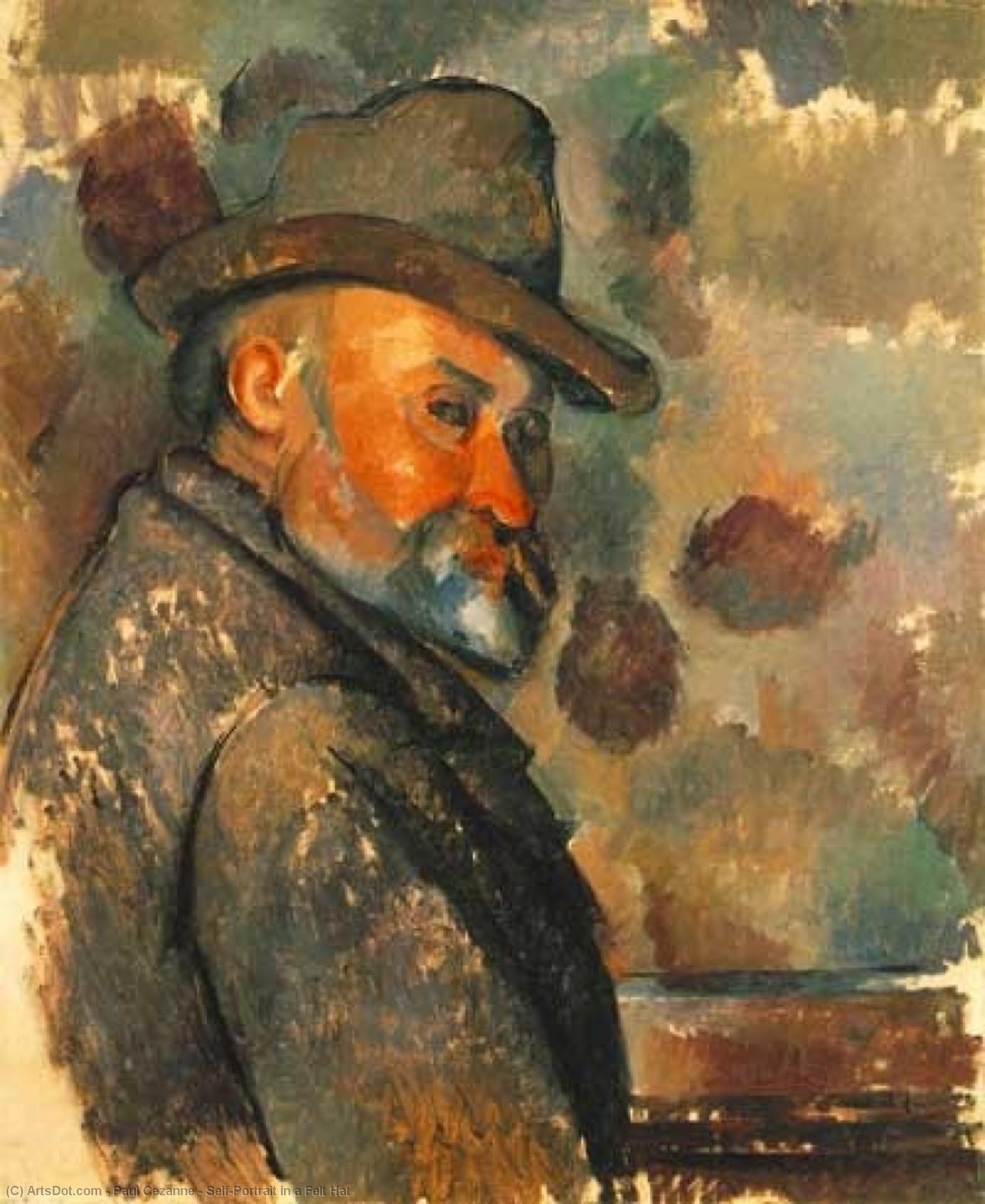
Paul Cézanne's 'Self-Portrait in a Felt Hat' (1894) captures the artist’s introspective nature & Post-Impressionist style. Explore its historical context, technique & lasting influence on modern art.
Discover Paul Cézanne (1839-1906): Post-Impressionist pioneer bridging Impressionism & Cubism. Explore geometric forms, still lifes & his lasting impact on modern art. #Cezanne #PostImpressionism
A Window Into the Soul: Paul Cézanne’s *Self-Portrait in a Felt Hat*
Paul Cézanne's *Self-Portrait in a Felt Hat*, painted in 1894, isn’t merely a depiction of an artist; it’s a profound meditation on perception, form, and the very act of seeing. Housed within the Bridgestone Museum of Art in Japan, this work transcends its status as a portrait, becoming a pivotal bridge between the fleeting impressions of Impressionism and the nascent geometric explorations of Cubism. Cézanne, a restless innovator even in his later years, wasn’t interested in capturing a likeness; instead, he sought to distill the essence of his subject – himself – into a structure of fundamental shapes and colors. The painting invites us not just to *look* at it, but to actively engage with its construction, feeling the deliberate layering of brushstrokes and recognizing the artist's conscious manipulation of space and light. It’s a remarkably intimate work, offering a rare glimpse into the mind of a man grappling with his artistic vision and his place within the evolving landscape of modern art.
The Evolution of an Artist: From Impressionism to Post-Impressionism
Cézanne's journey as an artist was marked by constant experimentation, a relentless pursuit of new ways to represent the world around him. Initially influenced by Romanticism and Realism – evidenced in his early murals at Jas de Bouffan – he quickly moved beyond mere imitation, dissecting Impressionist techniques with a critical eye. Rather than simply capturing the effects of light and color, Cézanne sought to understand *how* those effects were created, building up forms from basic geometric shapes—squares, triangles, circles—that underpinned his subjects. *Self-Portrait in a Felt Hat* exemplifies this shift perfectly. The brown jacket, scarf, and felt hat aren’t rendered with the delicate brushwork of an Impressionist; instead, they are constructed as blocks of color and planes, suggesting volume and solidity. This deliberate simplification wasn't about reducing reality but about revealing its underlying structure—a principle that would profoundly influence artists like Picasso and Braque in the development of Cubism. The painting is a testament to Cézanne’s intellectual approach to art, prioritizing conceptual understanding over purely optical representation.
Technique and Composition: A Study in Form
The painting's power lies not just in its subject matter but also in its masterful execution. Cézanne employs oil on canvas with a remarkable economy of brushstrokes, building up layers of color to create a sense of depth and texture. Notice how the folds of the jacket are suggested through subtle shifts in tone and direction, rather than meticulously detailed rendering. The gaze directed towards the viewer is particularly compelling—it’s not a passive observation but an active engagement, inviting us into Cézanne's world. The composition itself is remarkably simple: a frontal view of the artist, framed by the felt hat and the background. Yet, within this apparent simplicity lies a carefully considered balance between solidity and atmosphere. The muted palette—dominated by browns, blues, and greens—contributes to the painting’s contemplative mood, while the subtle variations in color create a sense of movement and vibrancy. The use of *plein air* techniques, though less pronounced than in his earlier works, is still evident, suggesting a connection to nature and a desire to capture the fleeting qualities of light.
A Legacy of Innovation: Cézanne’s Influence on Modern Art
Cézanne's influence extends far beyond his own lifetime. He acted as a crucial catalyst in the transition from 19th-century Impressionism to the revolutionary artistic movements of the 20th century. His emphasis on form, structure, and the underlying geometry of objects paved the way for Cubism, while his bold use of color and expressive brushwork inspired countless artists across various disciplines. The Van Gogh Museum in Amsterdam recognizes this connection, dedicating space to showcasing Cézanne’s impact alongside that of Vincent van Gogh, another pivotal figure in Post-Impressionism. Furthermore, the painting serves as a bridge between artistic movements, demonstrating Cézanne's role as a pioneer who challenged conventional notions of representation and opened up new possibilities for artistic expression. Reproductions of *Self-Portrait in a Felt Hat* offer a tangible connection to this groundbreaking artist and his enduring legacy—a testament to the power of art to transform our understanding of the world around us. For those seeking to delve deeper into Cézanne’s work, exploring detailed reproductions on platforms like ArtsDot.com provides invaluable insights into the nuances of his technique and vision.