Discover Paul Cézanne (1839-1906): Post-Impressionist pioneer bridging Impressionism & Cubism. Explore geometric forms, still lifes & his lasting impact on modern art. #Cezanne #PostImpressionism
A Pioneer of Modern Art: Exploring Cézanne’s “The Four Seasons, Autumn”
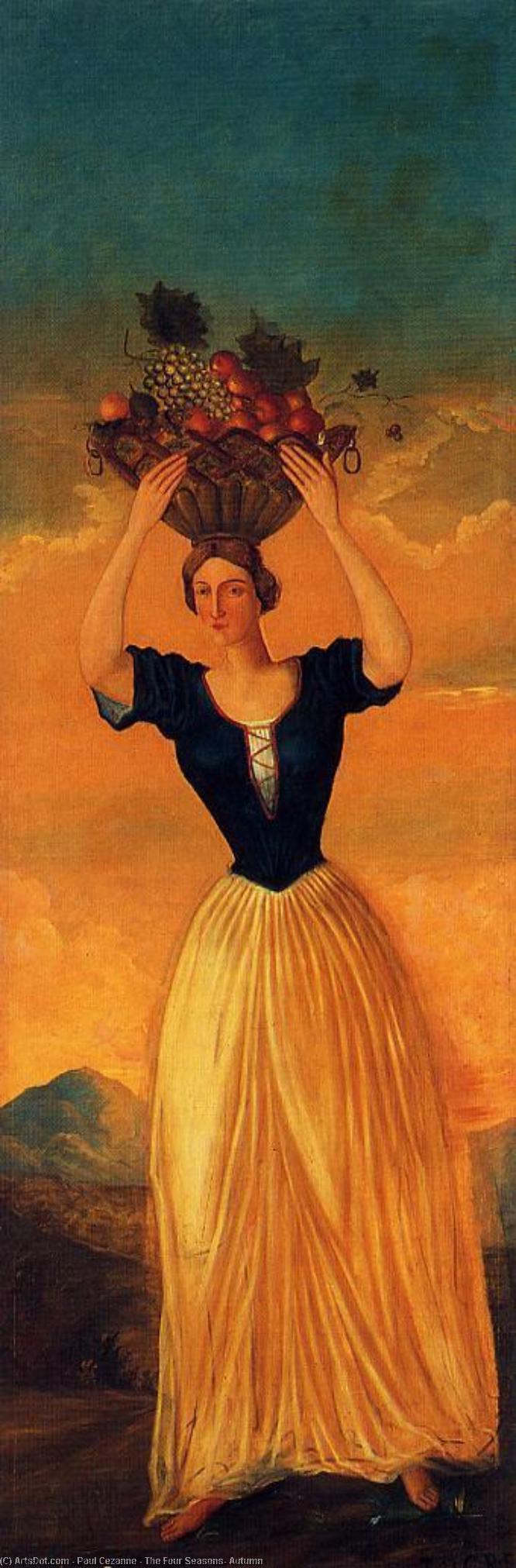
Paul Cézanne's "The Four Seasons, Autumn," painted in 1861, stands as a cornerstone of Post-Impressionism and a testament to the artist’s unwavering commitment to forging his own artistic path. Initially met with skepticism by critics of his time – who deemed it “primitive” and “unfinished” – this deceptively simple composition has since garnered recognition as a seminal work that profoundly influenced subsequent generations of artists, cementing Cézanne's place among the titans of modern art history.
The Romantic Roots and Cézanne’s Distinctive Vision
Cézanne’s artistic sensibilities were undeniably shaped by the prevailing Romantic movement, which championed emotion and imagination alongside realism. However, unlike his contemporaries who sought to faithfully depict observable reality, Cézanne embarked on a radical experiment: dismantling traditional perspective and exploring the underlying structure of objects. This approach—characterized by repetitive brushstrokes and an emphasis on geometric forms—would become the bedrock of Cubism and foreshadow the revolutionary developments that would reshape artistic expression in the decades to come. He wasn’t merely copying what he saw; he was actively reconstructing it, distilling its essence into a visual language unlike anything previously encountered.
A Symbol of Abundance and Quiet Contemplation
The painting depicts a woman gracefully holding fruit – specifically apples and pears – symbolizing the bountiful harvest season. Cézanne meticulously renders this central figure against a muted backdrop populated by indistinct individuals, directing the viewer’s gaze squarely onto the luminous colors and textured surfaces of the fruit itself. The woman's posture exudes serenity and invites contemplation, reflecting Cézanne’s belief that art should strive to capture not just what is seen but also what is felt. This deliberate framing underscores the painting’s core theme: a harmonious connection between humanity and the natural world.
Technique and Impressionistic Influence
Despite his departure from Impressionism's fleeting effects of light, Cézanne retained elements of Impressionistic technique—particularly in his use of color—to achieve remarkable luminosity and vibrancy. He skillfully blended pigments to create subtle tonal variations that imbue the canvas with depth and atmosphere. Furthermore, Cézanne’s characteristic brushstrokes – thick, broken lines – contribute to a palpable sense of physicality, conveying the artist's desire to represent not just appearances but also the underlying materiality of objects. This technique is particularly evident in the depiction of the fruit’s skin, where Cézanne meticulously captures its surface texture with painstaking detail.
Legacy and Enduring Appeal
The initial indifference surrounding “The Four Seasons, Autumn” swiftly dissipated as fellow artists like Camille Pissarro championed Cézanne's vision and Ambroise Vollard organized his first solo exhibition in 1895. Henri Matisse and Pablo Picasso famously acknowledged Cézanne as "the father of us all," recognizing his profound influence on their own artistic endeavors. Today, Cézanne’s work continues to inspire artists and captivate audiences worldwide—a testament to the enduring power of his groundbreaking approach to art and its ability to resonate across time periods. Its quiet beauty and symbolic richness offer a timeless invitation to contemplate the fundamental questions of perception and representation.