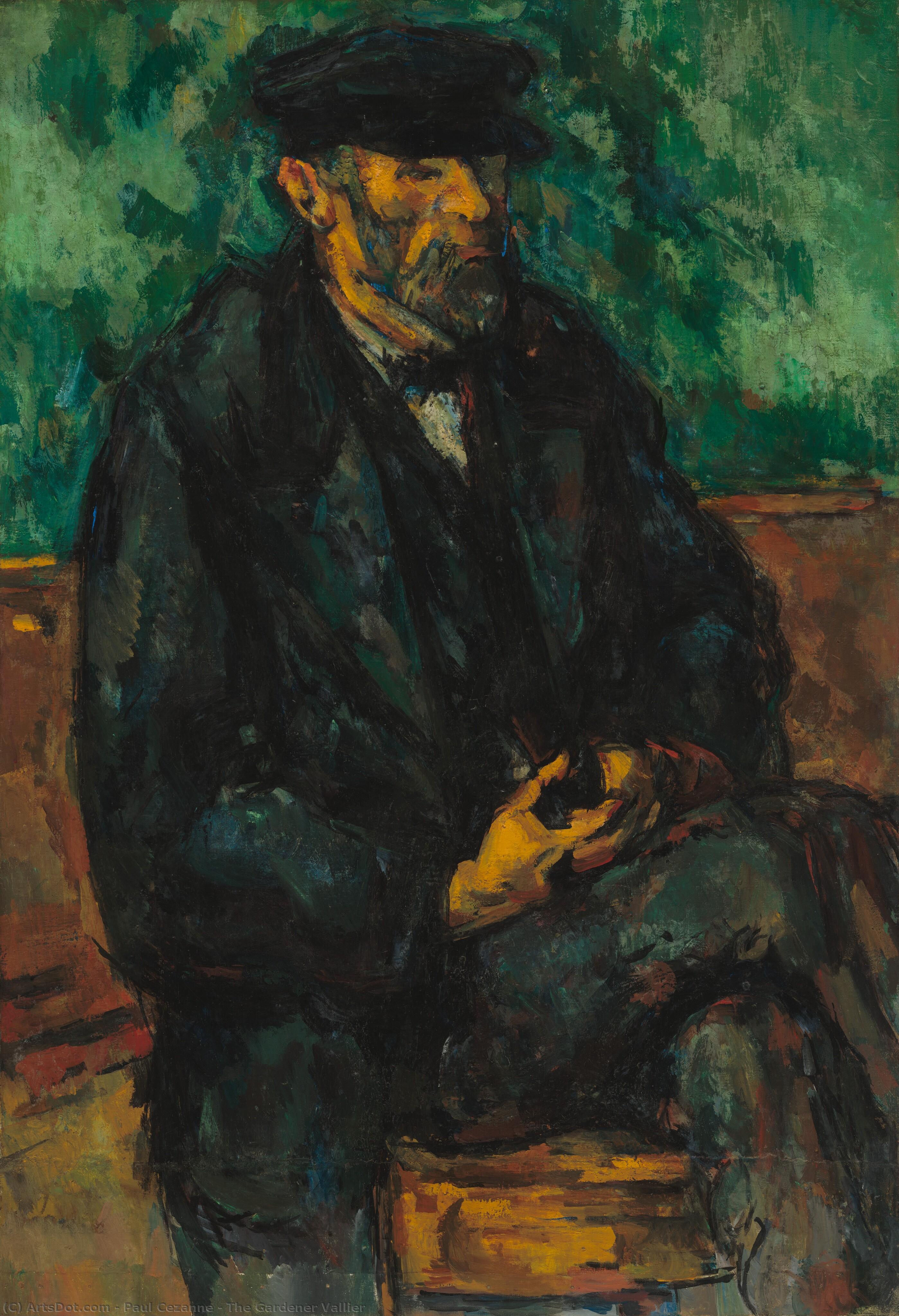
A Quiet Contemplation Captured in Cézanne’s Gardener Vallier
Paul Cézanne's “The Gardener Vallier,” painted in 1906, isn’t merely a portrait; it’s an embodiment of Cézanne’s revolutionary approach to depicting the human figure and landscape—a pivotal moment marking the transition from Impressionism’s shimmering surfaces to Cubism’s fractured perspectives. Initially met with skepticism by critics who deemed his work unfinished and lacking in conventional beauty, Cézanne persevered, driven by a singular vision of capturing not just what he saw but how he *felt* about what he observed.
- Subject Matter: The painting depicts Vallier Gardien, a French botanist and horticulturalist, seated on a simple wooden bench against a backdrop of lush greenery. Cézanne deliberately eschewed grand narratives or dramatic poses, opting for an intimate portrayal focused on the sitter’s stillness and contemplation.
- Style & Technique: Cézanne's distinctive style—characterized by geometric simplification and multiple viewpoints—is immediately apparent. Thick, visible brushstrokes dominate the canvas, creating a textured surface that conveys both solidity and movement. The artist meticulously renders the environment using muted greens and blues, layering colors to achieve an atmospheric effect reminiscent of Impressionism but rejecting its optical illusionistic qualities.
The color palette is remarkably restrained yet powerfully expressive. Kelly green and shamrock green dominate the foliage, punctuated by deep midnight blue for shadows and tawny brown for wood tones. Accents of crimson red—likely representing poppies—introduce a vibrant counterpoint to the predominantly cool hues. Cézanne’s masterful use of pigment isn't about replicating reality; it’s about conveying an emotional resonance – a sense of quiet observation and connection with nature.
- Historical Context: Cézanne was operating at the cusp of artistic innovation, reacting against Impressionism’s preoccupation with fleeting moments of light and color. He sought to represent objects as they exist in three dimensions, breaking down forms into geometric shapes—a precursor to Cubist explorations championed by Picasso and Braque.
- Symbolism: The gardener's posture – seated calmly, gazing outwards – speaks to themes of introspection and contemplation. Cézanne’s deliberate cropping of the legs emphasizes stability and grounding, mirroring the sitter’s connection to the earth. Furthermore, the inclusion of potted plants symbolizes fertility and growth—ideas central to Cézanne’s broader artistic philosophy.
“The Gardener Vallier” transcends mere representation; it invites viewers into Cézanne's perceptual world. The artist’s unwavering commitment to capturing form and emotion solidified his place as one of the most influential figures in modern art, inspiring generations of artists to challenge conventions and explore new avenues for visual expression. Its enduring appeal lies in its ability to evoke a profound sense of serenity and contemplation—a testament to Cézanne's genius.