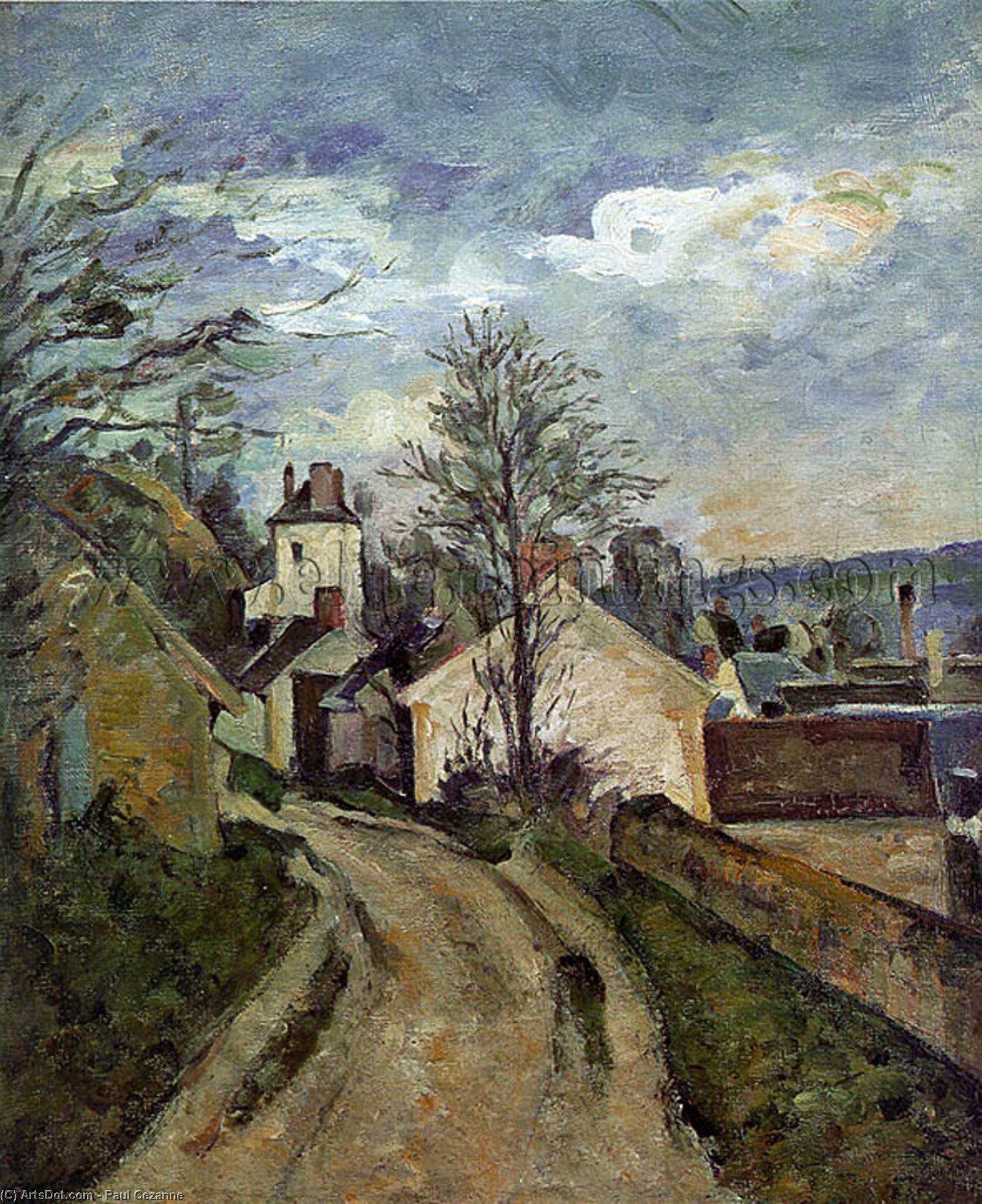
The House of Dr. Gachet in Auvers – A Post-Impressionist Vision
Paul Cézanne’s “The House of Dr. Gachet in Auvers,” painted in 1873, is more than a simple depiction of a rural scene; it's a profound exploration of form, light, and the very essence of perception. This captivating oil on canvas, currently residing within the esteemed Musée d’Orsay in Paris, offers a glimpse into Cézanne’s revolutionary approach to painting – one that would irrevocably influence generations of artists to come. The work stands as a pivotal bridge between the fleeting impressions of Impressionism and the nascent geometric explorations of Cubism, marking a decisive shift in how artists engaged with their subjects and the act of representation itself.
Cézanne’s decision to capture this particular house – Dr. Gachet's residence in Auvers-sur-Oise – was deeply personal. He spent several months there in 1872, a period marked by both artistic growth and emotional turmoil. The doctor himself, a physician with an interest in art and a patient of Van Gogh during the latter’s final months, became a significant figure in Cézanne's life. The painting isn’t merely a portrait of a building; it’s imbued with a sense of melancholy and contemplation, reflecting Cézanne’s own struggles with his health and artistic direction at the time. The composition is deliberately ambiguous, inviting the viewer to actively participate in constructing meaning – a hallmark of Cézanne's innovative approach.
Composition and Technique: A Study in Form
The painting’s strength lies not in photographic realism but in its masterful manipulation of form and space. Cézanne employs a technique he termed “alla prima,” working directly on the canvas with bold, confident brushstrokes. These strokes aren't blended or smoothed; instead, they retain their individual character, creating a vibrant tapestry of color and texture. Notice how he breaks down the house into its fundamental geometric shapes – rectangles, squares, and triangles – suggesting an underlying structure beneath the surface. This fragmentation of form is echoed in the surrounding landscape, with trees rendered as simplified, almost sculptural masses.
Cézanne’s use of color is equally deliberate. He eschews the bright, saturated hues favored by Impressionists, opting instead for a more muted palette dominated by earthy tones – ochres, browns, and greens. However, these colors are not applied uniformly; Cézanne utilizes subtle shifts in value and hue to create a sense of depth and atmosphere. The hazy blue sky, rendered with broad, sweeping brushstrokes, recedes into the distance, while the warm tones of the house draw the eye inward. The road leading towards the building is painted with a strong directional force, guiding the viewer’s gaze through the scene.
Artistic Significance and Historical Context
“The House of Dr. Gachet in Auvers” emerged during a period of intense artistic experimentation. Cézanne was deeply influenced by the Impressionists, particularly their focus on capturing fleeting moments of light and color. However, he quickly moved beyond mere imitation, seeking to develop his own unique visual language. He studied the works of Seurat and Gauguin, absorbing their explorations of color theory and symbolism, but ultimately forging a distinct path that prioritized structure and form over optical realism.
The painting’s significance extends beyond its purely aesthetic qualities. It represents a crucial step in the evolution of modern art, foreshadowing the abstract tendencies of Cubism and paving the way for future generations of artists who sought to challenge traditional notions of representation. Cézanne's insistence on seeing the world as a collection of interlocking geometric forms profoundly impacted the course of 20th-century art.
A Legacy Preserved: The Musée d’Orsay
The Musée d’Orsay, housed in a magnificent former railway station, provides the perfect setting to appreciate Cézanne's masterpiece. It stands as one of the most important collections of Impressionist and Post-Impressionist art in the world, alongside works by Seurat, Gauguin, Renoir, and many others. Visiting this museum is not merely a chance to view iconic paintings; it’s an immersive experience that allows you to trace the lineage of modern art from its roots in Impressionism to its radical departures.
For those seeking a high-quality reproduction of “The House of Dr. Gachet in Auvers,” ArtsDot offers meticulously crafted hand-painted reproductions that capture the essence of Cézanne’s vision with remarkable fidelity. Each artwork is created using traditional oil painting techniques, ensuring a timeless beauty and enduring value. Explore our collection today and bring this iconic masterpiece into your home or office – a testament to Cézanne's genius and a celebration of art’s transformative power.