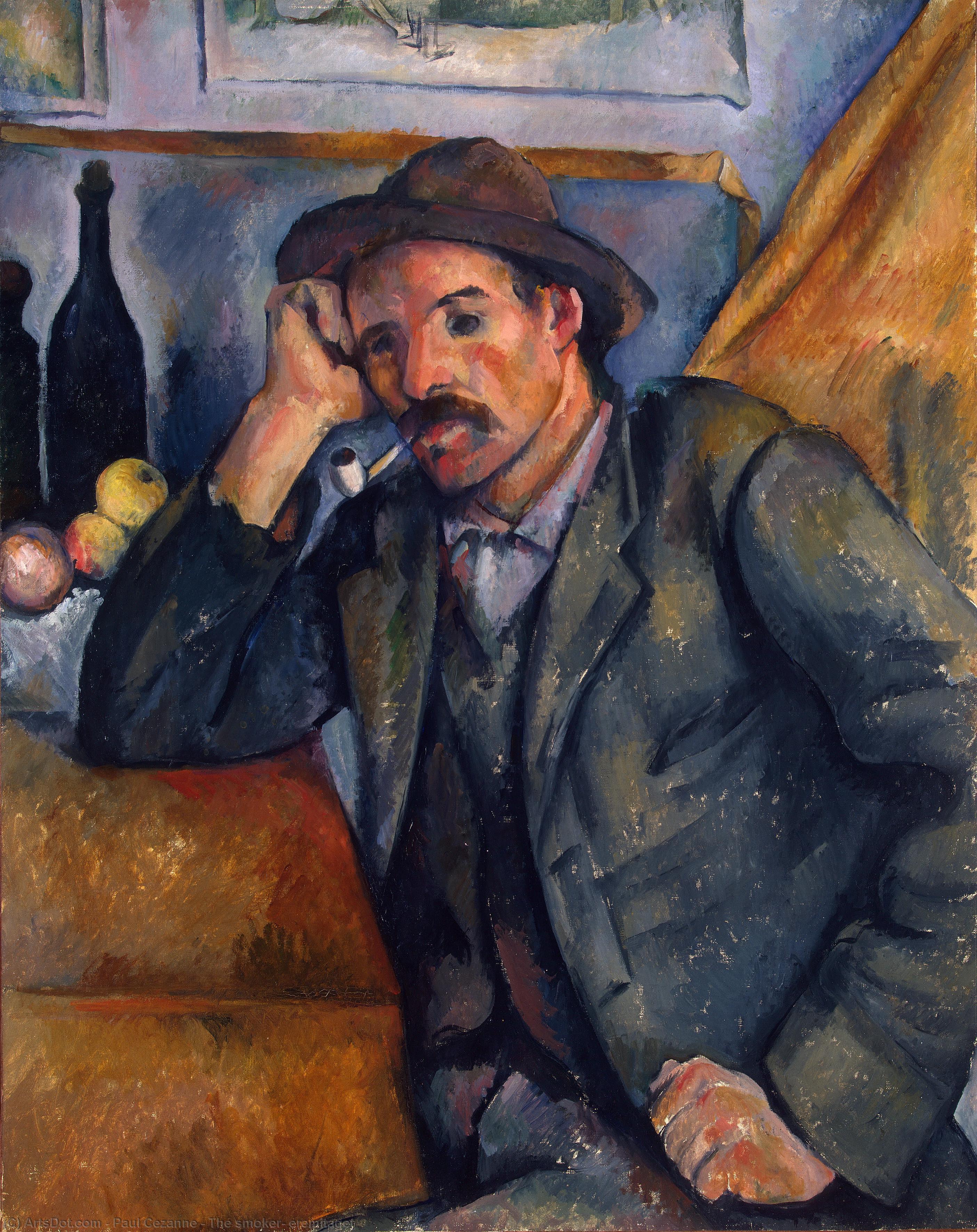
Explore Paul Cézanne’s ‘The Smoker,’ a quintessential Post-Impressionist portrait. Discover its earthy tones, geometric forms & profound contemplation. A masterpiece of everyday life.
Discover Paul Cézanne (1839-1906): Post-Impressionist pioneer bridging Impressionism & Cubism. Explore geometric forms, still lifes & his lasting impact on modern art. #Cezanne #PostImpressionism
A Moment of Quiet Contemplation: Unveiling Cézanne’s *The Smoker*
Paul Cézanne's *The Smoker*, painted in 1892, is more than just a portrait; it’s an intimate study of solitude and the quiet rhythms of everyday life. This captivating work, measuring a modest 3 x 74 cm, exemplifies the artist’s pivotal role in bridging Impressionism and the burgeoning Cubist movement. It invites us into a private moment with its subject, fostering a sense of connection that transcends time.
Subject & Composition: A Study in Stillness
The painting centers on a bearded man seated at a table, lost in thought as he smokes his pipe and holds a glass of wine. His attire – a hat and mustache – lends him an air of dignified repose. The arrangement around him is deliberately considered: bottles cluster near the edge and center of the table, alongside a bowl and two apples. This isn’t haphazard placement; it's a carefully constructed still life *within* a portrait, demonstrating Cézanne’s signature approach to form and structure. The room itself feels contained, focusing our attention entirely on this scene of quiet contemplation.
Style & Technique: Post-Impressionist Mastery
Cézanne's distinctive Post-Impressionist style is immediately apparent in *The Smoker*. He eschews the fleeting impressions of light favored by earlier Impressionists, instead prioritizing form and structure. Bold brushstrokes define shapes rather than blending seamlessly, creating a textured surface that feels almost sculptural. The palette is dominated by earthy tones – browns and greens – evoking warmth and intimacy. Impasto, the thick application of paint, adds to this tactile quality, giving the work a remarkable three-dimensional presence. This technique wasn’t merely aesthetic; it was central to Cézanne's exploration of how we perceive reality.
Symbolism & Emotional Resonance
The symbolism within *The Smoker* is subtle yet profound. The pipe suggests leisure, habit, and perhaps a retreat from the world. The wine glass hints at conviviality but also potential melancholy. The fruit – particularly the apples – are recurring motifs in Cézanne’s work, often interpreted as symbols of temptation or earthly pleasure. However, it's the overall *mood* that resonates most strongly: a sense of quiet introspection and solitude. The man isn’t engaging with us; he is absorbed in his own thoughts, inviting viewers to reflect on their own inner worlds.
Historical Context & Legacy
Created during a pivotal period in Cézanne's career, *The Smoker* reflects his growing interest in capturing the essence of everyday life and the human experience. He moved away from grand historical narratives towards intimate portrayals of ordinary people and objects. This shift was revolutionary, paving the way for modern art movements like Cubism. Cézanne’s influence on artists such as Pablo Picasso and Vincent van Gogh is undeniable, and his exploration of form and perception continues to inspire generations of artists today.
A Timeless Masterpiece for Your Space
*The Smoker* isn't just a historical artifact; it’s a work that speaks directly to the human condition. Its muted palette and contemplative mood make it an ideal addition to interiors seeking a sense of calm and sophistication. Whether you are an art collector, interior designer, or simply someone who appreciates beauty, this painting offers a timeless aesthetic and a powerful emotional resonance. High-quality reproductions allow you to experience Cézanne’s genius in your own home, bringing a touch of Post-Impressionist mastery into your daily life.