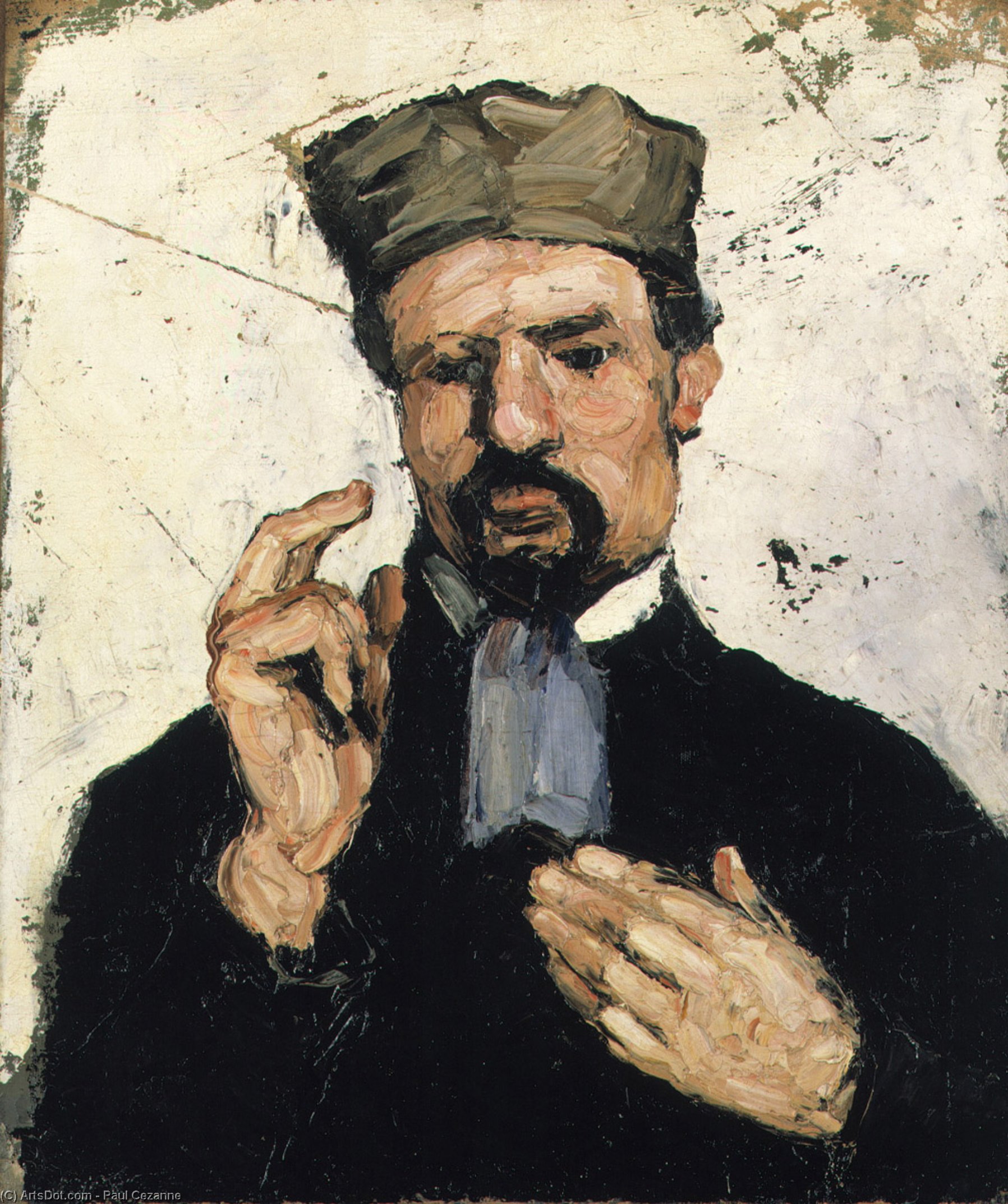
Explore Paul Cézanne's 'Uncle Dominique as a Lawyer,' a striking black and white portrait capturing dignity and contemplation. Admire its bold modeling technique & influence on Cubism at Musée des Beaux-Arts de Bordeaux.
Discover Paul Cézanne (1839-1906): Post-Impressionist pioneer bridging Impressionism & Cubism. Explore geometric forms, still lifes & his lasting impact on modern art. #Cezanne #PostImpressionism
Discover the Musée d'Orsay in Paris! Housed in a stunning former railway station, explore an unparalleled collection of Impressionist & Post-Impressionist masterpieces by Monet, Van Gogh & more.
A Portrait of Quiet Reflection: Cézanne’s Uncle Dominique as a Lawyer
Paul Cézanne, a name synonymous with revolutionary artistic vision, didn't merely depict figures; he wrestled them onto the canvas, striving to capture not just their likeness but also the very essence of their being. Among his prolific output—over 900 oil paintings—Uncle Dominique as a Lawyer stands apart, embodying Cézanne’s unwavering dedication to exploring form and color with unprecedented boldness. Painted in 1866, this deceptively simple portrait resides within the Musée d'Orsay in Paris, France, offering viewers an intimate glimpse into Cézanne’s personal life and artistic evolution.
The Subject: Dominique Aubert – More Than Just Flesh and Bone
Uncle Dominique Sauveur Aubert wasn’t simply a familial connection for Cézanne; he represented a formative influence on the young artist's burgeoning career. Aubert, Cézanne’s maternal uncle, served as a steadfast supporter of his artistic ambitions during those crucial early years—a rare circumstance in an era where artistic pursuits often clashed with societal expectations. The painting portrays Aubert dressed in monastic garb, a deliberate choice reflecting Cézanne’s fascination with religious symbolism and his desire to convey dignity and solemnity. However, Cézanne didn't merely aim for pious representation; he sought to capture the quiet contemplation of Aubert’s gaze—a gesture directed upwards, hinting at introspection and perhaps a yearning for something beyond the tangible world.
Stylistic Innovation: Embracing Bold Color and Fragmented Form
Cézanne’s approach to Uncle Dominique as a Lawyer exemplifies his groundbreaking stylistic innovations. Departing from Impressionism's emphasis on fleeting light effects, Cézanne employed a technique characterized by thick impasto—heavy application of paint—creating palpable textural surfaces that resist easy categorization. The palette is dominated by muted tones – predominantly browns and blacks – punctuated by strategic splashes of red and yellow, mirroring the artist’s exploration of color theory. Unlike traditional portraiture, Cézanne eschewed meticulous detail, prioritizing instead the suggestion of form through interlocking planes and geometric shapes. This fragmentation reflects Cézanne's belief that nature itself is inherently unstable, demanding an artistic response that transcends mere imitation.
Symbolism Within Simplicity: Walls, Writing, and Gestures
Beyond its formal qualities, Uncle Dominique as a Lawyer resonates with subtle symbolic layers. The backdrop—a plain wall adorned with handwritten text—adds depth to the scene, prompting contemplation about Aubert’s intellectual pursuits and Cézanne's own preoccupation with conveying information beyond visual representation. The artist’s hand raised to his face is perhaps the most poignant gesture within the composition. It speaks not only of physical discomfort but also of a deeper psychological state – a moment of profound reflection, capturing the elusive essence of human experience. Cézanne’s masterful use of light and shadow further enhances this emotional impact, creating an atmosphere of quiet solemnity that lingers long after viewing the artwork.
Legacy: Cézanne's Influence on Modern Art
Uncle Dominique as a Lawyer stands as a cornerstone in Cézanne’s artistic journey—a pivotal piece demonstrating his unwavering commitment to pushing boundaries and redefining artistic conventions. His bold experimentation with color and form profoundly impacted subsequent generations of artists, paving the way for movements like Cubism and establishing Cézanne's enduring place among the titans of modern art. As Picasso famously declared, “Cézanne is the father of us all,” acknowledging the indelible mark he left on the artistic landscape—a legacy rooted in a singular vision: to transform perception itself.