The Painting and Its Context
Paul Cézanne's
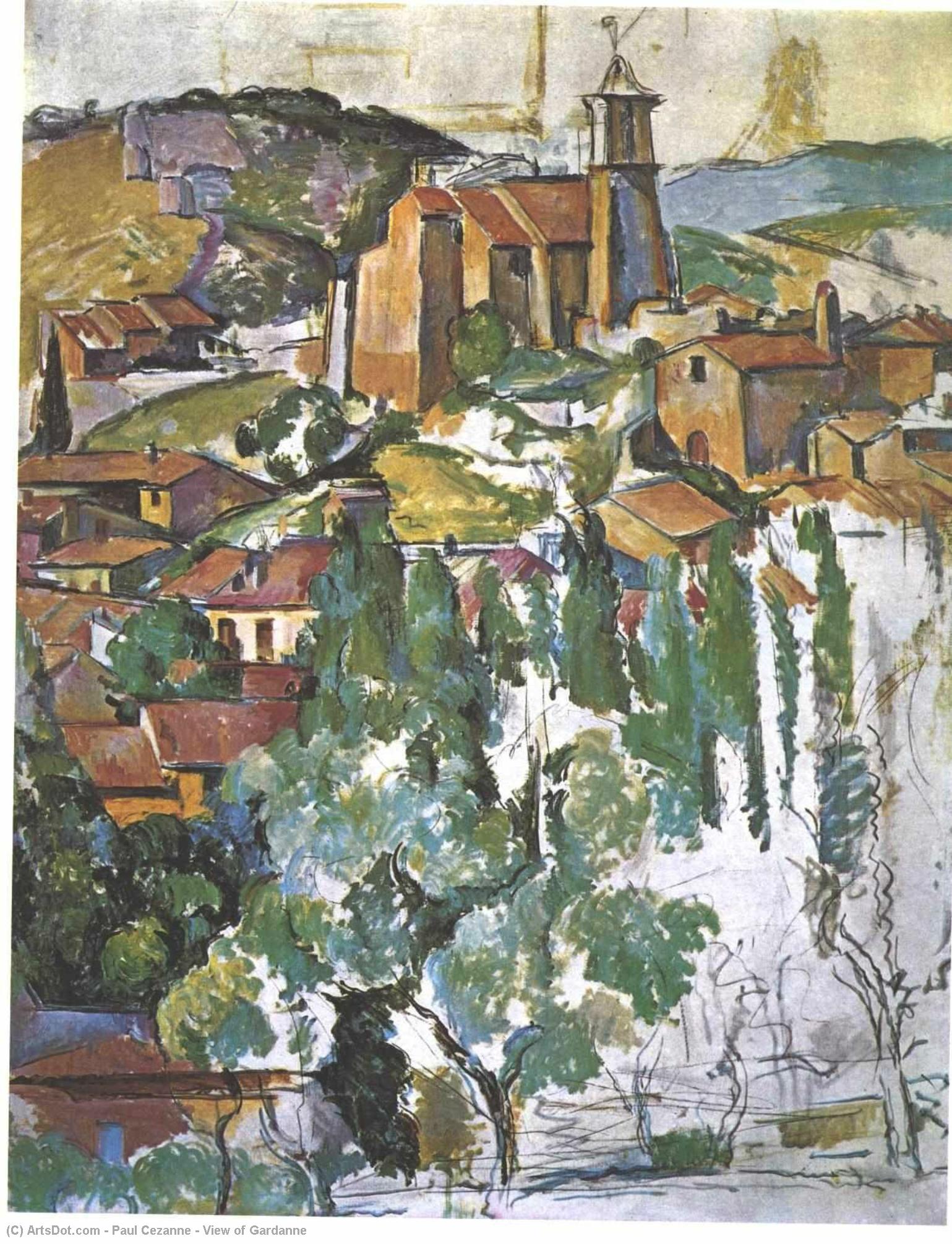
"View of Gardanne", created in 1886, is a quintessential example of the artist's unique contribution to the development of Post-Impressionism. This painting, measuring 92 x 74 cm and executed in oil on canvas, captures the serene beauty of a town with a church in the background, set against a hillside adorned with trees and buildings.
Artistic Style and Technique
Cézanne's style is characterized by his emphasis on the underlying structure of objects and the formal qualities of art. He broke away from traditional approaches to perspective and color, instead focusing on planes of color and small brushstrokes that build up to form complex fields. This technique is evident in
"View of Gardanne", where the artist's repetitive, exploratory brushstrokes create a sense of depth and texture.
Historical Significance
Paul Cézanne's work played a pivotal role in transitioning from 19th-century Impressionism to 20th-century Cubism. His innovative approach influenced avant-garde artistic movements, earning him the title "the father of us all" from artists like Henri Matisse and Pablo Picasso.
Reception and Legacy
Initially met with incomprehension and ridicule by contemporary art critics, Cézanne's work was championed by fellow artists and dealers. The first solo exhibition in 1895 at Ambroise Vollard's Paris gallery marked a turning point, leading to broader recognition of his contributions.
Relevance Today
Today,
"View of Gardanne" is celebrated as a masterpiece of Post-Impressionism. It exemplifies Cézanne's unique pictorial language and his influence on the development of modern art. For those interested in exploring more of Cézanne's work,
"View of Gardanne" is available for viewing at ArtsDot.
Other Relevant Works
-
Vincent Van Gogh's
"Field with Two Sowers and Trees" -
Paul Cézanne's
"Peaches, Pears and Grapes" -
Paul Cézanne's
"Gardanne (Horizontal View)" Conclusion
"View of Gardanne" by
Paul Cézanne is a seminal work in the history of art, showcasing the artist's innovative style and technique. Its significance extends beyond its beauty, representing a bridge between Impressionism and Cubism. For more information on Paul Cézanne and his contributions to Post-Impressionism, visit
Post-Impressionism Art Movement at ArtsDot.
For a deeper understanding of Cézanne's life and work, refer to
Paul Cézanne on Wikipedia.