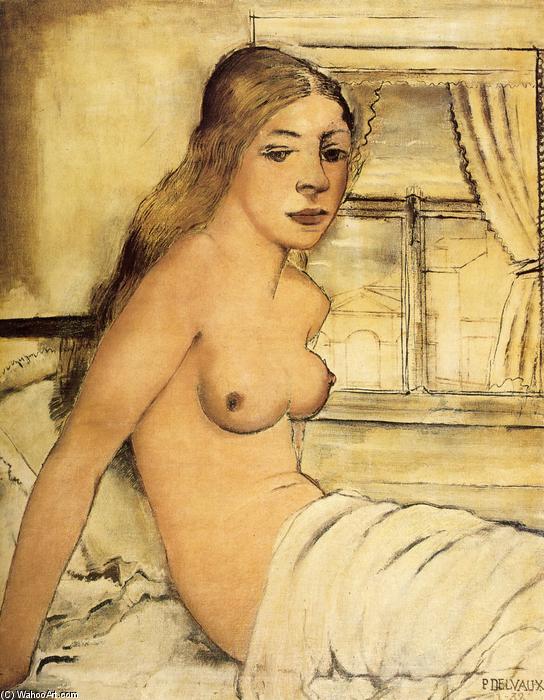
The painting
Naked at Dawn by
Paul Delvaux is a masterpiece of Post-Impressionism, created in 1932. This oil on canvas work measures 130 x 90 cm and is a testament to the artist's unique style, which often featured nude women in dreamlike settings. The subject of the painting is a woman seated on a bed or couch, with her body oriented towards the viewer but her head turned slightly away, lost in thought.
Artistic Style and Influences
Paul Delvaux's work was influenced by Surrealism, which is evident in the mysterious and introspective atmosphere of
Naked at Dawn. The artist's use of muted earth tones and subtle shadows creates a sense of contemplation and introspection. The painting's style is reminiscent of other notable works by Delvaux, such as
Girls by the Sea and Harmony.
Symbolism and Interpretation
The symbolism in
Naked at Dawn is open to interpretation, but it can be seen as a representation of the human condition. The nude figure may represent vulnerability and sensitivity, while the dreamlike setting suggests a state of reverie or meditation. The painting's themes are characteristic of Delvaux's work, which often explored the relationship between the human figure and the environment.
Handmade oil painting reproductions of
Naked at Dawn are available on
ArtsDot.com, allowing art lovers to own a piece of history. The painting's enigmatic quality and dreamlike atmosphere make it a fascinating addition to any art collection.
The
National Gallery and other prominent museums have featured Delvaux's works in their collections, solidifying his position as a leading figure in Post-Impressionism.