The Post-Impressionism art movement, which emerged in the late 19th century, is characterized by its emphasis on distortion, exaggeration, and primitivism. One notable artist associated with this movement is
Paul Elie Ranson, a French painter known for his captivating and emotionally charged works. Among his notable pieces is the poignant
Woman Crying, a painting that showcases the artist's ability to convey intense emotions through his subjects.
Artistic Background
Paul Elie Ranson was a prominent figure in the Post-Impressionism movement, and his works are characterized by their unique blend of symbolism and realism. The
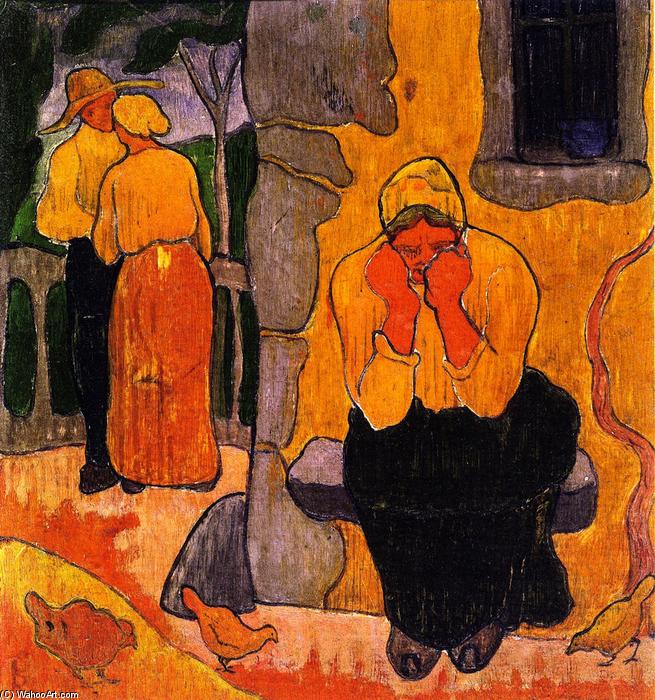
Woman Crying painting, created in 1891, is a prime example of this style. The piece features a woman overcome with emotion, her face hidden behind her hands as she sits in a state of distress. The background of the painting adds depth and context to the scene, with a building visible behind the subject.
Key Elements of the painting include the use of bold brushstrokes and vivid colors, which serve to emphasize the emotional intensity of the scene. The
Woman Crying is also notable for its sense of intimacy and vulnerability, as if the viewer has stumbled upon a private moment of sorrow.
- The painting is characterized by its use of oil on canvas, which adds to its texture and depth.
- The piece is relatively small, measuring only 22 x 19 cm, which serves to intensify the emotional impact of the scene.
- The Musee des Beaux-Arts in Limoges, France, is home to another notable work by Paul Elie Ranson, titled The Vanity of Mice.
For those interested in learning more about Post-Impressionism and its key artists, including
Paul Elie Ranson, visit the
Post-Impressionism Art Movement Introduction page on ArtsDot. To explore more of
Paul Elie Ranson's works, including the
Woman Crying, visit the
Painting by Paul Elie Ranson page.
The
Woman Crying painting is a powerful example of
Paul Elie Ranson's ability to convey emotion and intimacy through his art. As a piece of Post-Impressionism, it offers a unique glimpse into the artist's inner world and his ability to capture the human experience.