n{
Paul Gustave Doré
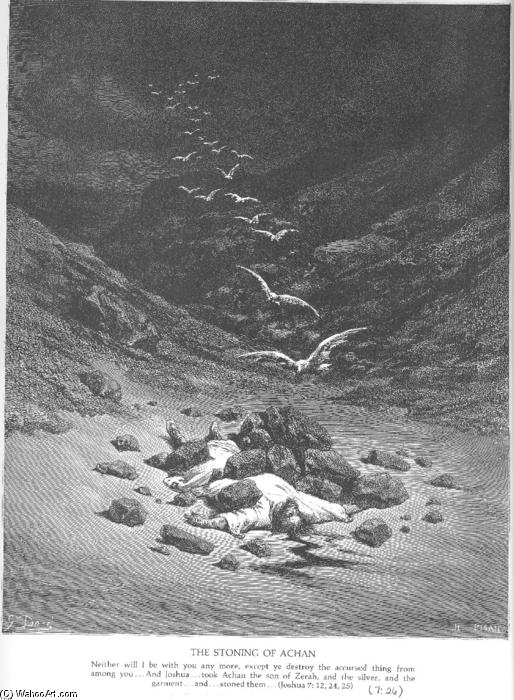
This monumental engraving portrays the gruesome stoning of Achan, son of Carmi, following Joshua's conquest of Jericho. Doré’s masterful use of hatching and shading conveys a palpable sense of despair and religious retribution against a backdrop of desolate rock formations.
Achan Is Stoned to Death
A Life Etched in Shadow and Light: The World of Gustave Doré
Paul Gustave L
A Deep Dive Into Gustave Doré’s “Achan Is Stoned to Death”
The artwork "Achan Is Stoned To Death," executed by Gustave Doré in 1866, stands as a monumental testament to Romantic artistic fervor and its unflinching portrayal of biblical narrative. More than just an illustration; it's a visceral experience rendered in meticulous detail—a chilling tableau that captures the solemn horror of divine retribution against Israel’s transgression. Doré’s masterful command of etching technique elevates this scene beyond mere depiction, transforming it into a profound meditation on faith, guilt, and the consequences of disobedience.
- Historical Context: Created during a period marked by burgeoning scientific inquiry alongside fervent religious belief, Doré's work reflects the anxieties of his time regarding moral responsibility and divine judgment. The engraving emerged from a broader cultural preoccupation with exploring themes of sin, punishment, and redemption—a fascination that resonated powerfully across Europe.
- Composition & Symbolism: Dominating the canvas is a stark landscape dominated by jagged rocks mirroring the harsh realities of biblical Israel. At its center lies Achan’s lifeless body, encircled by figures engaged in brutal stoning – an act symbolizing purification and divine justice. The flock of birds overhead serves as a poignant reminder of mortality and perhaps hints at detachment from earthly suffering. Doré deliberately employs diagonal lines to heighten tension and guide the viewer's gaze toward the central drama, reinforcing the narrative’s core message.
- Technique & Detail: Doré’s etching process—a laborious undertaking involving transferring a drawing onto a metal plate and meticulously carving lines with acid—allowed for unparalleled tonal gradation and textural richness. The artist’s painstaking attention to detail is evident in every fissure of rock, every fold of clothing, and every expression on the faces of the participants. Hatching and cross-hatching techniques skillfully build up shadows, creating an atmosphere of oppressive gloom and conveying a palpable sense of dread.
- Color Palette & Lighting: Stripped bare of color—a deliberate stylistic choice—the artwork relies entirely on shades of gray to amplify its emotional impact. Doré expertly manipulates light and shadow, casting dramatic highlights onto Achan’s body and emphasizing the brutality of the stoning ritual. This directional lighting underscores the scene's solemn gravity and reinforces the narrative’s moral core.
- Emotional Resonance: “Achan Is Stoned To Death” transcends mere storytelling; it confronts viewers with uncomfortable truths about human fallibility and divine wrath. The artwork evokes feelings of sorrow, remorse, and spiritual apprehension—a haunting reminder of the inescapable consequences of transgression. Doré’s unflinching depiction captures the essence of biblical morality, prompting contemplation on themes of repentance and forgiveness.
Doré's enduring legacy rests not only in his technical prowess but also in his ability to distill complex theological concepts into emotionally resonant visual imagery—a feat that continues to inspire artists and captivate audiences today. Its stark beauty and unsettling realism solidify its place as a cornerstone of Romantic art history.