A Vision of Divine Guidance: Paul Gustave Doré’s Beatrice and Virgil
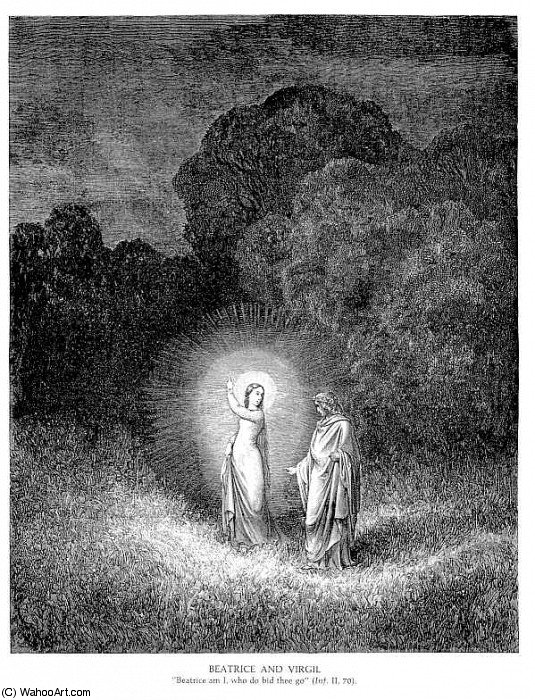
Paul Gustave Doré's engraving, “Beatrice ^ Virgil,” stands as a testament to the enduring power of literary inspiration translated into visual artistry. Executed in 1867, this masterpiece captures a pivotal moment from Dante Alighieri’s *Inferno*, depicting Beatrice and Virgil traversing the shadowy landscape of Hell – not merely as characters on paper, but as embodiments of spiritual enlightenment and unwavering devotion.
- Subject Matter & Narrative Context: Doré brilliantly illustrates Dante's depiction of Beatrice guiding Virgil through the ninth circle of Hell. This scene represents a crucial step in Virgil’s journey toward redemption, symbolizing Beatrice’s divine grace illuminating Virgil’s path amidst despair and torment. The engraving serves as a visual companion to the poem’s profound exploration of morality and faith.
- Style & Technique: Doré's signature style is characterized by meticulous detail and dramatic chiaroscuro – masterful manipulation of light and shadow—a technique perfected during his Romantic period. The engraving utilizes hatching and cross-hatching extensively, creating a palpable sense of texture that mimics the rugged terrain of Hell and emphasizes the ethereal glow emanating from Beatrice’s figure.
- Composition & Perspective: Centered around Virgil and Beatrice, Doré employs linear perspective to establish depth within the landscape, reinforcing the psychological drama unfolding before the viewer's eyes. The positioning of Beatrice on the left and Virgil on the right contributes to a dynamic composition that directs attention toward the luminous source of hope amidst darkness.
- Symbolism & Emotional Impact: The radiant light surrounding Beatrice is laden with symbolic significance—representing divine grace, purity, and spiritual illumination. Virgil’s gesture conveys reverence and trust in Beatrice's guidance, underscoring the importance of faith and devotion in overcoming adversity. Doré’s engraving evokes a feeling of solemn contemplation and awe, prompting viewers to consider themes of morality, redemption, and the transformative power of love.
- Historical Significance: Produced during the Victorian era, “Beatrice ^ Virgil” reflects the Romantic preoccupation with sublime landscapes and spiritual allegory. Doré's masterful rendering solidified his reputation as one of the foremost illustrators of his time, influencing generations of artists and cementing Dante’s *Inferno* as a cornerstone of Western literature.
A reproduction of this engraving offers more than just an image; it presents an opportunity to experience Doré's unparalleled artistic vision—a captivating glimpse into the heart of Dante’s Inferno and a celebration of enduring themes of faith, beauty, and spiritual aspiration.