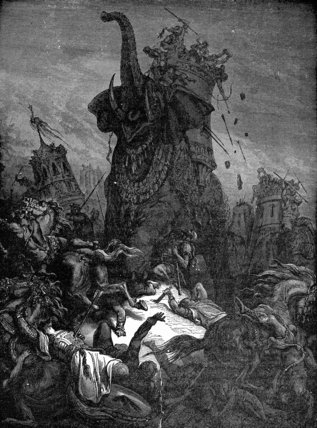
This artwork is a monumental wood engraving by Paul Gustave Doré, depicting the violent death of Eleazar at the hands of an elephant during the siege of Jerusalem. Executed in meticulous grayscale, it exemplifies Doré’s Romantic style—characterized by dramatic lighting, expressive linework, and a focus on conveying emotion through texture and perspective. The scene's composition is densely populat
A Dramatic Tableau of Biblical Conflict: Gustave Doré’s Eleazar Killed By The Elephant
Paul Gustave Doré, a titan amongst illustrators and engravers of the Victorian era, possessed an unparalleled ability to translate literary narratives into visceral visual experiences. Born in Strasbourg in 1832, his artistic journey was marked by relentless dedication to capturing emotion and detail with breathtaking precision—a pursuit that cemented his legacy as one of Romanticism’s most influential figures. From humble beginnings as a caricaturist for *Le Journal pour rire*, Doré rapidly ascended to prominence, establishing himself as a master craftsman whose engravings commanded respect and admiration across Europe. His distinctive style – characterized by monumental scale, dramatic lighting, and meticulous linework – continues to inspire artists today.
- Subject Matter & Historical Context: Doré’s “Eleazar Killed By The Elephant” draws directly from the biblical account of 2 Samuel 11:23, depicting a harrowing confrontation between David’s forces and Hiram Abiff's assassins. This scene encapsulates the anxieties surrounding religious faith and violence prevalent in Victorian society, reflecting broader concerns about morality and divine retribution. Doré skillfully captures the tension and brutality inherent in this pivotal moment of biblical history.
- Style & Technique: The artwork exemplifies Doré’s signature Romantic Realism—a stylistic approach that prioritized emotional intensity alongside meticulous observation. Employing the engraving technique, Doré utilized a burin to carve intricate lines into copper plates, achieving unparalleled textural detail and tonal gradation. This painstaking process resulted in an image brimming with palpable drama and conveying the overwhelming horror of battle.
- Composition & Visual Elements: The composition is deliberately claustrophobic, compressing figures within a walled city backdrop—a visual device that amplifies the sense of impending doom. Doré’s masterful use of perspective guides the viewer's eye towards the central confrontation between Eleazar and the elephant, emphasizing the vulnerability of the victim against the might of the aggressor. The dominant gray palette underscores the bleakness of the scene, highlighting the stark contrasts created by dramatic lighting.
- Symbolism & Emotional Impact: Beyond its narrative depiction, “Eleazar Killed By The Elephant” resonates with deeper symbolic meanings. The elephant represents overwhelming power and destructive force—a visual metaphor for the forces challenging David’s reign. Eleazar's position on the ground symbolizes helplessness and vulnerability, underscoring the tragic consequences of defiance against divine providence. Doré’s artwork evokes feelings of despair, terror, and profound sorrow, prompting contemplation on themes of mortality and faith.
- Material & Craftsmanship: Crafted from copper plates meticulously etched with burin lines and inked before being pressed onto paper, this engraving represents the pinnacle of Victorian printmaking artistry. Doré’s dedication to craftsmanship ensured that every detail—from the rough texture of stone to the smooth sheen of fabric—was rendered with breathtaking accuracy. This meticulous attention to technique elevates “Eleazar Killed By The Elephant” beyond mere illustration; it becomes a testament to Doré's artistic vision and enduring influence.
A reproduction of this masterpiece offers an opportunity to bring Doré’s dramatic aesthetic into your home, capturing the essence of Romantic Realism and preserving the profound emotional impact of this iconic biblical scene.