A Moment of Prayer Amidst Pilgrimage: Analyzing Gustave Doré’s “The Prayer of Jacob”
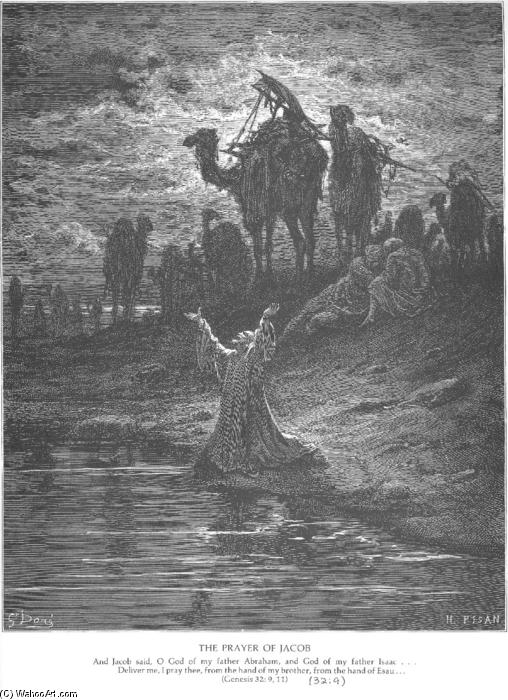
Paul Gustave Doré's "The Prayer of Jacob," a monochrome engraving executed with meticulous detail, transcends mere illustration; it embodies the spirit of Romanticism while firmly grounding itself in biblical narrative. Created around 1863, this artwork captures a pivotal scene from Genesis – Jacob wrestling with divine forces as he seeks protection before embarking on his journey to Bethel—and Doré’s masterful technique elevates it into an enduring symbol of faith and perseverance. The engraving's stark grayscale palette isn’t merely stylistic choice; it underscores the solemnity of the occasion, mirroring the spiritual struggle at its core.
- Composition & Technique: Doré employed drypoint etching on copper plate, a technique renowned for producing exceptionally fine lines and tonal gradations. This painstaking process demanded considerable skill and patience, resulting in an image brimming with textural richness—the rough stone of Jacob’s outcrop contrasts sharply with the smooth contours of his family members and camels. The artist skillfully utilized hatching and cross-hatching to sculpt shading, convincingly conveying the subdued illumination of twilight and emphasizing the vulnerability of Jacob amidst his surroundings.
- Historical Context & Narrative Depth: Produced during Doré’s prolific period of artistic output—primarily commissioned for literary adaptations of biblical tales—the engraving speaks directly to Victorian sensibilities concerned with morality and spiritual contemplation. Genesis recounts Jacob's arduous pilgrimage toward Bethel, where he wrestles with God (or an angel) symbolizing the inner conflict between doubt and unwavering belief.
- Symbolism & Emotional Resonance: The kneeling posture of Jacob is paramount—a gesture of humility before divine power. Surrounding him are his sons and camels, representing familial unity and earthly burdens juxtaposed against spiritual aspiration. Doré’s depiction powerfully communicates the emotional weight of prayerful supplication and the unwavering hope for divine intervention.
- Detailed Observation: Notice the careful rendering of Jacob's musculature—a testament to Doré’s anatomical precision—and the subtle nuances in facial expressions conveying exhaustion and determination. The artist’s attention to detail extends beyond mere representation; it aims to evoke empathy within the viewer, immersing them in the atmosphere of biblical pilgrimage.
Interior Design Considerations: This engraving's monochrome aesthetic lends itself beautifully to minimalist interiors or spaces seeking a touch of contemplative elegance. Reproductions offer an opportunity to introduce a timeless artwork into contemporary homes—a visual reminder of faith, resilience, and the enduring power of storytelling. Consider framing it in a simple wooden frame to complement its understated grandeur.