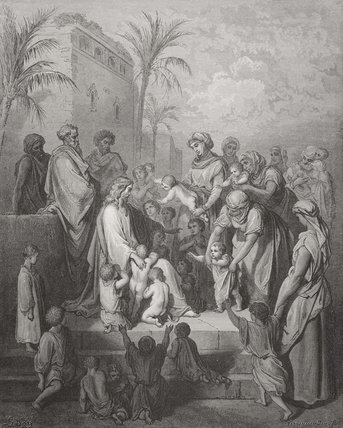
A Vision of Grace: Jesus Blessing The Children by Paul Gustave Doré
Paul Gustave Doré’s “Jesus Blessing The Children” is more than just an engraving; it's a visceral embodiment of the biblical narrative, rendered with a Romantic intensity that continues to captivate viewers over a century later. This powerful image depicts the pivotal moment from Matthew 18:3-5 – Jesus instructing his disciples on how to respond when they find someone being excluded – and is characterized by its dramatic composition, masterful use of light and shadow, and Doré’s signature expressive style.
Romantic Drama & Technical Mastery
Doré's technique is central to the artwork's impact. Executed as a burin engraving on metal, the image relies entirely on meticulously crafted lines – thick for solidity, thin for delicacy – to build form and texture. The resulting surface possesses a remarkable depth and richness, mimicking the textures of fabric, skin, and even the rough-hewn stone of the temple setting. The monochromatic palette—a deep, rich grey—amplifies the dramatic effect, eliminating color distractions and focusing attention entirely on the interplay of light and shadow. This deliberate choice aligns perfectly with the Romantic movement’s emphasis on emotion, subjective experience, and the sublime power of nature – or in this case, the divine.
Symbolism & Narrative Depth
Beyond a simple depiction of a biblical scene, “Jesus Blessing The Children” is rich in symbolic meaning. The tightly packed figures represent the universality of Jesus’s message of inclusion and compassion. Joseph and Mary, presented as central figures, embody faith and obedience, while Simeon, with his aged face and outstretched hand, represents wisdom and anticipation of Christ's arrival. The children themselves symbolize innocence and vulnerability – a poignant reminder of the vulnerable position of those seeking salvation. The setting itself—a bustling scene within a temple—underscores the importance of religious devotion and community.
Emotional Resonance & Lasting Impact
Doré’s masterful manipulation of light and shadow creates an intensely emotional experience for the viewer. The unseen source of illumination casts dramatic shadows, heightening the sense of drama and mystery. The composition, with its crowded space and dynamic movement, evokes a feeling of both awe and perhaps even confusion – mirroring the potential complexity of faith itself. This engraving’s enduring power lies in its ability to tap into fundamental human emotions: compassion, reverence, and a yearning for connection. It remains a testament to Doré's extraordinary talent and his profound understanding of the human condition.