Explore more about Gustave Doré and his iconic engravings at ArtsDot.com.
Paul Gustave Doré
Paolo and Francesca II
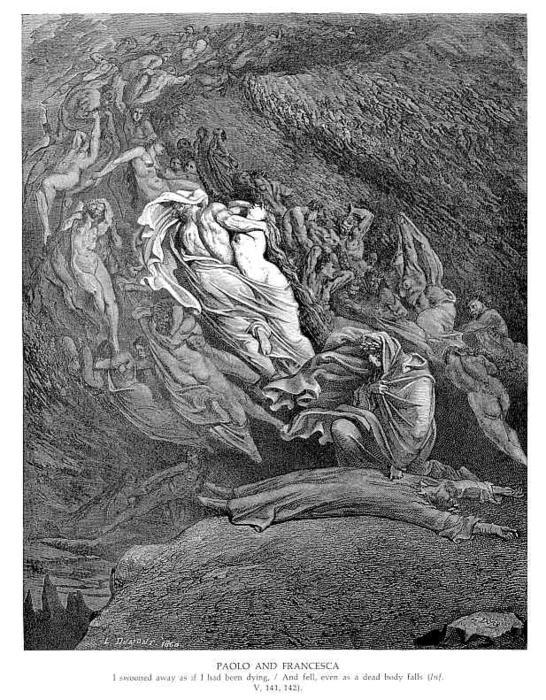
This engraving depicts Paolo and Francesca, figures from Dante's Inferno, locked in an embrace amidst a swirling vortex of tormented souls. Executed in grayscale tones with meticulous linework—hatching, cross-hatching, and detailed shading—it embodies Doré’s Romantic style, captur
Explore the dramatic wood engravings & illustrations of Gustave Doré (1832-1883). Master of Romanticism, famed for Biblical scenes, Dante's Inferno, and literary masterpieces. Discover his influential art!
A Descent into Darkness: Gustave Doré’s Dramatic Rendering of Dante's Inferno
Paul Gustave Doré, a titan amongst Romantic illustrators, possessed an unparalleled ability to translate literary narratives into visceral visual experiences. His magnum opus, “Paolo and Francesca II,” exemplifies this mastery—a haunting engraving that captures the agonizing torment of Dante’s Inferno with breathtaking precision and emotional depth. More than just a depiction of biblical scenes or fantastical tales; Doré's work delves into the very core of human suffering, confronting viewers with uncomfortable truths about desire, regret, and inescapable fate. This piece stands as a testament to his unwavering commitment to capturing not merely what was seen but what *felt*.
The Anatomy of Horror: Composition and Technique
Doré’s compositional genius is immediately apparent. The diagonal thrust of Paolo and Francesca's embrace dominates the frame, pulling the eye upwards into a swirling vortex populated by tormented souls—a visual representation of Hell itself. This dynamic arrangement isn’t accidental; it underscores the instability and chaos inherent in Dante’s depiction of damnation. Doré meticulously employed hatching and cross-hatching techniques to sculpt volume and depth within the engraving process, achieving remarkable realism despite the absence of color. Fine lines delineate forms with astonishing accuracy, creating a textured surface that mimics the rough materiality of stone and despair. The artist skillfully manipulated line density to convey perspective—closer figures are rendered with greater detail and contrast, while those receding into the background fade away, reinforcing the sense of vastness and terror.
Symbolism Beneath the Surface: Dante’s Inferno Revisited
“Paolo and Francesca II” is inextricably linked to Dante Alighieri's “Divine Comedy,” specifically the second canto of Inferno. The engraving portrays Paolo and Francesca—lovers consumed by illicit passion—locked in an embrace as they are tormented by demons. Their intertwined bodies symbolize not only their doomed love but also the inescapable grip of sin and its consequences. The swirling vortex serves as a potent metaphor for Hell’s turbulent energies, mirroring the psychological torment experienced by Dante's characters. Doré brilliantly captures the emotional core of Dante’s narrative—the agonizing regret of lost opportunity and the crushing weight of eternal punishment.
A Legacy Etched in Stone: Doré’s Influence on Art History
Gustave Doré’s influence extends far beyond his own lifetime, shaping the aesthetic sensibilities of subsequent generations of artists. His dramatic style—characterized by meticulous detail, expressive shading, and masterful use of line—became a cornerstone of Romantic illustration and continues to inspire contemporary artists today. “Paolo and Francesca II” exemplifies Doré's ability to transform literary ideas into unforgettable visual images, cementing his place as one of the most celebrated illustrators in European art history. Its enduring power lies not only in its technical brilliance but also in its profound exploration of human emotion—a timeless reminder of the darkness that resides within us all.