Paul Gustave Doré (1832 - 1883)

Explore the dramatic wood engravings & illustrations of Gustave Doré (1832-1883). Master of Romanticism, famed for Biblical scenes, Dante's Inferno, and literary masterpieces. Discover his influential art!

A Symphony of Shadows: The Lost Paradise of Doré

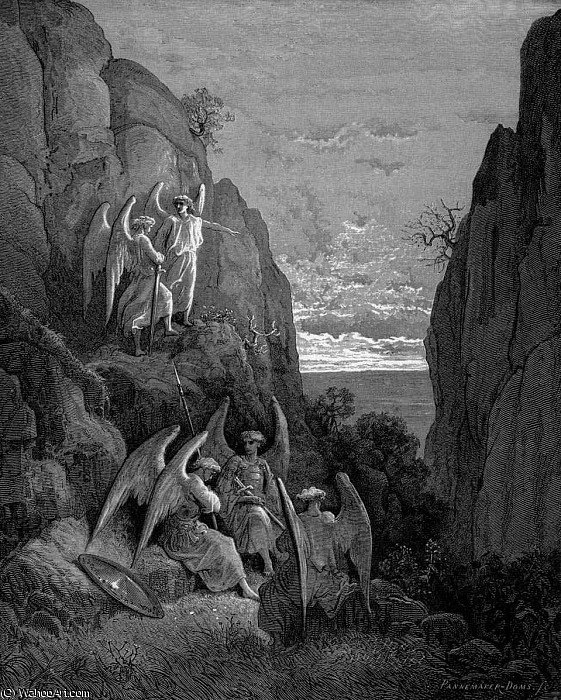
  • Gustave Doré’s “Paradise Lost” isn't merely an illustration; it’s a visceral plunge into Milton’s epic, a dramatic translation of the biblical narrative rendered with unparalleled emotional intensity. Executed in the mid-19th century, this monumental engraving captures a pivotal moment – Satan’s defiant confrontation with God and his angelic legions after the expulsion of Adam and Eve from Eden. It's a scene brimming with theological weight and primal struggle, translated into a visual language that resonates across centuries.
  • Doré’s genius lay in his ability to distill complex ideas into powerfully evocative imagery. He doesn’t simply depict the story; he *conveys* it – the arrogance of Satan, the despair of fallen angels, and the profound tragedy of humanity's loss of innocence. The sheer scale of the composition—a vast, cavernous space filled with towering figures—heightens this sense of drama and emphasizes the epic scope of Milton’s poem.
  • Notice the masterful use of chiaroscuro – the dramatic interplay of light and shadow – a technique perfected by Doré himself. This isn't a gentle illumination; it’s a harsh, almost brutal light that accentuates every detail, from the jagged edges of the cliffs to the tormented expressions on the faces of the angels. The deep blacks and rich browns create a sense of foreboding and amplify the scene’s inherent tension.

Technique & Materials: A Window into Doré's Process

  • Doré was a master printmaker, renowned for his meticulous attention to detail and his innovative use of engraving techniques. He employed a complex process involving multiple copper plates, each etched with varying degrees of fine lines. These plates were then inked and pressed onto paper using a large, hand-operated printing press.
  • The resulting image is incredibly detailed – almost photographic in its precision. The texture of the rocks, the folds of the angels’ robes, even the individual feathers on their wings are rendered with astonishing realism. This level of detail was achieved through countless hours of painstaking work, a testament to Doré's dedication and skill.
  • The paper itself played a crucial role in the final effect. Doré favored high-quality papers that could withstand the pressure of the printing press and retain their color and texture. The choice of paper contributed significantly to the image’s depth and richness.

Symbolism & Narrative: Layers of Meaning

  • Beyond its literal depiction of a biblical scene, “Paradise Lost” is rich in symbolism. Satan, depicted as a towering figure with fiery wings, represents rebellion, pride, and the corrupting influence of evil. The angels surrounding him symbolize divine judgment and the consequences of disobedience.
  • The setting – a vast, desolate landscape dominated by towering cliffs – reinforces the themes of isolation, despair, and loss. It’s a place of exile, a reminder of humanity's fallen state.
  • Doré’s interpretation aligns closely with Milton’s original text, capturing the poem’s central themes of free will, moral responsibility, and the eternal struggle between good and evil. The image serves as a powerful visual representation of this timeless story.

A Timeless Masterpiece: Bringing Doré's Vision to Life

  • This hand-painted reproduction captures the essence of Doré’s original engraving with breathtaking fidelity. Each detail, from the dramatic lighting to the intricate textures, is meticulously recreated by our skilled artisans.
  • Available in a range of sizes and materials – including museum-quality canvas and archival paper – this reproduction offers a stunning addition to any art collection or interior space. It’s a timeless masterpiece that will continue to inspire awe and wonder for generations to come.
  • Own a piece of art history—a tangible connection to one of the most influential illustrations of all time.