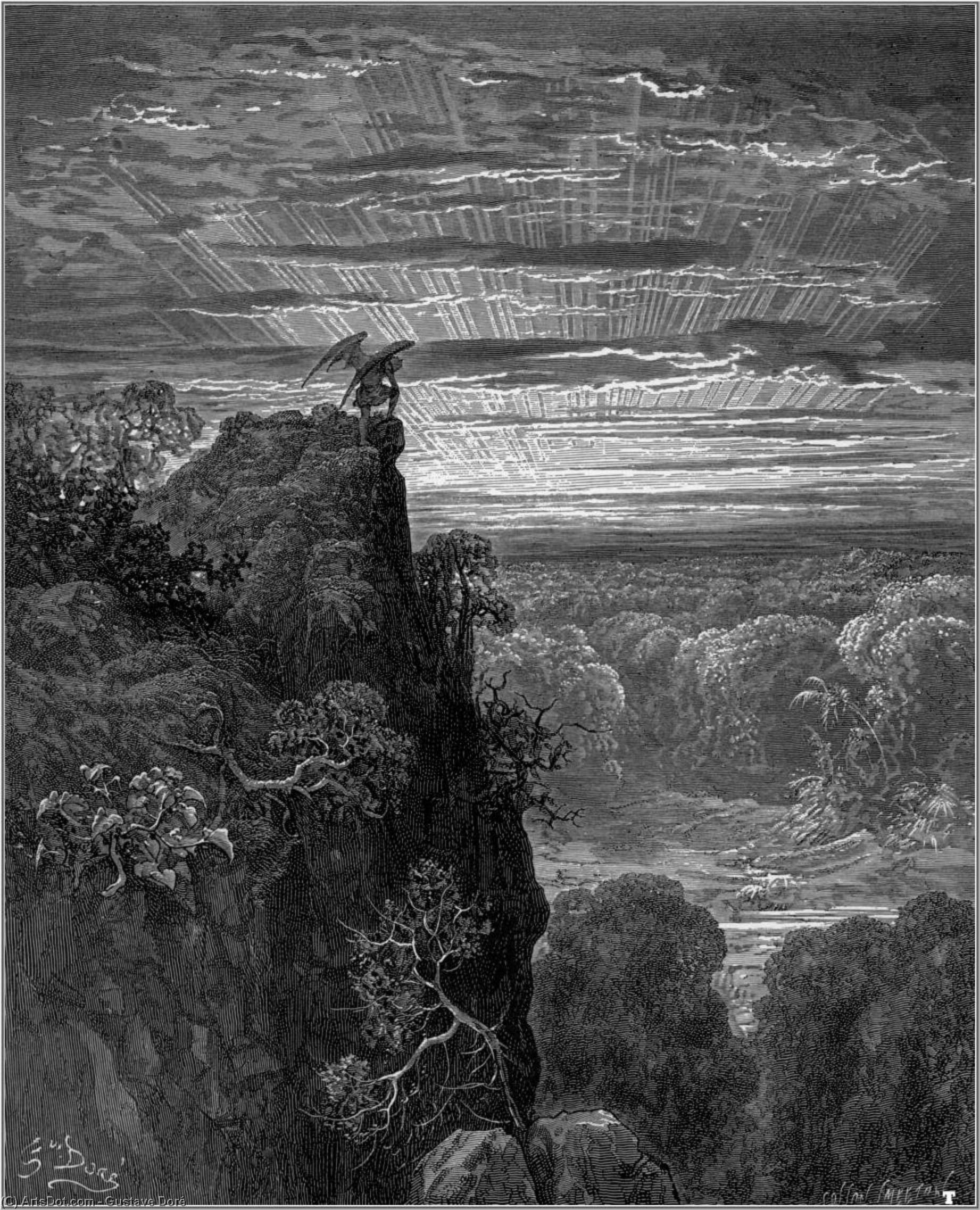
Paradise Lost – A Descent into Darkness Illuminated by Divine Light
Gustave Doré’s “Paradise Lost,” an engraving born from the fertile imagination of Milton and meticulously rendered in monochrome, stands as a testament to Romantic art's preoccupation with grand narratives and visceral emotion. Published in 1867, this artwork isn’t merely a depiction of biblical scripture; it’s a profound meditation on themes of rebellion, loss, and the inescapable consequences of transgression—a cornerstone of Victorian artistic expression.
The engraving captures Lucifer's chilling observation of Eden after his expulsion from Heaven. Doré doesn’t shy away from portraying the bleakness of this fallen realm; a towering cliff face dominates the left side, choked with thorny vegetation and jagged rocks – a visual representation of the devastation wrought by Satan’s defiance. From its summit, Lucifer gazes upon a desolate landscape stretching into infinity, bathed in an unsettling twilight punctuated by shafts of radiant light—a deliberate juxtaposition designed to underscore the grandeur of God's dominion contrasted against the despair of demonic rule.
- Composition & Perspective: Doré employs a dramatic diagonal composition, guiding the viewer’s eye upwards towards Lucifer and outwards into the expansive emptiness. Atmospheric perspective subtly diminishes distant elements, reinforcing the sense of depth and conveying the immensity of God's universe against the confines of Eden.
- Technique & Materials: Executed as a steel engraving, Doré’s method involved meticulously incising lines onto a metal plate before applying ink and pressing it onto paper—a technique renowned for its ability to achieve exceptional detail and tonal range. The resulting image is a hauntingly beautiful monochrome reproduction of Milton's iconic poem.
- Line Work & Texture: Doré’s mastery lies in his masterful use of hatching and crosshatching, techniques that transform lines into palpable textures. Fine lines delineate delicate foliage and rocky outcrops, while denser shading imbues the cliff face and sky with a sense of ruggedness and turbulent energy.
- Symbolism & Emotion: Lucifer embodies temptation and corruption—a figure consumed by pride and driven to usurp divine authority. The desolate landscape symbolizes the aftermath of sin and the irrevocable fall from grace, evoking feelings of melancholy and apprehension.
A Symphony of Shadows and Light – Doré’s Artistic Vision
Doré's stylistic approach aligns perfectly with Romantic ideals—a fervent embrace of realism tempered by theatrical grandeur. He sought to convey not just what he saw but how he *felt*, channeling the anxieties and spiritual uncertainties of his era into a visual language that continues to resonate powerfully today.
Detailed Examination: Line Work & Texture
The engraving’s remarkable textural quality stems from Doré's painstaking attention to detail. Observe how crosshatching creates the impression of rough rock surfaces, mirroring the jagged contours of Lucifer’s domain. Conversely, softer shading defines ethereal clouds and highlights the radiant beams of divine light—a deliberate contrast that amplifies the artwork’s emotional impact.
Historical Context & Influence
“Paradise Lost” emerged during a period marked by intellectual ferment and artistic experimentation. Milton's poem challenged conventional religious dogma, prompting artists like Doré to explore themes of morality and spirituality with unprecedented boldness. This engraving cemented Doré’s reputation as one of the foremost illustrators of his time, influencing generations of artists who followed.
Conclusion: An Enduring Legacy
"Paradise Lost" remains a captivating masterpiece—a visual embodiment of Milton's epic tale and a stunning demonstration of Doré’s unparalleled artistic skill. Its enduring appeal lies in its ability to evoke profound contemplation on the human condition, reminding us that even amidst darkness, there exists the promise of divine grace.