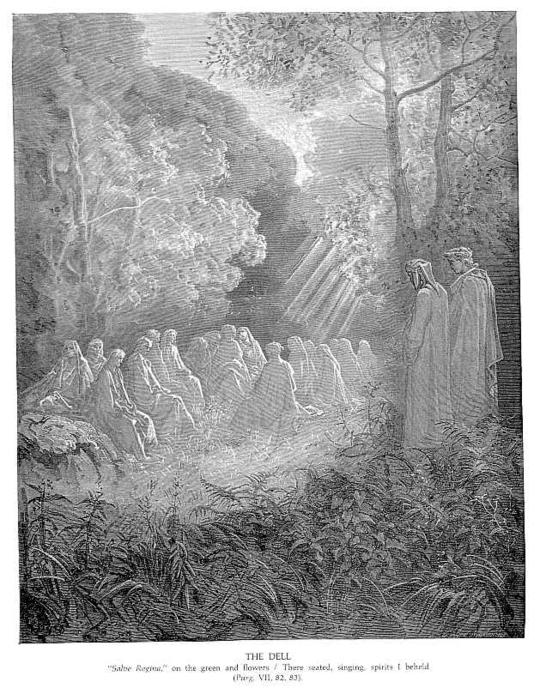
This evocative wood engraving depicts a contemplative gathering of figures in a secluded dell, bathed in ethereal light—likely referencing Dante’s *Inferno*. Doré's meticulous technique utilizes dense hatching and directional lines to convey texture and depth, creating a scene rich with symbolic resonance. Known for his dramatic Romantic style, Doré expertly blends realism and imagination through
Explore the dramatic wood engravings & illustrations of Gustave Doré (1832-1883). Master of Romanticism, famed for Biblical scenes, Dante's Inferno, and literary masterpieces. Discover his influential art!
A Vision of Tranquility: Exploring Gustave Doré’s “The Dell”
Paul Gustave Doré's "The Dell," created in approximately 1867, stands as a testament to the Romantic spirit—a masterful blend of meticulous detail and dramatic emotional resonance achieved through the painstaking process of wood engraving. More than just an illustration, it’s a carefully crafted tableau that invites contemplation on themes of spirituality and solitude, rooted firmly within Dante's *Inferno*, albeit presented with a serene beauty markedly different from its literary source material.
Composition and Technique: Lines That Breathe
The artwork’s strength lies in its masterful composition—a balanced arrangement prioritizing visual harmony. Doré employs a pyramidal structure, anchoring the central group of seated figures amidst a backdrop of towering trees that frame the scene with an almost claustrophobic intimacy. Dense cross-hatching dominates the engraving technique, meticulously applied to create textures and shading that convey depth and atmosphere. These interwoven lines aren’t merely decorative; they are fundamental to conveying the ethereal quality of light filtering through the foliage—a crucial element in establishing a mood of otherworldly calm. Doré's dedication to capturing subtle tonal variations elevates the image beyond mere representation, transforming it into an embodiment of Romantic idealism.
Symbolism and Narrative Resonance
The scene’s evocative symbolism speaks volumes about its conceptual underpinning. The seated figures represent souls embarking on a spiritual journey—a direct reference to Dante’s depiction of purgatorial contemplation within *Inferno*. Their posture exudes stillness and introspection, mirroring the contemplative mood fostered by Doré's masterful use of light and shadow. The standing figure on the right acts as an observer, perhaps symbolizing divine guidance or simply acknowledging the profound experience unfolding before him. This visual narrative underscores the artwork’s exploration of existential questions—questions concerning faith, morality, and the human condition.
Historical Context: Romanticism's Quiet Rebellion
Doré’s “The Dell” emerged during a pivotal moment in artistic history – the waning years of Romanticism. While Romantic artists championed passion and dramatic expression, Doré subtly countered this trend with an emphasis on serene beauty and psychological depth. He skillfully utilized engraving—a technique favored for its ability to reproduce intricate detail—to convey these ideas with remarkable precision. Unlike oil paintings which prioritize color and vibrancy, engraving allowed Doré to sculpt light and shadow with unparalleled subtlety, mirroring the Romantic preoccupation with capturing inner emotion through visual form.
Emotional Impact: A Moment of Contemplative Peace
Ultimately, “The Dell” succeeds in transporting the viewer into a realm of contemplative peace. The muted gray palette reinforces this feeling, creating an atmosphere reminiscent of twilight—a time often associated with introspection and spiritual awakening. Doré’s meticulous rendering captures not just the visual appearance of the woodland setting but also its emotional essence—a quiet invitation to pause, reflect, and appreciate the beauty inherent in solitude. It remains a powerful illustration of Romantic idealism, demonstrating that profound artistic expression can reside within understated elegance.