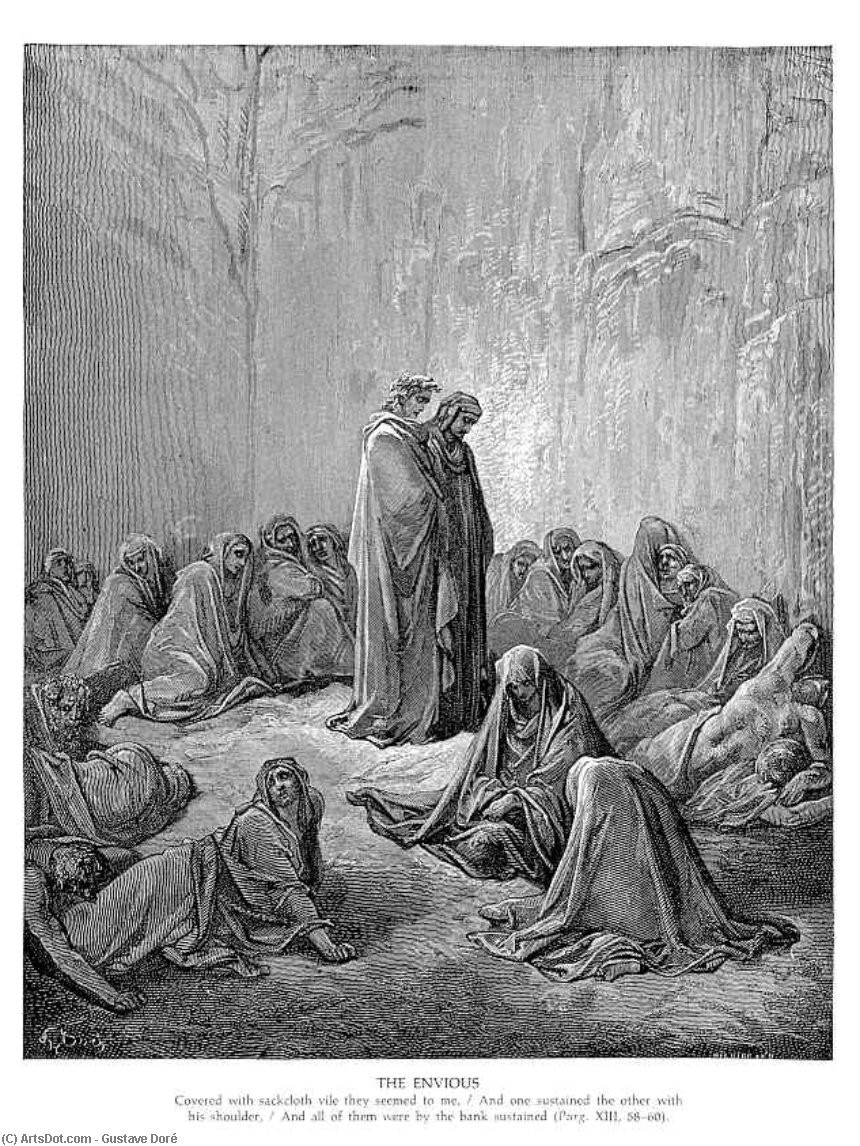
This engraving by Paul Gustave Doré exemplifies Romantic illustration, utilizing meticulous hatching and cross-hatching to convey depth and texture. Inspired by Dante’s Inferno, it portrays figures consumed by resentment within a claustrophobic composition reflecting moral corruption. Explore Doré's legacy at ArtsDot.
Delve into Gustave Doré's 'The Envious,' a haunting black & white engraving em
The Envious: A Descent into Gothic Allegory
Paul Gustave Doré’s “The Envious” isn't merely an engraving; it’s a meticulously crafted visual poem that plunges viewers into the chilling depths of human emotion. Executed in 1867, during the fervent embrace of Romanticism—a movement obsessed with dramatic storytelling and exploring the darker recesses of the human psyche—this artwork transcends simple depiction to become a profound meditation on jealousy and its corrosive effects. Doré’s signature style is instantly recognizable: a masterful blend of meticulous detail and theatrical grandeur that anticipates the expressive power of Symbolist art.
- Composition & Atmosphere: The circular arrangement immediately establishes a claustrophobic tension, drawing attention to the central figures—two individuals enveloped in cloaks—who dominate the scene. Surrounding them is a throng of tormented souls, their postures conveying despair and resentment. Doré’s masterful use of hatching and cross-hatching builds up tonal values, creating an oppressive atmosphere reminiscent of Dante's Inferno, mirroring the artist’s fascination with biblical narratives and moral allegory.
- Technique & Material: Doré achieved his remarkable level of detail through a painstaking process utilizing a burin—a tool that incises lines into a copper plate—followed by ink application and printing onto paper. This technique allowed for nuanced shading and textural variations, capturing the palpable gloom of the depicted environment. The resulting engraving possesses an undeniable physicality, reflecting Doré’s commitment to conveying emotion through visual precision.
- Symbolism & Narrative Depth: Beyond its immediate visual impact, “The Envious” operates on multiple symbolic levels. The cloaked figures obscure faces, representing anonymity and universality—the insidious nature of envy transcends individual circumstances. Interpretations suggest the central individuals embody those envied or those who incite jealousy, furthering the artwork’s exploration of moral corruption and psychological torment.
- Historical Context: Doré's work emerged from a period grappling with anxieties about societal decay and spiritual disillusionment—themes prevalent in Romantic literature and art. The engraving reflects the movement’s preoccupation with exploring human passions and confronting uncomfortable truths, cementing Doré’s place as a pivotal figure in shaping Victorian artistic sensibilities.
- Emotional Resonance: “The Envious” succeeds in conveying an overwhelming sense of dread and sorrow. Doré's skillful manipulation of light—casting shadows that emphasize expressions and postures—amplifies the artwork’s emotional intensity, prompting contemplation on themes of envy, ambition, and the destructive consequences of unchecked desire.
Recommended Reproduction: A stunning high-quality reproduction captures Doré's dramatic artistry, bringing this haunting masterpiece into your home or studio.