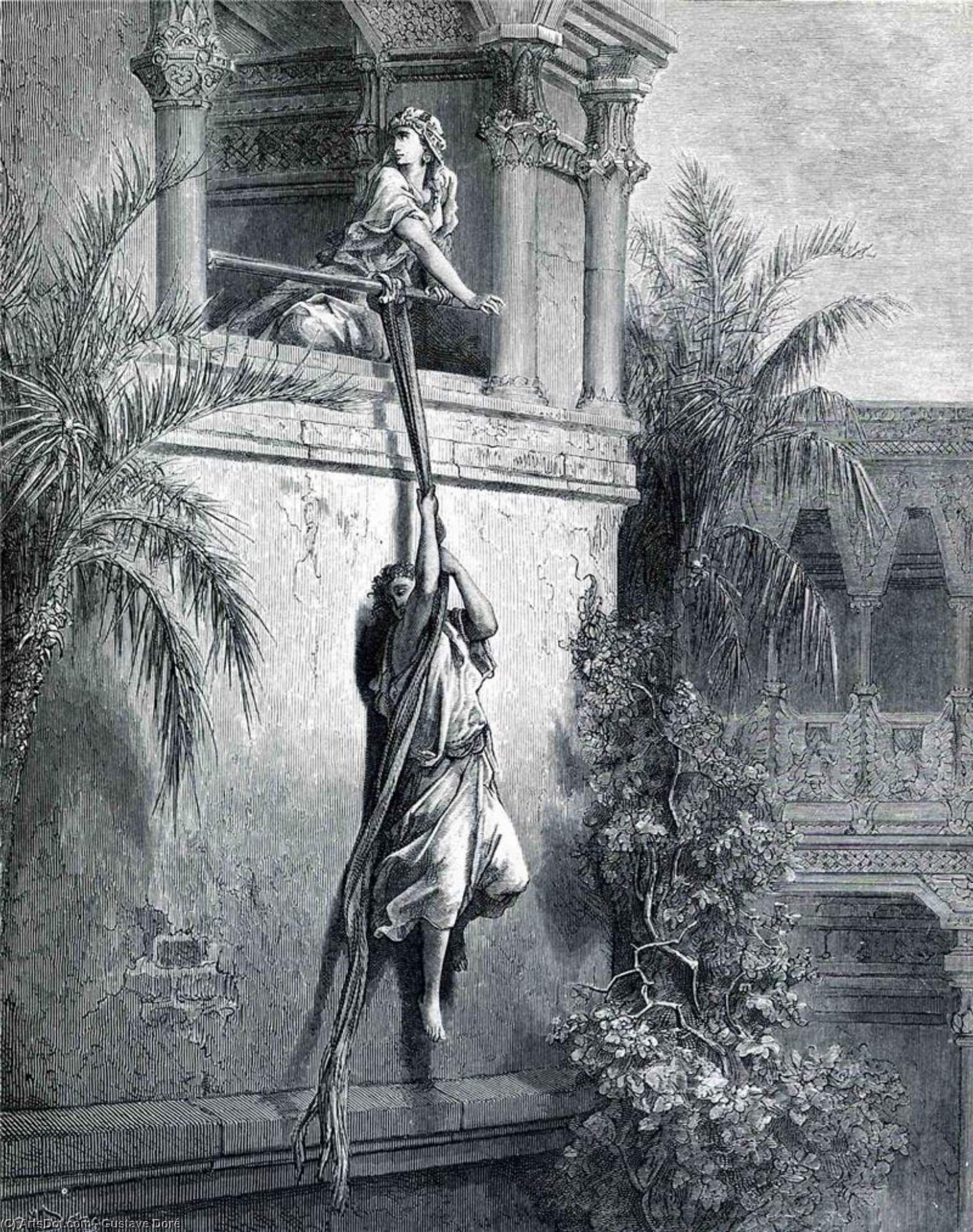
Gustave Doré’s “The Escape of David Through The Window” (1866) is a striking wood engraving depicting a perilous rescue scene from the Bible. Executed in meticulous detail, Doré blends realism with theatrical flair, utilizing bold lines and hatching to convey texture and depth within an architectural setting illuminated by dramatic lighting. This artwork exemplifies Romanticism’s penchant for emot
The Escape of David through the Window – A Dramatic Tableau by Gustave Doré
Gustave Doré’s “The Escape of David through the Window,” completed in 1866, stands as a testament to Romanticism's obsession with narrative grandeur and its masterful manipulation of visual language. More than just an illustration of biblical scripture—specifically recounting David’s daring maneuver to evade capture after slaying Goliath—the engraving embodies a profound exploration of courage, vulnerability, and the precariousness of freedom against overwhelming odds.
- Subject Matter & Narrative Depth: Doré meticulously captures the pivotal moment when King David orchestrates his liberation from imprisonment by scaling a window. This scene draws heavily upon biblical lore, portraying David as both victim and victor—a figure desperately clinging to hope amidst imminent danger. The artist’s intention wasn't merely to depict an event but to convey a complex psychological drama, mirroring the anxieties of rebellion and the yearning for deliverance.
- Style & Technique – Romantic Drama Embodied: Doré’s signature style is instantly recognizable—a blend of realism infused with theatrical exaggeration. He employs meticulous detail to render architectural elements like towering columns and arched doorways, creating a claustrophobic backdrop that amplifies the tension of David's escape attempt. The engraving technique itself—copperplate etching—allowed for unparalleled precision in line work and shading, resulting in an image brimming with textural richness.
- Composition & Visual Hierarchy: The composition is deliberately structured around a central vertical axis defined by the rope supporting David’s ascent. This dynamic element draws the viewer's gaze upwards, emphasizing the perilous journey and highlighting the vulnerability of the protagonist. Doré skillfully utilizes linear perspective to establish depth within the architectural space, reinforcing the sense of confinement and amplifying the drama unfolding before our eyes.
- Symbolism & Emotional Resonance: Beyond its literal depiction, “The Escape of David through the Window” resonates with broader symbolic themes. The window represents opportunity—a fragile portal through which escape is sought—while the climbing plant symbolizes resilience and perseverance. Doré’s masterful use of chiaroscuro – dramatic contrasts between light and shadow – evokes feelings of suspense, fear, and ultimately, triumph.
- Historical Context & Artistic Influence: Created during a period marked by intellectual ferment and artistic experimentation, Doré's engraving aligns perfectly with the Romantic movement’s preoccupation with emotion, imagination, and heroic narratives. It anticipates later developments in printmaking and visual storytelling, cementing Doré’s legacy as one of the foremost illustrators of his era and inspiring countless artists to come.
A reproduction of this iconic artwork offers a captivating glimpse into Doré's artistic vision—a masterful blend of meticulous craftsmanship and emotive storytelling that continues to captivate audiences today. Its dramatic composition, evocative symbolism, and unparalleled textural detail make it an exceptional choice for interior design projects seeking to infuse spaces with grandeur and contemplation.