Gustave Doré
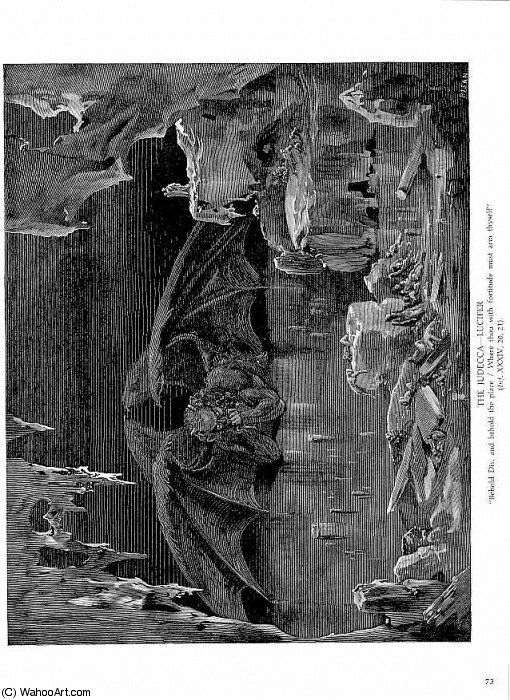
Experience the chilling grandeur of Gustave Doré's 'The Judecca Lucifer,' a masterful engraving depicting Dante’s Inferno. Explore intricate linework and dramatic chiaroscuro, capturing the terror of Lucifer imprisoned in ice.
A Descent into Darkness: Examining Gustave Doré’s ‘The Judecca Lucifer’
Gustave Doré's engraving, “The Judecca Lucifer,” stands as a monumental testament to Romantic artistic fervor and the enduring power of literary illustration. Published in 1867 alongside Dante Alighieri’s *Inferno*, this artwork isn’t merely a visual depiction; it’s an immersive experience designed to transport viewers into the heart of Hell itself—a chilling panorama rendered with unparalleled detail and dramatic intensity.
- Subject Matter & Context: Doré meticulously captured Dante's harrowing vision of Lucifer’s torment, specifically the ninth circle of Hell – Judecca – where Lucifer is imprisoned in icy darkness, surrounded by demonic legions desperately clinging to him. This scene derives directly from Dante’s poetic masterpiece, cementing its place within a broader tradition of visualizing religious narratives.
- Style & Technique: The engraving exemplifies Doré's signature style—a masterful blend of Romantic realism and theatrical imagination. Employing the meticulous craft of wood engraving, he achieved astonishing textural depth through dense cross-hatching and hatching techniques. These methods skillfully simulate the rough surface of rock formations and the grotesque flesh of tormented demons.
- Composition & Visual Elements: The composition is deliberately unsettling, prioritizing dynamism over conventional perspective. Lucifer dominates the lower right corner, encircled by a chaotic swirl of demonic figures—a deliberate choice to convey the overwhelming scale and terror of Lucifer’s dominion. Angular rock formations contrast with fluid demonic forms, furthering the sense of disorientation.
- Symbolism & Emotional Impact: Beyond its visual splendor, “The Judecca Lucifer” resonates deeply with symbolic meaning. Lucifer represents ultimate evil—the antithesis of divine goodness—and his imprisonment symbolizes humanity’s eternal struggle against temptation and damnation. Doré's masterful rendering evokes feelings of dread, despair, and visceral horror, prompting contemplation on themes of sin, punishment, and the inescapable consequences of transgression.
- Historical Significance: Doré’s engraving profoundly impacted Victorian audiences and solidified Dante’s *Inferno* as a cornerstone of Western literature. It remains an influential exemplar of Romantic illustration, demonstrating how artists can translate complex narratives into emotionally resonant visual experiences—a legacy that continues to inspire contemporary art reproductions.
ArtsDot offers exceptional high-resolution reproductions of “The Judecca Lucifer,” allowing collectors and interior designers alike to appreciate Doré’s artistic brilliance in stunning detail. Explore the artwork here.