A Glimpse into a Fantastical Realm: Gustave Doré's "Untitled (8555)"
Paul Gustave Doré’s “Untitled (8555)” is not merely an illustration; it’s a portal. A window into a world teeming with serpentine creatures, rendered in exquisite detail and steeped in the dramatic flair that defined the artist's career. This black and white engraving, characteristic of Doré’s prolific output during the 19th century, immediately commands attention with its sheer scale and intricate composition. It is a testament to his mastery of wood engraving—a technique demanding both precision and artistic vision—and offers a compelling glimpse into the Romantic imagination that captivated audiences across Europe.
The Dance of Serpents: Composition and Technique
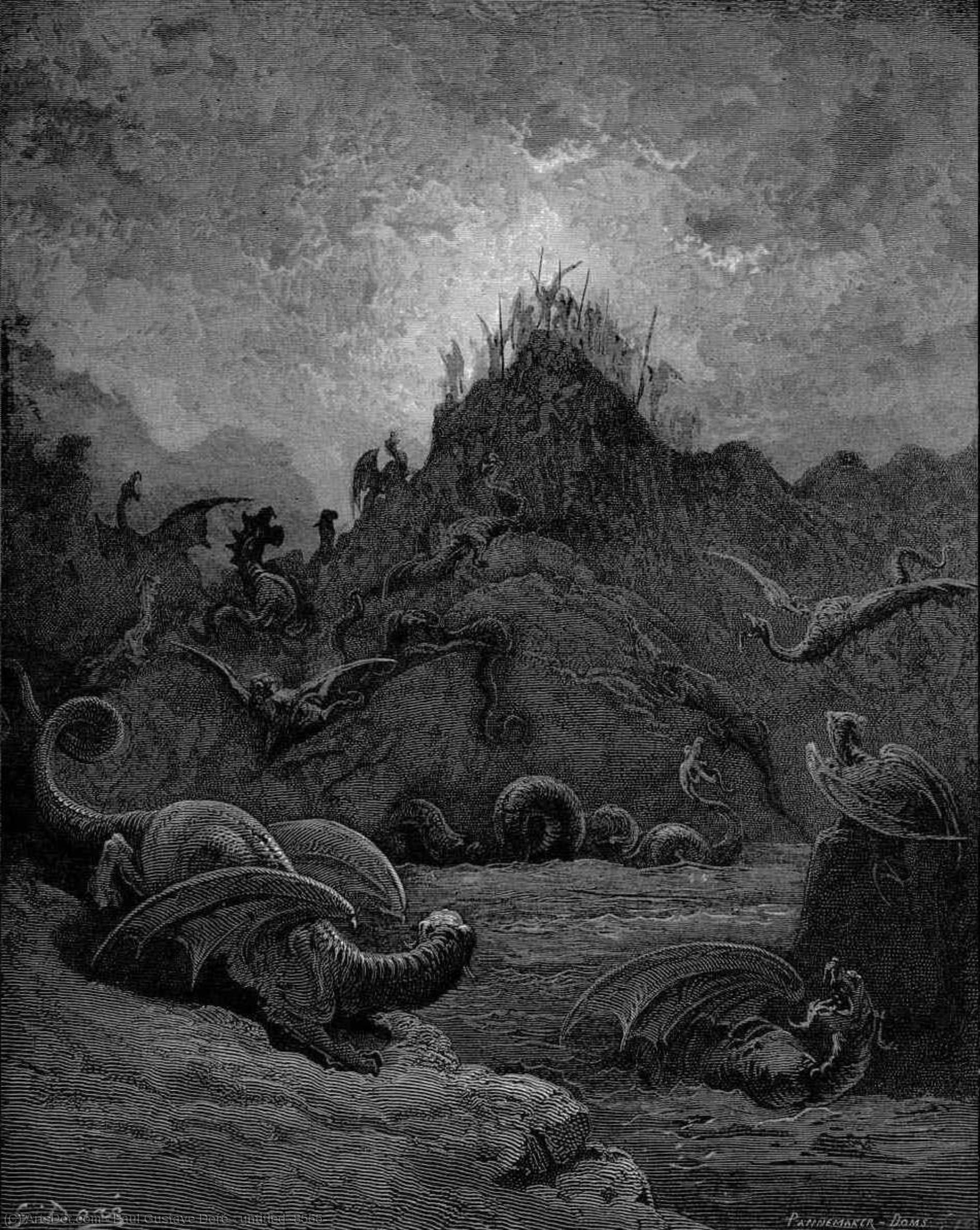
The artwork’s power lies in its dense, almost overwhelming detail. The lower half of the image is dominated by a writhing mass of serpentine creatures, each possessing distinct dragon-like features. These aren't simply beasts; they are figures imbued with an unsettling vitality, locked in what appears to be a perpetual state of conflict or coexisting within a desolate landscape. Rising above this chaotic scene is a rocky outcrop crowned with a fortress or city structure—a silent observer to the drama unfolding below. Doré’s use of diagonal lines, created by the bodies of the creatures and the sloping terrain, guides the viewer's eye towards the distant peak, emphasizing the vastness of this fantastical realm. The monochromatic palette, ranging from deep blacks representing shadows to light grays highlighting textures, amplifies the dramatic effect. The technique itself is remarkable; Doré rarely carved the woodblocks himself, instead designing intricate images that were then meticulously transferred to wooden blocks by skilled artisans. This allowed for a level of detail and complexity rarely seen in printmaking at the time, and it’s evident in every scale, feather, and contour within this piece.
Echoes of Romanticism: Historical Context and Influences
To fully appreciate “Untitled (8555),” one must understand its historical context. Doré flourished during a period when Romanticism was giving way to new artistic movements, yet his work remained firmly rooted in the dramatic sensibilities of the era. His illustrations for literary classics like Dante’s *Inferno* and Milton’s *Paradise Lost* cemented his reputation as a master storyteller through visual means. This particular piece shares stylistic similarities with those earlier works—the sense of scale, the dramatic lighting, and the focus on fantastical creatures all point to Doré's established artistic vocabulary. The influence of artists like J.J. Grandville is also apparent in the expressive characterization of the serpentine beings. The late 19th century was a time of great social change and upheaval, and many artists explored themes of chaos, conflict, and the darker aspects of human nature—themes that resonate strongly within this engraving.
Symbolism and Emotional Resonance
Beyond its technical brilliance, “Untitled (8555)” evokes a powerful emotional response. The sheer number of creatures, their intertwined forms, and the desolate landscape create a sense of awe mixed with unease. It’s difficult to escape the feeling that this is not merely a depiction of fantastical beasts but an allegory for something deeper—perhaps the struggle between order and chaos, or the inherent conflict within human nature itself. The dark palette and dynamic composition contribute to a pervasive atmosphere of mystery and dread. The fortress in the background could symbolize civilization attempting to contain the primal forces represented by the serpents, adding another layer of symbolic complexity. Ultimately, Doré’s work invites viewers to contemplate the darker aspects of existence—the fears and anxieties that lie beneath the surface of our everyday lives.