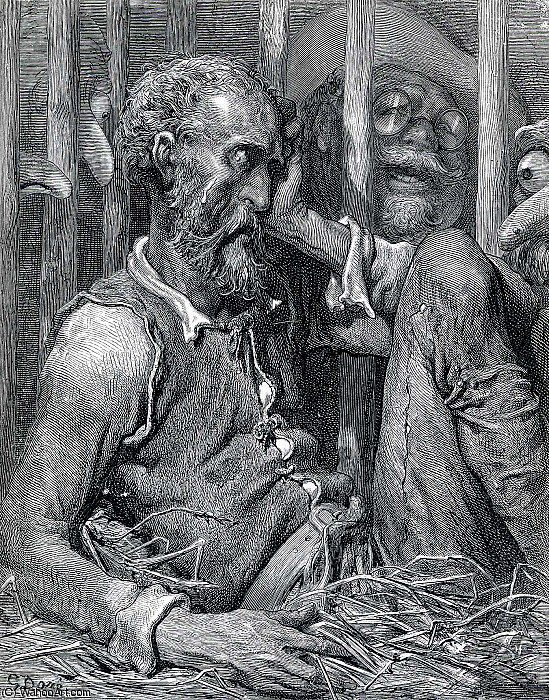
This evocative engraving depicts two figures engaged in clandestine communication within a prison-like setting. Doré’s meticulous detail captures the somber mood of confinement and secrecy, reflecting Romantic ideals.
Delve into Gustave Doré's haunting engravings and paintings! Explore 'untitled (981)', inspired by Newgate Prison, showcasing Romantic realism & masterful line work – a timeless mas
A Study in Shadow and Silence: Gustave Doré’s “Prisoners’ Round”
Paul Gustave Doré (1832-1883), a titan of Romantic illustration, possessed an unparalleled ability to distill complex narratives into visually arresting images. His magnum opus, "Prisoners' Round," painted in 1890 during his confinement at Saint Paul’s Asylum in Saint Remy – a period marked by profound mental anguish – transcends mere depiction; it embodies the artist’s tormented soul and confronts viewers with unsettling questions about human dignity and despair. Inspired directly by Gustave Doré’s seminal engraving of Newgate Prison published in 1872, this painting isn't simply a visual echo but an ambitious reimagining that elevates the original printmaking process to new heights of expressive power.
- Subject Matter: The scene portrays two figures locked in intimate conversation within a starkly delineated prison yard. Doré meticulously captures the palpable tension between them, conveying not just physical confinement but also psychological imprisonment—a state where words carry immense weight and silence speaks volumes.
- Style & Technique: Doré’s signature style is unmistakably Romantic, prioritizing dramatic lighting and emotive portrayal over precise realism. He employs a masterful use of chiaroscuro – the interplay between light and shadow – to sculpt the forms of his subjects and heighten the sense of claustrophobia. The painting's texture is achieved through painstaking detail in etching, utilizing fine lines and hatching to render skin tones, clothing folds, and architectural elements with remarkable accuracy.
- Historical Context: Doré’s work emerged during a time when Romanticism wrestled with anxieties about societal progress and the darker aspects of human nature. The engraving that served as inspiration for this painting reflects the Victorian fascination with penal reform and the moral dilemmas inherent in confronting injustice. Doré's artistic vision aligns perfectly with the broader intellectual currents of his era, exploring themes of suffering, compassion, and the enduring power of human connection amidst adversity.
- Symbolism & Emotional Impact: The whispered exchange between the figures symbolizes clandestine communication—a desperate attempt to convey truth or solace within a repressive environment. Doré’s masterful composition directs the viewer's gaze towards the faces of his subjects, emphasizing their expressions of weariness and anxiety. The vertical bars of the prison yard serve as a potent visual metaphor for restriction and oppression, reinforcing the painting’s overarching mood of melancholy and profound contemplation.
- Medium & Technique Details: Doré executed this piece using oil paint on canvas—a deliberate choice that allowed him to capture nuanced tonal variations and imbue the artwork with an ethereal quality absent in etching alone. The artist skillfully utilized a burin tool to create intricate lines, meticulously transferring the essence of Doré’s original engraving onto a new medium, resulting in a stunning visual testament to artistic innovation and emotional depth.
A Legacy Etched in Light and Shadow
Gustave Doré's "Prisoners' Round" stands as an enduring symbol of Romantic artistry—a poignant meditation on human vulnerability and the transformative power of art itself. Its meticulous technique, coupled with its evocative imagery and profound emotional resonance, cements Doré’s place among the most influential illustrators of his time. Reproductions of this masterpiece offer collectors and interior designers alike a captivating glimpse into the artistic spirit of the Victorian age—a reminder that beauty can flourish even within the confines of sorrow and despair.